Get Full Government Meeting Transcripts, Videos, & Alerts Forever!
Get email alerts on the Fentanyl topic
No spam. Unsubscribe anytime.
Wyoming interim judiciary probes fentanyl penalties, asks staff to map other states' laws
Summary
Lawmakers heard testimony on fentanyl potency, trafficking penalties in other Western states and prosecution limits in Wyoming, and directed legislative staff to prepare a comparative penalties spreadsheet, statute text, and research on effectiveness of enhanced sentences and distribution-to-minor provisions.
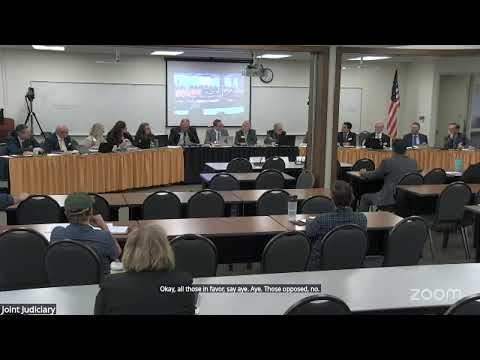
The Joint Judiciary interim committee heard extensive testimony on fentanyl enforcement and penalties, and directed legislative staff to compile a comparative spreadsheet of other states’ fentanyl statutes and related research.
The issue matters because illicit fentanyl and its analogs have driven recent overdose deaths and present different prosecution and public-safety tradeoffs than other controlled substances. Committee staff said other Western states have enacted tiered mandatory minimums and enhanced trafficking penalties, while Wyoming’s statutory structure includes special penalties when minors are involved.
Clarissa Nord of the Legislative Service Office told the committee “fentanyl is a synthetic opioid that's estimated to be 50 to 100 times more potent than other drugs, such as morphine and heroin.” She summarized recent state actions: Idaho in 2024 adopted tiered mandatory minimums (for example, 4–14 grams triggers a minimum of three years and a $10,000 fine; more than 28 grams triggers at least 10 years and a $25,000 fine), Montana and Utah recently added stricter penalties, and Colorado’s 2022 Fentanyl Accountability and Prevention Act increases penalties tied to quantities and fatal overdoses.
Alan Thompson, executive director of the Wyoming Association of Sheriffs and Chiefs of Police, described operational and safety concerns for frontline officers and jail populations and urged the committee to consider whether Wyoming’s weight thresholds and statutory language should be adjusted. He noted state statute distinctions and recommended aligning fentanyl thresholds with other high‑risk substances: “individuals have the greatest risk of overdose, right after incarceration,” Thompson said, arguing for attention to both sentencing and post‑release overdose risk-reduction.
Sarah Barrett of the Wyoming State Crime Laboratory said the lab has identified about “15 unique fentanyl or fentanyl related compounds” in state evidence and that the lab’s rules and schedules cover fentanyl analogs.
Committee members pressed for particulars on statutes and outcomes. Mr. Fuller (LSO staff) pointed out existing Wyoming law that increases penalties when a distributor’s victim is under 18 and at least three years younger, and noted school‑zone enhancements tied to possession or delivery within 500 feet of K–12 property. Lawmakers asked LSO to compile the full text of the relevant Wyoming statutes and to prepare a separate summary listing states’ penalties, special offenses for distribution to minors, and any available studies on whether enhanced penalties reduce overdose deaths or trafficking.
The committee did not adopt policy changes at the meeting; it approved staff work and asked for materials the members said they would use to decide whether a bill draft is needed at a future interim meeting in Casper.
The committee's next steps include LSO delivering: (1) a spreadsheet comparing state fentanyl penalties; (2) a document enumerating statutes that single out distribution to minors; (3) the full Wyoming statutory text the committee referenced; and (4) any available studies on the effectiveness of enhanced penalties and mandatory minimums.