Get Full Government Meeting Transcripts, Videos, & Alerts Forever!
Get email alerts on the Parking Ordinance Commercial Vehicles topic
No spam. Unsubscribe anytime.
Planning board flags conflicts, asks for clearer screening in proposed commercial-vehicle parking ordinance
Summary
The Township of Washington Planning Board told staff to send comments to the consultant and asked for clearer screening definitions and harmonization with existing parking rules after identifying conflicting size and weight limits in a draft ordinance.
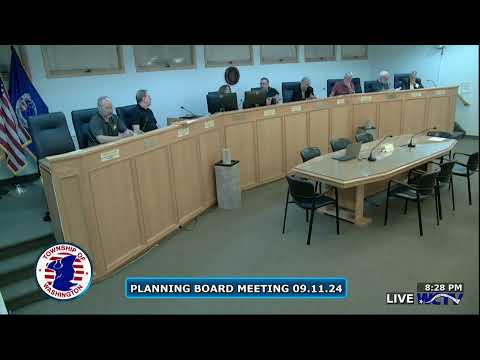
At a recent Township of Washington Planning Board meeting, members raised concerns that a draft commercial-vehicle parking ordinance conflicts with an existing parking ordinance and leaves screening requirements ambiguous.
The board focused on two technical conflicts and a lack of detail on required screening. Planning board members noted that the draft’s subpoint f limits a covered vehicle to not exceed 8 feet in width, 10 feet in height, or 23 feet in overall length, while the township’s current parking ordinance (Article 2, sections 330-1 through 330-8) uses different thresholds: height in excess of 8 feet, length in excess of 18 feet, width in excess of 7 feet, and additional limits on vehicle weight and number of wheels (the existing ordinance sets a weight limit of 11,000 pounds and a four-wheel limit). Board members said those differences create “a disconnect” that must be resolved before the mayor and council consider introduction.
Board members also questioned letter H of the draft, which says “every commercial vehicle in a residential district shall be screened with fencing or a landscape buffer or both” and that such screening “shall be designed to shield the commercial vehicles from nearby residences.” Members described that language as “broad and ambiguous” and asked for more substantive descriptions, examples, or standards for fencing, buffers and the intended coverage of screening so that enforcement would be clearer.
The board discussed whether the draft was intended to replace the existing parking ordinance or to be merged with it. Members repeatedly urged harmonization between the draft (which is proposed for chapter 5-80, the zoning code) and the existing parking regulations in chapter 330 so the two sections do not conflict when applied. One planning board member said the draft is “more substantive” and expands coverage to recreational vehicles, which the current commercial-vehicle-focused ordinance does not.
The board asked that staff relay the comments to the consultant. Planning staff said they will reach out to Steve Lyden of Burgess Associates, provide the board’s comments and ask Lyden to reappear before the board. The meeting record shows the planning board does not have final authority to introduce ordinances; introduction and final decisions rest with the mayor and council, and the board’s role is advisory.
During the public-comment period, resident Michael Locurado of 176 Fern asked whether the current ordinance limits the number of commercial vehicles on a driveway. The board read language in the draft limiting the number of vehicles; the transcript records the text that “not more than 1 non prohibited commercial vehicle shall be parked on a private premise in a residential zone of the township during prohibited hours.” The board said the draft will limit the number of commercial vehicles and that enforcement will be handled by a combination of the police department and the code official.
Locurado also raised a specific enforcement example — a Ridgewood Road property with two commercial vehicles and a large boat parked continuously — and asked what will be done about properties that appear to violate existing rules. The mayor said he would ask the police department to look into the property, and board members noted code enforcement works with police on such matters.
Board members also noted that the council had, during its meeting, raised boat storage explicitly and that the draft had not previously included bulk boat-storage language. Several members suggested adding language about recreational-boat storage (and where such rules belong in the code) and asked that examples of acceptable screening — fencing, landscape buffers and shielding — be provided to the board by the consultant.
No ordinance was introduced or adopted at the meeting. The board passed routine motions to open and close the public-comment period for the discussion. The next steps recorded in the meeting were that staff will provide the board’s comments to Burgess Associates, seek Lyden’s response or a follow-up presentation, and that the mayor and council will decide whether to introduce a revised ordinance or to change the existing ordinance to achieve consistency.