Get Full Government Meeting Transcripts, Videos, & Alerts Forever!
Get email alerts on the Student Device Policy topic
No spam. Unsubscribe anytime.
Springfield 186 teachers urge stronger limits on student devices; board reports drop in confiscations
Summary
Two teachers urged District 186 to stop sending devices home for K–8 and to adopt a bell‑to‑bell phone ban; staff data presented to the board shows reported confiscations fell sharply after this year’s stricter policy.
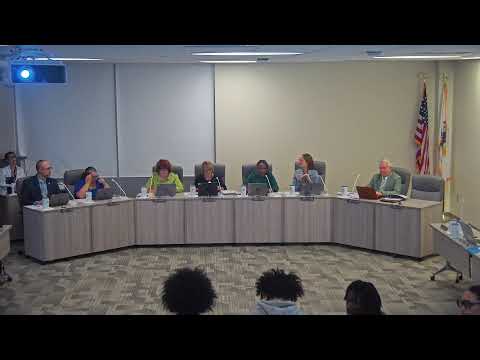
Two Springfield 186 teachers urged the Board of Education on Monday to tighten classroom technology rules, with one asking the district to stop sending Chromebooks home for kindergarten through eighth grade and the other urging a districtwide bell‑to‑bell ban on cellphones.
The comments came during the superintendent’s invited presentation time and a public‑comment segment, where teachers Melissa Hostetter and Monique Davis presented research, teacher survey results and policy options to reduce in‑class screen time and related harms.
Hostetter, a science teacher at Franklin Middle School, told the board, “I do not believe we need to send devices home with students in kindergarten through eighth grade.” She said classroom devices kept in a cart would reduce lost instruction time when students forget devices, bring dead batteries or leave them in other rooms, and would relieve teachers of the ongoing task of policing students’ online activity.
Monique Davis, a Springfield High School teacher who co‑authored a teacher questionnaire, urged the board to “seriously consider making District 186 completely phone free” and recommended a bell‑to‑bell policy so teachers would no longer be “the phone police.” She described two practical options presented to the board: collecting devices each morning into a school office envelope, or issuing a Yondr‑style pouch (a lockable bag) that students would carry while items remained inaccessible.
District staff presented usage data and enforcement results alongside the presentations. A staff member reported that earlier in the school year some schools logged hundreds of confiscations — “421 instances of confiscated student [devices] … down to 2 for this year,” the staff member said, describing monthly reporting trends entered by schools into the district information system. Another staff speaker said one high school’s total fell from 508 earlier in the year to zero in the most recent month.
Board members discussed the tradeoffs and enforcement challenges. Board member Sarah Blissett said she supported measuring violations before and after the current policy to see whether the new language reduced incidents. A different board member noted that stricter reporting can initially raise recorded infractions because staff are now required to register violations that previously may have been handled informally.
Members also discussed cost and logistics. Several board members and staff said a Yondr‑style pouch program had been considered and that the board had previously voted it down amid budget concerns; one speaker recalled an estimated cost of about $220,000 for middle and high schools, while another recalled earlier estimates near $200,000. Board members said the district would need a specific proposal, cost details and a plan for replacing damaged pouches before revisiting that option.
Superintendent Gilt and other administrators told the board they would continue collecting monthly data and bringing clarifying information to the board, including consistent reporting of violations and options that balance cost, student safety and instructional time.
Board members did not take a formal vote on new phone rules during the meeting; the discussion closed with several members asking staff for follow‑up data and for policy fine‑tuning, particularly at the high‑school level.