Get Full Government Meeting Transcripts, Videos, & Alerts Forever!
Get email alerts on the Charter Review topic
No spam. Unsubscribe anytime.
Canal Winchester council reviews Charter Review Commission recommendations on pay, P&Z role and administrator confirmation
Summary
City council discussed the Charter Review Commission's recommendations — including proposed mayor and council compensation changes, giving a council member tie-breaking vote on Planning & Zoning, and confirmation/termination language for the city administrator — but took no action to move changes to the ballot at Monday's meeting.
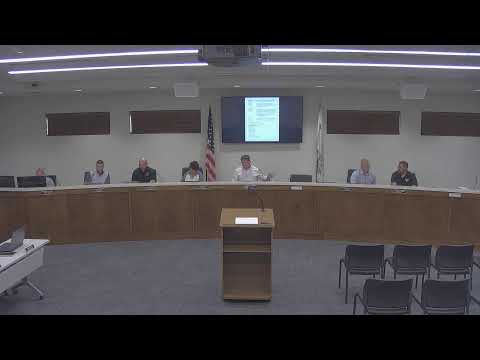
Canal Winchester City Council members discussed a package of Charter Review Commission recommendations on May 19, 2025 that would change how the mayor and council are paid, give a council member a special role with the Planning & Zoning Commission in tie votes, and add confirmation language for the city administrator’s appointment. Council did not move the items to the ballot and left the draft changes on the work-session agenda.
The Charter Review Commission presented edits to multiple charter sections and recommended a range for the mayor’s pay. “We all agreed that the mayor salary now is too low,” the commission said during the meeting, and the group reported it had “landed on the 60 to 85” range in its deliberations. Council discussion referenced the current mayoral pay level of $41,200 as the baseline. Legal counsel told the council the Ohio Ethics Commission’s guidance limits an individual council’s ability to enact interim pay raises and that any local action would need to comply with state precedent.
Council members and commission representatives said the commission aimed to depoliticize compensation and to tie any automatic adjustments to established anchors. One suggestion discussed at length was linking council pay to the OPERS full-service pension figure so future changes would follow that external metric. The commission also proposed that, for Planning & Zoning (P&Z), a council member designated to chair the body would vote only to break ties, a move the commission described as intended to “streamline communication” between P&Z and council.
Commission members also flagged appointment and confirmation language for the city administrator, saying council should confirm mayoral appointees. Councilors probed whether removal of the city administrator should require council approval or remain at-will. Staff explained that the city’s handbook classifies most department heads and the administrator as at-will employees and that classified employees have due-process protections, but unclassified (at-will) positions may be removed without the council’s approval. The commission did not recommend changing at-will removal protections during this session.
Councilors agreed several of the commission’s proposed edits were noncontroversial and could be grouped for a single ballot question, but said several items — pay, P&Z voting, and administrator appointment/termination — were “meatier” and would require more public discussion. Legal counsel outlined the calendar: the filing deadline to place charter items on the November ballot falls the Wednesday after the council’s first August meeting, giving council roughly four meetings to refine language and decide which items (if any) to send to voters.
At the end of the discussion council decided not to advance the draft compensation resolutions that had been prepared as placeholders; multiple council members said they preferred to let the charter process play out and take no interim legislative action. Items not advanced will remain on the work-session agenda for further discussion before any vote to place questions before voters.
The council scheduled additional meetings and suggested breaking the commission’s recommendations into grouped, manageable sets to give the public time to review major items before the filing deadline.
Looking ahead, council members said they will continue deliberations at future work sessions and may publish clearer ballot packaging and explanatory language before deciding whether to submit any charter amendments to the November 2025 ballot.