Get Full Government Meeting Transcripts, Videos, & Alerts Forever!
Get email alerts on the Education Assessment topic
No spam. Unsubscribe anytime.
Whitnall officials report strong spring screening results, outline Act 20 follow-up
Summary
District staff told the school board that most K–8 students are above national medians in math and reading growth, described increases in tiered interventions and personal reading plans under Act 20, and said the district met statutory reporting deadlines while awaiting third‑grade forward exam results.
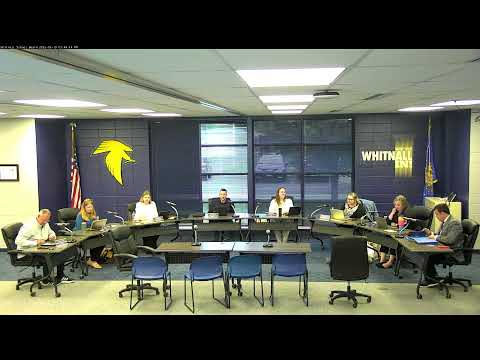
Whitnall School District staff reported to the Board of Education on spring universal screening results and the district’s implementation of Act 20, saying most K–8 students exceeded national median performance in math and that reading growth showed mixed but improving results, with some increases in students placed on personal reading plans.
The presentation, led by Dana (staff member), summarized results from FastBridge, MAP, AIMSwebPlus and other screeners and said district teams completed required reporting to families within Act 20’s statutory window. “We did have all of our results and reports sent home by the statutory deadlines for Act 20, which is 10 to 15 days,” Dana said.
Why it matters: Act 20 requires early-grade screening and parent notification; how the district interprets and implements screening cutoffs affects which students receive Tier 2 or Tier 3 support and which third graders must remain on a personal reading plan until they meet state exit criteria on the forward exam.
Key findings and figures presented - Districtwide tiering: about 80% of students receive Tier 1 classroom instruction, 10–15% receive Tier 2 targeted supports, and about 5–10% receive Tier 3 intensive supports, Dana said. - Early math (K4–2): FastBridge median percentiles were above the 50th percentile; the percent of students scoring at publisher-defined “at risk” thresholds was below expected norms (e.g., below the 15th percentile for some FastBridge measures). - Grades 3–8 math (MAP): “A significant number of our students are above the 60th percentile,” Dana said; all grade levels showed more than 70% of students meeting projected growth, and fourth grade had over half its students at or above the 80th percentile. - Reading/Act 20 specifics: districtwide there was a net increase of 17 personal reading plans from winter to spring across the two elementary buildings, with kindergarten and first grade showing some notable increases. Second grade showed net exits in reading plans in some cohorts. Third‑grade forward scores — required to exit a personal reading plan under state rules — were pending at the time of the presentation.
How the district is responding - Staffing and interventions: the district added a dedicated interventionist at Hills Corners and at the middle school during winter, increasing Tier 3 capacity. Winter-to-spring scheduling and staffing changes contributed to increases in students identified for Tier 3 in K–2 reading. - Instructional supports: the district plans additional professional development on small-group instruction, fidelity checks for evidence‑based reading interventions led by a new K–12 reading specialist, and continued use of classroom walkthrough tools to monitor Tier 1 curriculum implementation. - State norming: Dana warned that MAP and AIMSwebPlus will be renormed over the summer, which will shift percentile cutoffs and complicate year‑to‑year comparisons.
Board questions and clarifications Board members asked about methodology and interpretation. Board member Cassie asked about the choice of median versus mean; Dana explained median was used to reduce skew from outliers. Board member Karen asked how high accuracy (90%+ oral reading accuracy) can coexist with more students on personal reading plans; Dana explained the plan assignment is based on words correct per minute (oral reading fluency) while percent accuracy and comprehension are considered separately for instructional decisions.
Unresolved items and next steps - Third‑grade exits: some third graders’ forward exam results were pending; those scores will determine whether students exit personal reading plans. - Renorming impact: staff will monitor how next year’s renorming affects identification rates and may revisit thresholds or instructional responses. - Policy work: the district policy committee is developing a promotion policy for third-to-fourth grade required to be adopted by July 1 under state law; staff said that work will continue into June.
The board received the update and questioned implementation details; no formal vote or change in district policy was taken during the presentation.