Get Full Government Meeting Transcripts, Videos, & Alerts Forever!
Get email alerts on the Criminal Justice Recovery Court topic
No spam. Unsubscribe anytime.
Superior Court reports recovery court has seven participants, credits county funding
Summary
Superior Court Judge Jeremy Ford briefed the Board of Supervisors on two years of the county's recovery court program, saying the voluntary court-based treatment model has seven participants currently and is funded at $6,000 per year from the county budget.
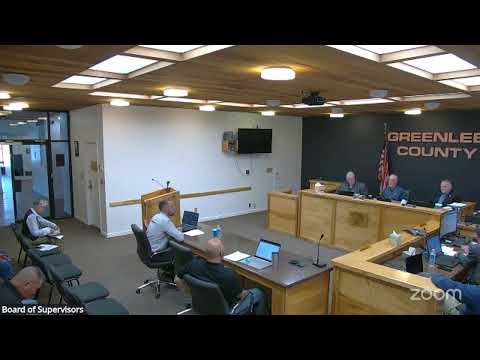
Superior Court Judge Jeremy Ford reported to the Greenlee County Board of Supervisors on the county's recovery court program, saying the voluntary treatment-based court has seven participants and is funded with $6,000 per year from the county.
Ford said the $6,000 is split into a $5,000 stipend to pay the attorney who covers recovery court and $1,000 for incidental expenses. He described recovery court as a voluntary, treatment-focused model that combines court-enforced consequences with intensive treatment, including twice-weekly drug testing and weekly court appearances.
Ford said the program targets people with long-term, high-need addiction histories and that most participants volunteer. He described the program's approach to consequences as immediate and graduated: the first response to a positive drug test is additional treatment and, if needed, short jail stays that increase with repeated violations rather than a probation-revocation process that can take months.
Ford told the board the program emphasizes restoring family relationships and employability as well as sobriety. He said, "For a lot of these people...this is sometimes the first time they're both being praised on a regular basis and having good things happen, and being held accountable on a regular basis." He added that several participants had recently gained steady employment and that one long-time user was nearing one year sober and preparing to graduate the program.
Ford described the program's team as collaborative and including the county attorney, probation, treatment providers (who attend weekly), defense counsel and the judge. He said treatment is provided primarily through Access and that intensive outpatient services are delivered in Safford, with transportation often provided through Access services. He said some participants require inpatient stays of three to 12 months before returning to the recovery court model.
Ford closed by thanking the board for continuing annual funding and said the program does not currently seek additional funds; instead he asked supervisors, individually, to consider employer connections for participants seeking work.
The report was informational; no formal board action was requested or recorded at the meeting.
Ending: Ford invited supervisors to observe recovery court sessions and to connect local employers with participants seeking jobs.