Get Full Government Meeting Transcripts, Videos, & Alerts Forever!
Get email alerts on the Homelessness topic
No spam. Unsubscribe anytime.
Joint Wausau–Marathon County task force outlines homelessness gaps, opens interim shelter
Summary
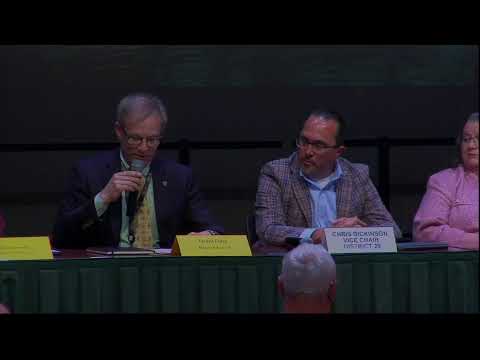
A joint city–county homelessness task force presented findings May 19 and recommended coordinated long‑term planning while the city and county opened an interim shelter funded with matching local dollars; the report identifies service gaps, staffing and Medicaid funding risks and sets a goal to develop a coordinated plan by Q1 2026.
A joint Marathon County–City of Wausau Homelessness Task Force presented a report May 19 and outlined short‑ and long‑term steps to address unhoused residents, while the city and county also opened an interim shelter to cover a gap until a permanent provider is selected.
The task force’s report, delivered to the Wausau Common Council and the Marathon County Board of Supervisors, recommended a coordinated, countywide approach to move people into stable housing and directed the county administrator to work with Wausau city staff on an actionable plan by the end of the first quarter of 2026. Ron Covelli, chair of the task force, told both bodies the work showed “homelessness is a very complex issue with many layers.”
Task force members and presenters framed the report around three near‑term outcomes: stabilize shelter capacity, inventory and coordinate existing services, and complete a targeted gap analysis to match services to needs. The city opened a short‑term gap‑filling shelter, the Wausau Marathon County (WMC) shelter, on May 1. Chief Matt Barnes of the Wausau Police Department said the facility, located in the basement of First United Methodist Church at 903 Third Avenue, has been staffed by city employees and community volunteers: “If it weren’t for organizations, businesses, and the community, this wouldn’t be possible,” Barnes said.
Barnes gave operational details: the shelter is set up to receive guests beginning at 6 p.m.; guests are asked to leave by 8 a.m. The shelter has operated for 18 nights as of the report and has served 85 unduplicated individuals, with nightly counts ranging from about 30 on low nights to 50 on the largest night; roughly 30% of guests were female and about 16% were employed, Barnes said. He described the interim shelter as covering May 1 through Dec. 31 while the city and county run a second request for proposals (RFP) for a longer‑term provider; the second RFP closes at the end of May and proposals will be opened by the Board of Public Works in June.
Presenters identified extensive nonprofit and faith‑based services in Marathon County, including Catholic Charities (Good Shepherd Shelter and a warming center), Bridge Street Mission (meals, a day center and expanded transitional housing slated to increase capacity in July), North Central Community Action Program (permanent supportive housing and tenant‑based rental assistance), Northern Valley Industries (employment services), Hager House and Gospel TLC (transitional housing), and several volunteer outreach groups including the Marathon County Community Outreach Task Force (sometimes called the Mardi Bus). Vicki Tilka, senior director of behavioral health services at North Central Health Care, summarized the county’s behavioral health treatment array and said provider shortages and Medicaid reimbursement levels limit capacity: “If Medicaid gets cut, that will be a challenge for what we do now,” she said.
The task force detailed gaps that the group identified: insufficient affordable short‑ and long‑term housing for people on fixed incomes; lack of handicap‑accessible units; a shortage of transitional housing for women and for people with criminal records or on registries; limited non‑faith‑based transitional housing; and the absence of coordinated case management across providers. Members cited a working estimate of “up to 400” people or families in Marathon County experiencing some form of housing instability (couch‑surfing, shelters or unsheltered) and an annual unduplicated count of roughly 200–300 people who are contacted by outreach teams.
The task force recommended several actions: county–city matching funds to stabilize shelter services, creation of a landlord engagement and risk‑mitigation program, facilitated conversations among employers and landlords to speed housing placements, exploration of private and business contributions, and a focused gap analysis to determine what new services to fund. The group also recommended pursuing a regional engagement plan; Administrator David Leonard was assigned to develop that engagement and a coordinated plan with surrounding municipalities.
Task force members emphasized limits to local authority and legal constraints. Presenters described local park and parking‑ramp ordinances used when clearing encampments, and they referenced pending court and legal guidance on municipalities’ authority to remove people from public spaces. County and city staff said they were tracking a request for an attorney general opinion being sought by other Wisconsin cities; Marathon County Corporation Counsel and city legal staff will review applicable law, including Chapter 51 emergency detention procedures for people in acute mental‑health crisis.
Elected officials asked questions about youth and family services, Salvation Army changes, and whether outside counties that bring people to Wausau should contribute funding. The Salvation Army now operates a families‑only shelter (up to three families), presenters said; programs such as Hager House and the Family Keys program help families reunify and access housing. Several supervisors and alderpersons urged the task force and administrators to keep momentum, monitor Medicaid and workforce risks, and report interim progress rather than treating the May presentation as an endpoint.
The task force’s written recommendation asks city and county staff to develop a coordinated, actionable long‑term plan with measurable goals — including a target to reach a functional “zero” homelessness benchmark for the population the plan covers — and to return with deliverables through the first quarter of 2026. In the meantime, the WMC interim shelter will operate with city and county funding and community volunteer support while the RFP process continues.
What happens next: the city and county expect responses to the second RFP in June; county and city staff will continue a coordinated planning process and report back on progress toward the task force’s recommendations and the Q1 2026 planning milestone.