Get Full Government Meeting Transcripts, Videos, & Alerts Forever!
Get email alerts on the Transportation Infrastructure topic
No spam. Unsubscribe anytime.
ATL DOT seeks staff and capital increases as city prepares for World Cup and backlog work
Summary
The Atlanta Department of Transportation presented a FY26 request that increases operating positions and capital delivery funding, highlights Vision 0 and resurfacing priorities tied to the 2026 FIFA events, and drew sustained council questions about vacancies, permitting, contract strategy and delivery timelines.
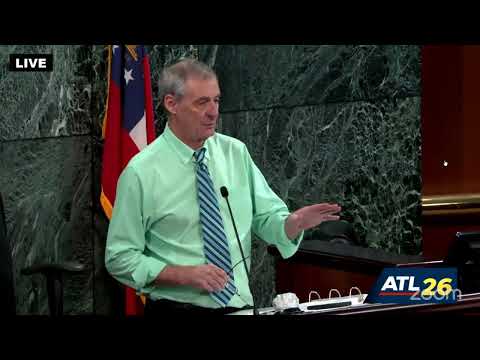
The Atlanta Department of Transportation on Tuesday told City Council its proposed fiscal 2026 budget would expand staff capacity and push major resurfacing and capital projects ahead of next summer's FIFA World Cup games.
The presentation, delivered at the FY26 budget hearing by ATL DOT leadership, said the department's total proposed operating budget is $58,600,000 and that the capital program includes more than $250,000,000 in investments planned for fiscal 2026. Commissioner Cavus said the operating request “enables us to strengthen service delivery, retain skilled employees, more rapidly and reliably respond to the city's evolving transportation needs.”
Council members pressed ATL DOT on staffing, permitting and program delivery. Councilmember Hillis asked, “Would you be confident in saying that ATL DOT is fully funded and fully staffed?” and followed with questions about where roughly 90 vacancies are concentrated and how about 50 proposed FTEs would be allocated. Commissioner Cavus and senior deputies said the department will fill many positions with capital-funded staff and use contract services to address backlog while augmenting in-house capacity for capital delivery.
City officials described recent ATL DOT accomplishments, including nearly 40,000 street lights in the citywide conversion partnership with Georgia Power, 10 micromobility corrals, 21 crosswalks refreshed or installed, activation of 50 leading pedestrian intervals, repairs of more than 7,000 potholes this past year (and 38,000 potholes since the administration began), installation or upgrades of 159 ADA ramps, and repairs to over 1,000 traffic signals. The agency said it completed 20 capital projects, initiated 25 new projects and paved 48 centerline miles during the prior fiscal year.
The presentation singled out safety programs and short-term funding. ATL DOT reported it will invest $3,300,000 in Vision 0 strategies and planning for the department’s stated goal to cut traffic fatalities and serious injuries. The budget narrative also cited $1,100,000 invested in Vision 0 and safe routes-to-school planning and said the FY26 capital plan anticipates 93 miles of resurfacing citywide with about 25 miles in downtown in preparation for FIFA events.
Council debate focused on operational gaps and delivery timelines. Councilmember Juan and others raised permit processing, enforcement and restoration concerns after utility and contractor work damaged recently repaved Bolton Road. Deputies said they are working toward a comprehensive permitting system, added training in the Office of Engineering and said some capacity increases will be funded through capital programs rather than the general fund. Several council members asked ATL DOT to break out vacant positions into funded, unfunded and new positions and to provide a capital delivery schedule tied to bond and capital allocations.
On capital delivery, ATL DOT said the city’s overall capital program totals $1.43 billion, and staff described strategies to accelerate work, including design-build approaches and outside consultant support. The department said it has engaged Jacobs to accelerate designs for the Moving Atlanta Forward program and expects several projects to enter construction in the coming months. The department also cited an AURA bond of $120 million earmarked for downtown resurfacing ahead of FIFA and said two of three resurfacing packages for downtown are under way.
Council members asked for more specificity on the allocation of bond and capital funds, schedules for sidewalk and ADA ramp completion, and whether resurfacing projects would incorporate Vision 0 bicycle and pedestrian elements. Deputies said resurfacing money covers pavement and that corridor-level design for complete-street elements will be coordinated through planning and project design steps; final designs will be shared before construction starts.
Several council members also asked about staffing retention and outsourcing: ATL DOT leaders said competition from regional firms since the Bipartisan Infrastructure Law has tightened the local talent market and that the department is using on-call firms and consultants while investing in recruitment and pay adjustments. Deputies said they will increase use of contract services for maintenance and signing to relieve in-house crews and reduce overtime.
Council members pressed for clearer timelines and deliverables for a list of priority projects, including downtown corridor resurfacing, sidewalk and ADA work, and specific bridge and intersection projects such as the Marietta Street/West Marietta area. ATL DOT said it would return with updated lists, a capital delivery schedule, and a breakdown of vacancy types and where proposed new positions would be assigned.
The presentation and follow-up questions reflected a tension familiar to Atlanta officials: the need to scale delivery quickly for high-visibility events while maintaining long‑term safety and equity improvements across neighborhoods. Councilmembers repeatedly asked for corridor-level implementation plans, more transparent capital schedules and confirmation that resurfacing and street redesigns will incorporate adopted safety guidance before final construction.
Ending: ATL DOT committed to providing the council with a more detailed capital delivery schedule and a clarifying breakdown of funded versus unfunded vacancies and to continue work with council offices and neighborhoods on permitting, restoration and prioritized safety investments.