Hamilton County Schools present $577 million operating plan, propose central-office cuts and 0.5 positions at each school
Loading...
Summary
Superintendent Doctor Robertson presented a proposed Hamilton County Schools operating budget of just over $577 million, highlighting investments in transportation, special education and school-based staff while proposing cuts to central office and a recommendation to remove 0.5 position at every school to help balance the plan.
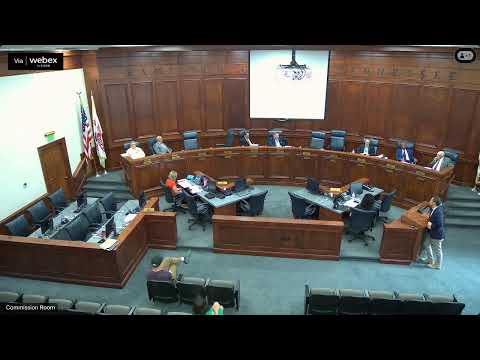
Hamilton County Schools Superintendent Doctor Robertson on Wednesday presented the school system’s proposed operating budget of just over $577 million, saying the plan balances increased state revenue with targeted reductions in central office and some school-based staffing.
“We thought we've got a solid budget to present to you today,” Doctor Robertson said, emphasizing investments in transportation, exceptional education and staff retention while noting hard choices to reach balance.
The presentation said operating revenue totals just over $577 million, about $17 million more than the previous year, with much of the increase attributed to the state funding formula (referred to in the packet as TISA/TESA). Local operating revenue—property tax and sales tax—was held flat at about $279 million, the superintendent said. Robertson told the commission that federal ESSER funds ended in 2024 and that the district previously received roughly $140 million in ESSER allocations to support learning, facilities and temporary positions.
To close an initial roughly $16 million deficit, the district lists reductions and savings that include a targeted cut of 0.5 full-time equivalent at every school (described as a principal-level decision at each school and estimated to reduce school-based positions by about 35.5 FTEs if enacted), the elimination of approximately $1 million in capital maintenance this year with reliance on bond proceeds from a 2023 bond, rebidding copier contracts and other central-office reductions. Robertson said central office staffing was reduced by “almost 11%,” a decrease of roughly $4 million.
The presentation highlights continued investments the district plans to preserve, including $55 million for exceptional education (the same amount budgeted last year), $28 million for transportation and sustained funding for school personalization staff such as counselors and social workers. The packet and Robertson’s remarks also noted a 93% graduation rate and a 70% “post‑secondary ready” rate for the class discussed in the presentation.
Board members and commissioners pressed for additional detail during a question-and-answer period. Commissioner Mackey requested the accounting format that shows five-year spend trends at a fine-account level; Robertson agreed to provide additional detail. Commissioners also asked for a breakdown of “other” budget categories and for printed versions of the summary pages distributed electronically.
The superintendent and several commissioners discussed the effect of statewide private-school voucher programs, which Robertson described as potentially risky to public education budgets. Robertson said about 20,000 statewide vouchers exist and reported that about 400 county students already participate in a voucher program piloted with Metro Nashville and Shelby County; he called vouchers “one of the greatest threats to public education” in his personal opinion and urged community support of the district.
The school board members present—Larry Groan, Ben Connor, Steve Slater and finance chair Ben Daugherty—were introduced at the start of the presentation. Robertson said the district had used priority-based budgeting for five years and pointed to staffing choices that push more resources into schools. He also said transportation performance has improved: the district reported 98% of buses on time and 100% of routes filled for the year cited.
Commissioners and board members did not take a vote during the presentation; the superintendent said the budget has been posted publicly (since May 9, per the presentation) and that the commission will have multiple opportunities for deliberation and public comment over the coming weeks.
The school system provided a one-page estimate for the proposed Franklin Roberts center when fully operational (the packet showed an estimated annual operating cost around $1,900,000 at 450 students, presented as a planning figure). Robertson and commissioners agreed to follow up with additional detail on personnel counts, positions added with TISA funding and the accounting of grants and one‑time funds.
Commissioners thanked the board and district staff for the work on a balanced proposal and requested additional follow-up documents, including five-year trend reports and more granular line‑item breakout for “other” categories before formal county budget votes.