Get Full Government Meeting Transcripts, Videos, & Alerts Forever!
Get email alerts on the Housing Development Shoreway Tower topic
No spam. Unsubscribe anytime.
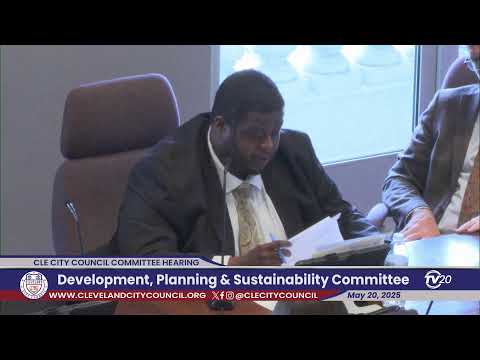
Council committee approves TIF, requires community-benefit contributions for Shoreway Tower project
Summary
An emergency ordinance authorizing the director of economic development to enter a tax-increment financing (TIF) agreement with Shoreway Tower LLC won committee approval, clearing the way for a 13-story addition to the existing Shoreway building in the Detroit Shoreway neighborhood.
An emergency ordinance authorizing the director of economic development to enter a tax-increment financing (TIF) agreement with Shoreway Tower LLC won committee approval, clearing the way for a 13-story addition to the existing Shoreway building in the Detroit Shoreway neighborhood.
The ordinance, No. 499-2025, tasks the director with finalizing a TIF agreement that will support construction of a project that developers say will total about $92,000,000 and create 161 apartment units, including an addition of roughly 110 units to the existing converted Shoreway building. Tom McNair, director of economic development for the city of Cleveland, told the committee the city expects the development to produce tax revenues over time but will use a back-end TIF to incent the project.
The project team said the new tower will include studios through three‑bedroom units, about 4,000 square feet of retail—reworking the existing Good Company restaurant space—public gallery space, and 169 indoor structured parking spaces. Adam Comer of J Rock Development described the total investment as “a roughly $92,000,000 investment in the community.”
Why it matters: city staff framed the TIF as necessary to close financing gaps that otherwise would prevent the private investment, and committee members emphasized the project’s neighborhood impacts and the community benefits package attached to the development agreement.
Committee discussion and community benefits: city and developer representatives said the TIF will produce some new tax revenue for the city and schools over the 30‑year term, though McNair noted the net gains to the Cleveland Metropolitan School District and the city are limited after residential abatements and other tax captures. McNair summarized the forecast to the committee, saying the city expects roughly $712,000 in additional income taxes over the 30‑year life of the TIF and an estimated $1,700,000 for the non‑school portion over the same period; he characterized the net numbers as modest.
As part of the community benefits agreement (CBA) negotiated with Councilwoman Spencer and neighborhood stakeholders, the developer will make a $500,000 cash contribution intended for design and construction of a Battery Park Boulevard extension to connect the development area to W. 70th and to improve pedestrian access toward Edgewater. McNair said the CBA includes safeguards that allow the city to repurpose remaining funds for other community development in the area if the roadway cannot be built after best efforts.
The CBA also specifies workforce elements: committee members were told the agreement requires two apprenticeships and two internships tied to the project, and that the apprenticeships will be Cleveland resident apprenticeships. Comer and city staff said the Office of Equal Opportunity and the developer are coordinating to recruit apprentices and link general contractors to potential trainees through outreach events.
Affordability and unit mix: committee members pressed the developer about affordability. The developers said that “up to 5%” of units would be offered at or below 100% of area median income (AMI). Council members noted that “up to 5%” could technically be zero; Comer said the developer’s intent is to include some units at or below 100% AMI and that they expect to set a nonzero portion as they finalize unit mix and rents. The project team confirmed the final building will include studio, one‑bedroom, two‑bedroom and some three‑bedroom units.
Right-of-way and connector design: the Battery Park Boulevard extension proposed in the CBA sits on private property now used as a cut‑through. Speakers described options the city and developer are weighing: a developer-built street dedicated to the city, or private construction with a permanent public easement and a maintenance agreement. City staff noted prior examples—such as a pedestrian easement in Ohio City—where private property was paired with a permanent public easement to preserve public use while allowing private ownership of the underlying lots.
Committee action and next steps: after questions from council members, the committee voted to approve Ordinance 499-2025. The ordinance authorizes the director of economic development to finalize the TIF agreement; committee discussion indicated additional design and implementation steps remain, including finalizing the CBA details and the TIF agreement terms. No further committee action was recorded in the transcript regarding exact vote tallies. The ordinance was announced as approved by the chair.
Community context: council members said the project expands housing supply in Ward 15 and noted its proximity to arts amenities such as 70 Eighth Street Studios. City and developer representatives emphasized the contribution to local connectivity and public infrastructure as central features of the negotiated community benefits.
What remains unresolved: the transcript records open items that will be decided later—final unit rents and the exact number of affordable units, final design and the funding mechanism for the Battery Park Boulevard extension (including whether the city will accept ownership), and the formal TIF agreement terms. The transcript does not provide a final effective date for the TIF or a binding schedule for the roadway construction.