Get Full Government Meeting Transcripts, Videos, & Alerts Forever!
Get email alerts on the Parking And Adjudication topic
No spam. Unsubscribe anytime.
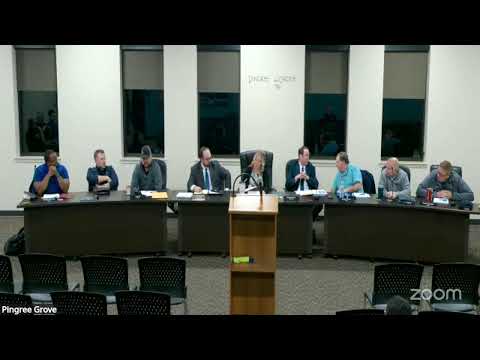
Pingree Grove Board delays new e-ticketing adjudication rules after debate on fines and court costs
Summary
The village board discussed changes to parking fines and a municipal adjudication process tied to an electronic ticketing rollout. Trustees asked for more information on hearing costs and vendor RFQ results and voted to table the ordinance until the board receives that information.
The Pingree Grove Village Board on May 19 discussed changes to local parking fines and an administrative adjudication program tied to a new electronic ticketing system, but members voted to table final action until staff returns with hearing-officer cost estimates and RFQ responses.
The proposed ordinance would modify how parking fines escalate so amounts do not rise before a resident’s administrative hearing date. Andy, a village staff member, said the changes were required because “per state statute, fines for violation cannot escalate until after a hearing has occurred.” He described the draft scheme: a base fine would remain the same initially; a person would receive a hearing date more than 21 days out and could pay the base amount prior to that hearing or contest the citation.
Board members probed how defaults, appeals and collections would work. Andy explained that if a ticket goes uncontested and the person does not appear, the municipality could enter a default finding and the fine would escalate to the maximum shown in code. He said a person found liable after a hearing would receive an order for the debt and have 35 days to appeal to the circuit court. The village would generally defer collections until the appeal window passes.
Trustees and staff also discussed whether to add an administrative “court cost” fee for hearings to cover hearing-officer and program costs. Andy recommended an initial $25 fee but the board asked to wait until the RFQ submittals for hearing officers arrive so they could see vendor availability and likely costs. Trustee Peony noted members should be mindful of deterrent effects: “I don’t know how much are we paying this person once a month regardless?” and trustees questioned whether small fines with a modest court cost would meaningfully deter repeat parking violations.
Board members discussed alternate enforcement pathways if fines go unpaid, including collections through MCOA or the state refund intercept program (“iDrop”), and the limits of those mechanisms. Michael (role not specified in the record) observed the iDrop program is generally used for utility billing and tax-refund intercepts, not parking tickets, and staff confirmed different collection approaches carry different fees and outcomes.
After extended discussion about escalation, appeals, collection options and the level of a court-cost fee, a motion to table the ordinance until staff can provide RFQ results and further cost detail passed on a roll call vote. The board asked staff to return with proposed court-cost figures and clearer implementation mechanics before adopting the code change.
The tabling preserves the board’s ability to adopt an adjudication framework that complies with state law while allowing trustees time to review actual hearing-officer pricing and system capabilities.