
Committee backs tougher penalties and longer statutes of limitation for misuse of official information in bid-rigging cases
Get AI-powered insights, summaries, and transcripts
Subscribe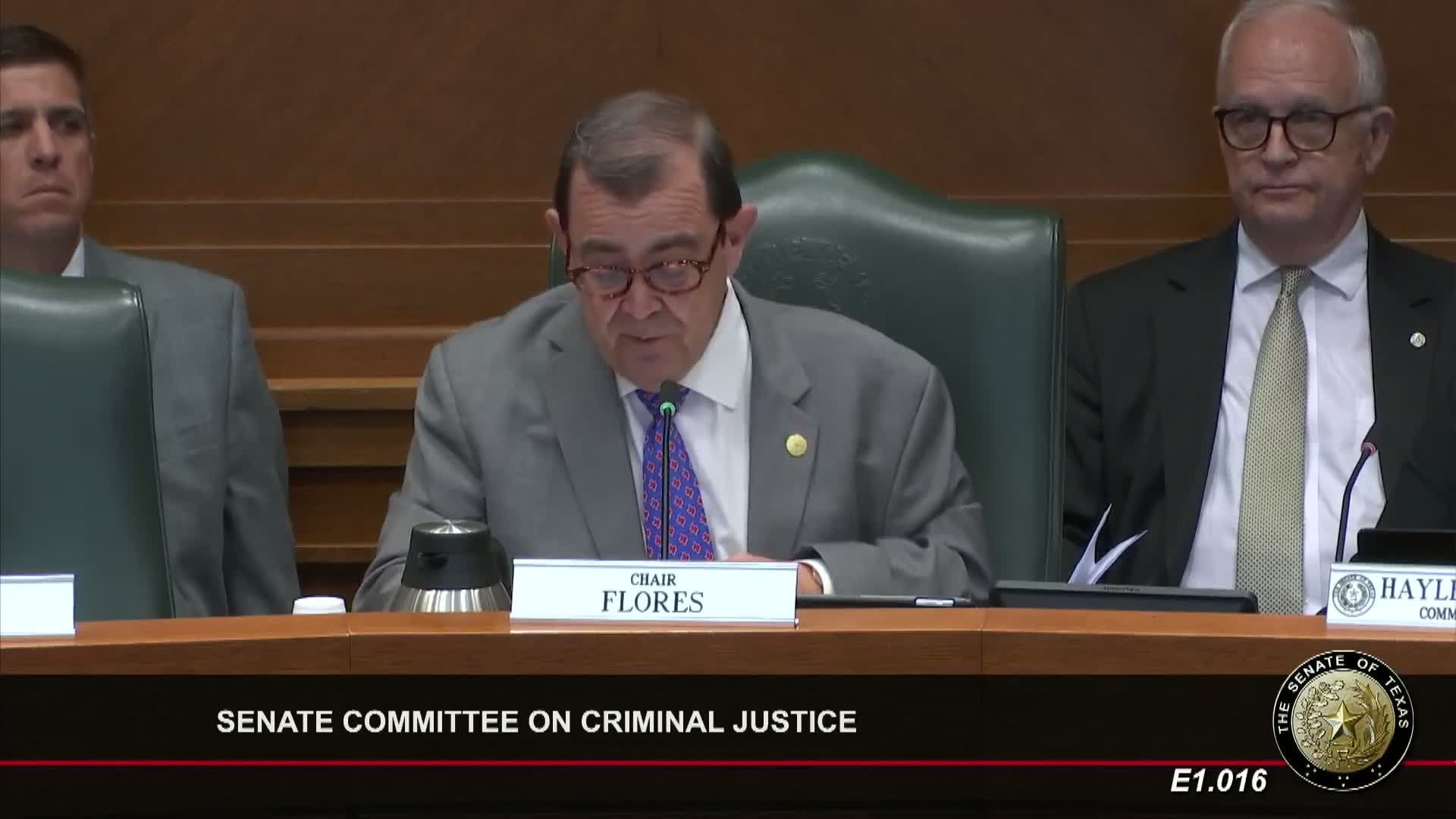
Summary
House Bill 2001 to increase penalties for misuse of official information in public procurement was advanced by the Senate Committee on Criminal Justice after prosecutors and the Texas Rangers described investigative hurdles in bid‑rigging cases.
House Bill 2001, intended to strengthen criminal penalties for misuse of official information and related conduct in public procurement, was presented and advanced by the Senate Committee on Criminal Justice on May 20.
Sponsor Senator Paul Bettencourt said the bill raises baseline penalties and creates tiered felony levels tied to net pecuniary gain, with higher degrees for larger gains. He framed the bill as a response to recent apparent bid‑rigging scandals and said current penalties have not deterred misconduct.
Prosecutors and investigators joined the hearing. Montgomery County District Attorney Brett Ligon and Fort Bend County District Attorney Brian Middleton testified in favor. Jeff Wolf of the Texas Rangers explained investigative challenges in these white‑collar schemes, including limited statute of limitations periods that can make it difficult to assemble complex financial evidence in time to prosecute. Middleton said increasing the offense severity and extending the statute of limitations would “give us the ability to not only look at the crime itself, but to look backwards.”
Why it matters: Witnesses said bid‑rigging and misuse of confidential procurement data can divert millions in public funds and are difficult to detect. Supporters argued enhanced penalties and longer limitations periods would strengthen deterrence and prosecution.
Committee action: The committee reported HB 2001 favorably to the full Senate (roll call recorded 5 ayes, 0 nays) and recommended it for further consideration.
Next steps: The bill proceeds to the full Senate. Witnesses suggested additional practical steps (public notices, audit flags and more investigative resources) to complement the statutory changes.