Get Full Government Meeting Transcripts, Videos, & Alerts Forever!
Get email alerts on the Pesticide Regulation Battery Sprayers topic
No spam. Unsubscribe anytime.
Committee approves exemption and training requirements for battery-powered pesticide applicators
Summary
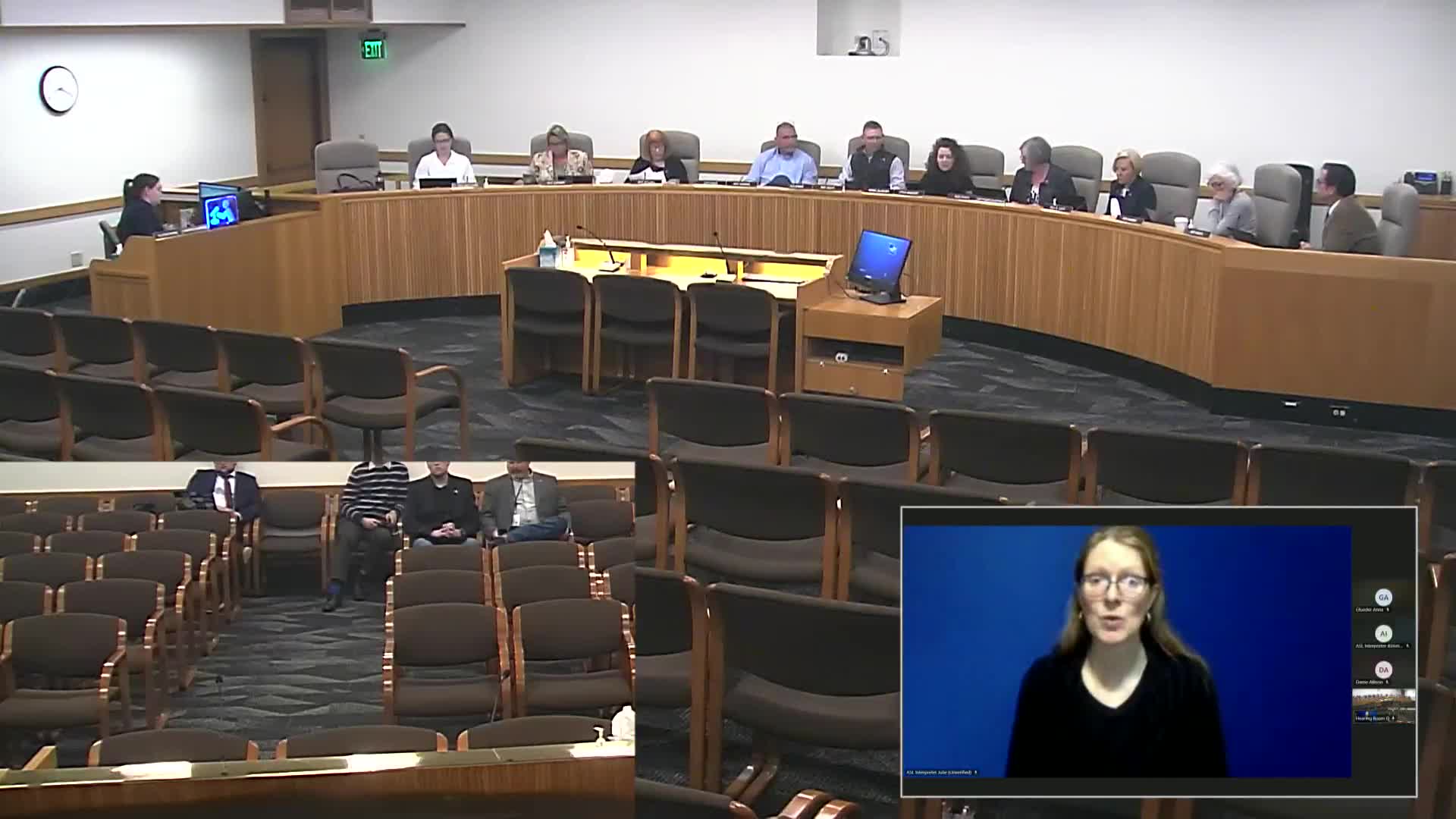
The Committee on Agriculture, Land Use, Natural Resources and Water adopted the A-1 amendment to Senate Bill 360 and forwarded the bill, as amended, to the House floor with a "do pass" recommendation on May 19.
The Committee on Agriculture, Land Use, Natural Resources and Water adopted the A-1 amendment to Senate Bill 360 and forwarded the bill, as amended, to the House floor with a "do pass" recommendation on May 19.
SB 360 exempts employees using a battery-powered device to apply pesticides from certain pesticide licensing requirements and directs the Oregon Department of Agriculture to develop standards and training materials for safe application using such devices. The A-1 amendment excludes applications on school campuses from the exemption, requires employers to provide training using applicable materials, and requires employers to create and maintain records of training and make those records available to the Oregon Department of Agriculture upon request. Committee staff described the fiscal impact as minimal and said there is no revenue impact.
Representative Scharf raised concerns that the amendment duplicates existing training under Worker Protection Standards (WPS) and Occupational Safety and Health Administration (OSHA) requirements and questioned why records in the amendment are made available specifically to the state Department of Agriculture rather than to OSHA for inspection. "First of all, that is a OSHA regulation," Scharf said, describing overlap with existing pesticide training and worker-safety standards.
Jonathan Sandow, deputy director of the Oregon Department of Agriculture, told the committee that WPS applies to agricultural operations and agricultural worker protections; it does not automatically apply to public applicator activities. "WPS is underneath OSHA, but pesticide regulation is underneath [the] Oregon Department of Agriculture," Sandow said. He explained that the Department would be seeking documentation that training was provided "in lieu of a license" for employees using battery-powered devices in contexts where a license would otherwise be required. Sandow agreed to follow up with the committee to clarify how WPS, OSHA and ODA responsibilities intersect for public versus agricultural applicators.
Committee members pressed for further detail about why the amendment requires recordkeeping and how inspection responsibilities will work in practice. Representative Jeff Sharp said he was concerned there was no fiscal estimate for ODA to develop training materials and that the bill appeared to create a different compliance regime for public applicators than for agricultural workers. Sandow said he would "do [his] due diligence" and provide a clearer delineation of responsibilities and inspection authority after conferring with agency staff.
The A-1 amendment passed on voice vote after discussion, and the committee voted to move SB 360, as amended, to the floor with a do-pass recommendation. The committee recorded no roll-call tally in the transcript for the final motion. ODA will provide follow-up information requested by committee members about the interaction of WPS, OSHA and ODA oversight and about the amendment's recordkeeping and inspection provisions.