Get Full Government Meeting Transcripts, Videos, & Alerts Forever!
Get email alerts on the Hb3545 Hoa Assessments topic
No spam. Unsubscribe anytime.
Counties and Fishhawk Lake residents clash at public hearing over bill on HOA dues for county‑owned foreclosures
Summary
The Senate Committee on Housing and Development held a public hearing May 19 on House Bill 35‑45 A, which would make homeowner or condominium association assessments accrue as a lien when a county takes deed to a tax‑foreclosed property.
The Senate Committee on Housing and Development held a public hearing May 19 on House Bill 35‑45 A, a bill that would make homeowner and condominium association assessments begin to accrue as a lien from the date a county takes deed to a tax‑foreclosed property and require the lien to be paid by a future private purchaser; if a county retains or leases the property, the county would be responsible to clear the lien.
Representative Cyrus Javidy, sponsor of HB 35‑45, told the committee the measure is intended to close a statutory gap that leaves counties uncertain about when HOA dues begin and who must pay them after tax foreclosure. “This bill addresses a gap in statute that’s related to properties that are deeded to a county through the tax foreclosure,” Javidy said, describing the bill’s mechanics: start date on the date the county receives deed, an end date the day the county transfers, leases, or permanently retains the property, limits on lienable items and notice requirements for associations.
Clatsop County officials described a specific local problem tied to the Fishhawk Lake community. Heidi Tandy, Clatsop County director of assessment and taxation, said the county holds two tax‑foreclosed lots in Fishhawk Lake and has paid more than $72,000 in HOA fees for those two properties as of May 1. She described dues that have risen “from $2.73 to $5.76, then $8.33 per month per lot,” and said at current rates the county could be paying $80,000 to $100,000 annually if more lots are foreclosed. Monica Steele, Clatsop County assistant county manager, told the committee those public dollars divert scarce funds away from county services.
Those county statements were met with strong opposition from Fishhawk Lake HOA representatives, homeowners and several witnesses with long ties to the matter. Pamela Owen, president of the Fishhawk Lake HOA, told the committee the community maintains roads, water, sewer and environmental protections for 257 lots and said Fishhawk Lake has invested in a $6 million spillway and fish ladder that is backed by a bank loan requiring the HOA keep delinquency under 10 percent; she added the HOA cannot absorb a transfer of dues from counties and warned the loan could be called if delinquencies rise. “House Bill 35‑45 undermines these investments,” Owen said, and she asked the Legislature to withdraw the bill in favor of a study and stakeholder process.
Former Tillamook County Commissioner Mark Labhart and former State Senator Betsy Johnson urged the committee to pause the measure and protect the negotiated settlement tied to Fishhawk Lake’s environmental remediation. Labhart — who said he facilitated the settlement negotiations — warned the bill could “severely negatively impact the FishHawk Lake HOA and its property owner’s ability to meet their financial obligations under the terms of the bank loan” for multimillion‑dollar remediation. Johnson said the settlement involved nearly $4 million in obligations and urged a seven‑month pause to convene stakeholders and craft a solution that preserves both county fiscal stability and the remediation agreement.
The Association of Oregon Counties and several county officials urged passage. Justin Lowe of AOC told the committee counties do not choose to acquire foreclosed properties and that public funds should not subsidize private amenities; he also referenced the need to align state law with the U.S. Supreme Court’s 2023 Tyler v. Hennepin decision and noted that new foreclosure rules could mean counties hold properties longer, increasing potential HOA liabilities. Multnomah County’s Tom Powers and Umatilla County Commissioner and AOC president John Schaefer also testified in favor of the bill, saying it provides a clear, statewide framework for when assessments accrue and protects county budgets.
Several individual homeowners and an HOA attorney opposed the bill on fairness and housing‑stability grounds. Resident Samantha Swaim said the bill “fundamentally passes the financial burden to private citizens” and warned seniors could lose homes; Elaine Faria, a full‑time Fishhawk Lake resident, said the measure could force her out of her home. Ashley Yora, an attorney representing HOAs, testified that the bill would create two classes of property — HOA properties and non‑HOA properties — and argued the Legislature should not create statewide law based on a single local dispute.
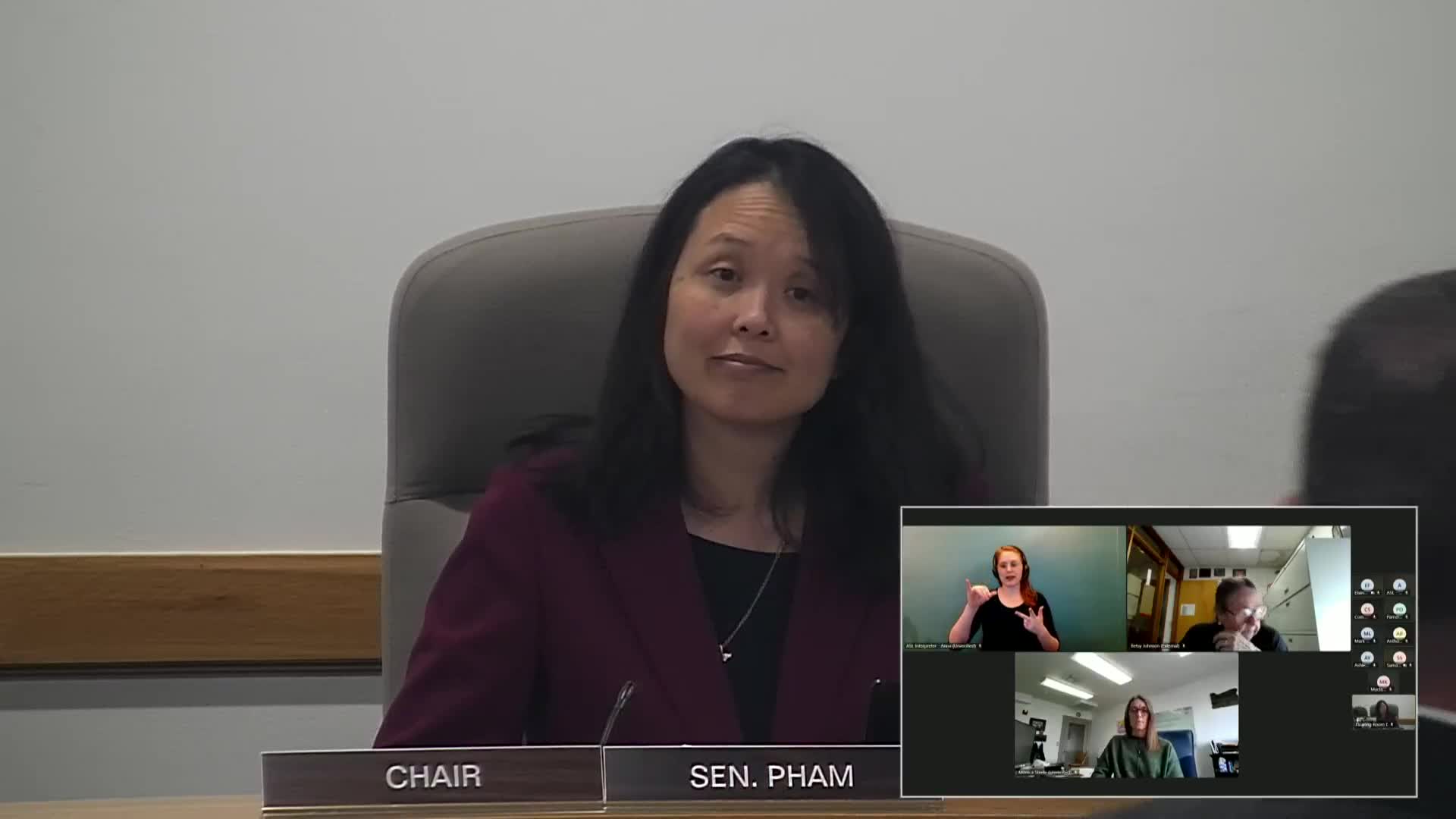
Committee Chair Pham closed the hearing without a committee vote.
Why it matters: HB 35‑45 pits county officials’ concern about stretching limited public budgets against homeowners and HOAs’ concern that shifting the county’s immediate liability will increase delinquencies, threaten settlement‑backed environmental projects and depress property values in small, rural HOA communities. Multiple witnesses asked for a pause to allow a negotiated, statewide approach that includes insurers, banks, affected counties and HOAs.