Get Full Government Meeting Transcripts, Videos, & Alerts Forever!
Get email alerts on the Education— Taxonomy topic
No spam. Unsubscribe anytime.
ODE presents FY23 K-12 fiscal-transparency report, flags capital delays and reserve shortfalls
Summary
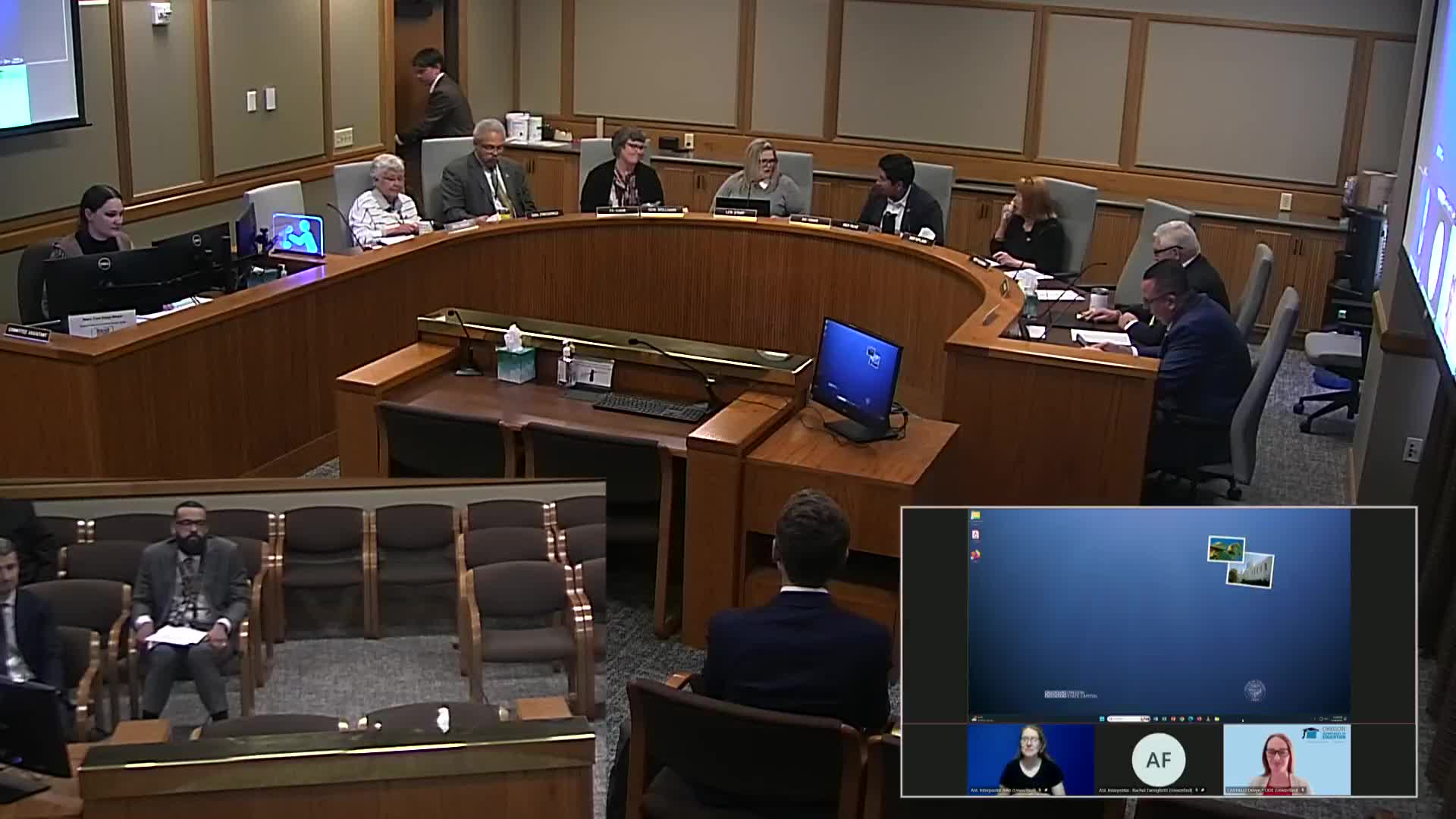
The Oregon Department of Education presented its fiscal year 2023 K–12 fiscal-transparency report to the Joint Committee on Ways and Means’ Education Subcommittee on May 19, describing statewide revenue and expenditure patterns, gaps in timely data, and plans to build public dashboards.
The Oregon Department of Education presented its fiscal year 2023 K–12 fiscal-transparency report to the Joint Committee on Ways and Means’ Education Subcommittee on May 19, describing statewide revenue and expenditure patterns, gaps in timely data, and plans to build public dashboards.
The report, delivered by Kai Turner, assistant superintendent for the Office of Finance and Information Technology, and Devin Castillo, director of fiscal transparency, summarized audited district financial statements covering 197 school districts and flagged capital-project underspending and district reserve shortfalls as the principal concerns for statewide fiscal resilience.
Turner said the department’s work is rooted in the state’s chart of accounts and statutory duties, and that the agency aims to make district finances “clear, comparable and actionable.” Castillo told the committee the report provides “a data-informed look into district revenue, expenditures and areas of improvement in financial reporting.”
ODE said the bulk of school funding comes from state and local sources and that instruction accounts for the largest portion of expenditures. The report’s statewide summary showed state revenue at about 45% of total revenue, local revenue at about 35%, and instruction at about 42% of district spending in FY23. Revenue forecasts were described as “highly accurate,” while final budgets often exceeded or undershot actuals depending on fund type.
The department identified capital projects as the largest source of variance between final budgets and actual spending. Castillo told lawmakers capital-project funds were underspent by roughly 66% statewide, a gap ODE attributed to delays in permitting, contracting and construction timelines. The department also reported that 25 districts ended FY23 with general fund balances below the Government Finance Officers Association (GFOA) benchmark of 16% of general fund revenues; five districts had ending balances below 2%.
Legislators pressed ODE on per-pupil spending and enrollment. Representative Juncker and others questioned how statewide totals translated to a per-student figure; Castillo acknowledged differing methods exist (for example, whether to include capital expenditures and targeted federal grants) and offered to provide a clearer per-pupil calculation. ODE also noted a multi-year enrollment downtrend and cited a fall 2024 average daily membership figure of about 545,000 for 2024–25 as a reference point.
Turner described current data limitations: ODE relies on audited financial statements that are statutorily submitted about six months after the fiscal year ends, and by the time records are validated and displayed the information can be up to 18 months old. The department said that staleness reduces the data’s value for real-time decision-making and increases workload for districts and ODE staff.
As immediate next steps, ODE said it has stood up a fiscal-transparency unit (hired starting in September 2024), automated portions of certain reconciliation tasks, begun “scraping” audited financial statements to harvest structured data, and is developing interactive dashboards. The department said it is exploring options that include adopting a statewide financial system, adding grant- or appropriation-level detail in reporting, and cleaning up the chart of accounts to improve comparability among districts.
ODE also reported external partnerships and reviews informing the work: a 50-state scan by the University of Oregon group referenced in the presentation and a user-research effort by “Oregon’s Kitchen Table” at Portland State University to design persona-based dashboards for parents, legislators and community members.
The committee did not take a formal vote. Members agreed to carry the work session over to the next scheduled meeting for additional discussion; ODE encouraged legislators to submit detailed follow-up questions to Devin Castillo for written responses and to inform the next presentation.
The Department of Education told the committee it will continue developing visualizations and expects to return with further improvements and additional analytics in the February reporting cycle the law contemplates.