Get Full Government Meeting Transcripts, Videos, & Alerts Forever!
Get email alerts on the Transportation Cleanup topic
No spam. Unsubscribe anytime.
Transportation committee rolls over bill that would authorize local cleanup of ODOT right of way
Summary
The Committee on Transportation on May 19 postponed consideration of Senate Bill 1024, which would explicitly authorize formal agreements allowing cities or counties to perform cleanup on Oregon Department of Transportation property. ODOT staff said the measure contains no statewide appropriation and that funding would be negotiated locally.
The Committee on Transportation on May 19 rolled over Senate Bill 1024 after members raised questions about funding, authority and how the measure would change existing agreements for cleanup on Oregon Department of Transportation right of way.
The bill would allow ODOT to enter into formal agreements with cities and counties enabling those local governments to perform cleanup work — for example removing trash, abandoned RVs and large appliances — on state-owned right of way. Lindsay Baker of the Oregon Department of Transportation told the committee the bill contains no appropriation and that any money exchanged would be negotiated between ODOT regions and the local government.
"There is no appropriation tied to this measure," Baker said. "So, there would be no requirement ... that there would be any sort of funds exchange." She added that the bill "allows the agency to enter into a more formalized agreement with any city or county" but does not require ODOT to pay for the work.
The measure grew out of earlier arrangements ODOT made with the City of Portland following session work in 2017–2019 to address debris and abandoned property on state right of way within city limits. Baker said those agreements established notice requirements and payment terms for work the city performed on ODOT property and that Senate Bill 1024 would extend the authority to formalize similar agreements elsewhere in the state.
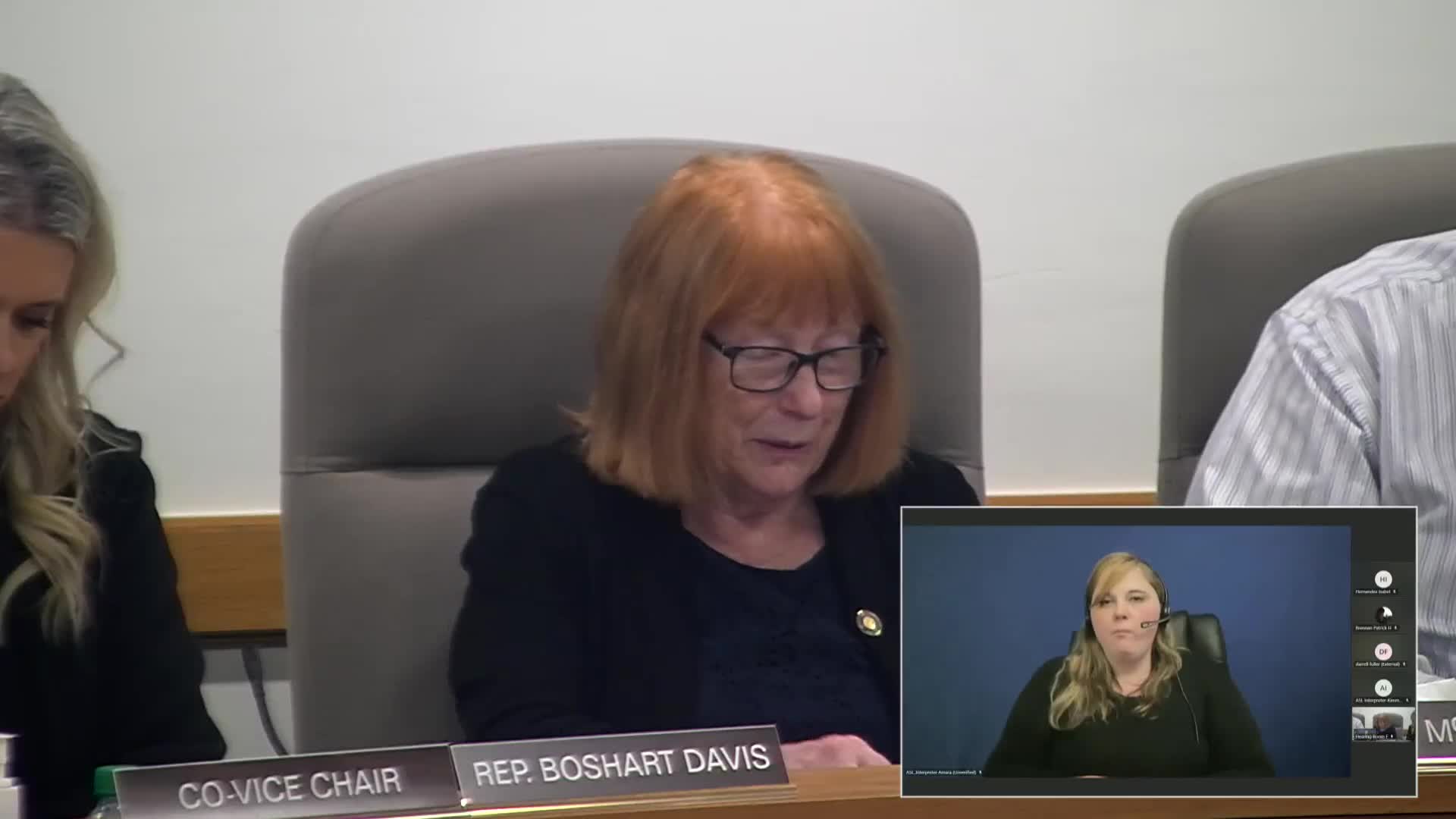
Representative Bossard Davis asked whether local governments can already clean ODOT right of way without this bill. Baker replied there is nothing in current law that prohibits a local government from negotiating such an agreement, but she cautioned that a local government cannot unilaterally begin the cleanup process without the appropriate permit or negotiated agreement.
Representative Mannix said the bill is useful because it gives local officials clear authority to enter agreements with ODOT. "It's permission, for people to do the right thing," Mannix said during the hearing.
Baker and committee members also discussed practical limits: local governments often lack funds to extend their routine maintenance onto state-owned property, and cleanup dollars compete with other maintenance needs — pothole repair, plowing and guardrail replacement — paid from the same state transportation maintenance funds. Baker noted existing private partnerships, such as an adopt-a-highway-style program, that can bring outside funding or volunteer labor to localized stretches of roadway.
After questioning and requests for clarification from several members, the committee agreed to roll the bill over for additional work and for staff to supply answers to outstanding questions at a later session.
The committee's postponement leaves unresolved whether the measure will include standard statewide procedures for notice, timelines for storing personal property, or model funding terms for agreements between ODOT and local governments.