Get Full Government Meeting Transcripts, Videos, & Alerts Forever!
Get email alerts on the Public Safety Pay topic
No spam. Unsubscribe anytime.
Appropriations committee delays vote on supplemental pay for Lakefront airport firefighters after equity concerns
Summary
A bill to give supplemental pay to nine aircraft‑rescue firefighters at the Lakefront Management Authority was voluntarily deferred after members questioned precedent, parity with other emergency workers and funding. Supporters said the pay is needed to retain trained staff; opponents worried it would spur similar requests statewide.
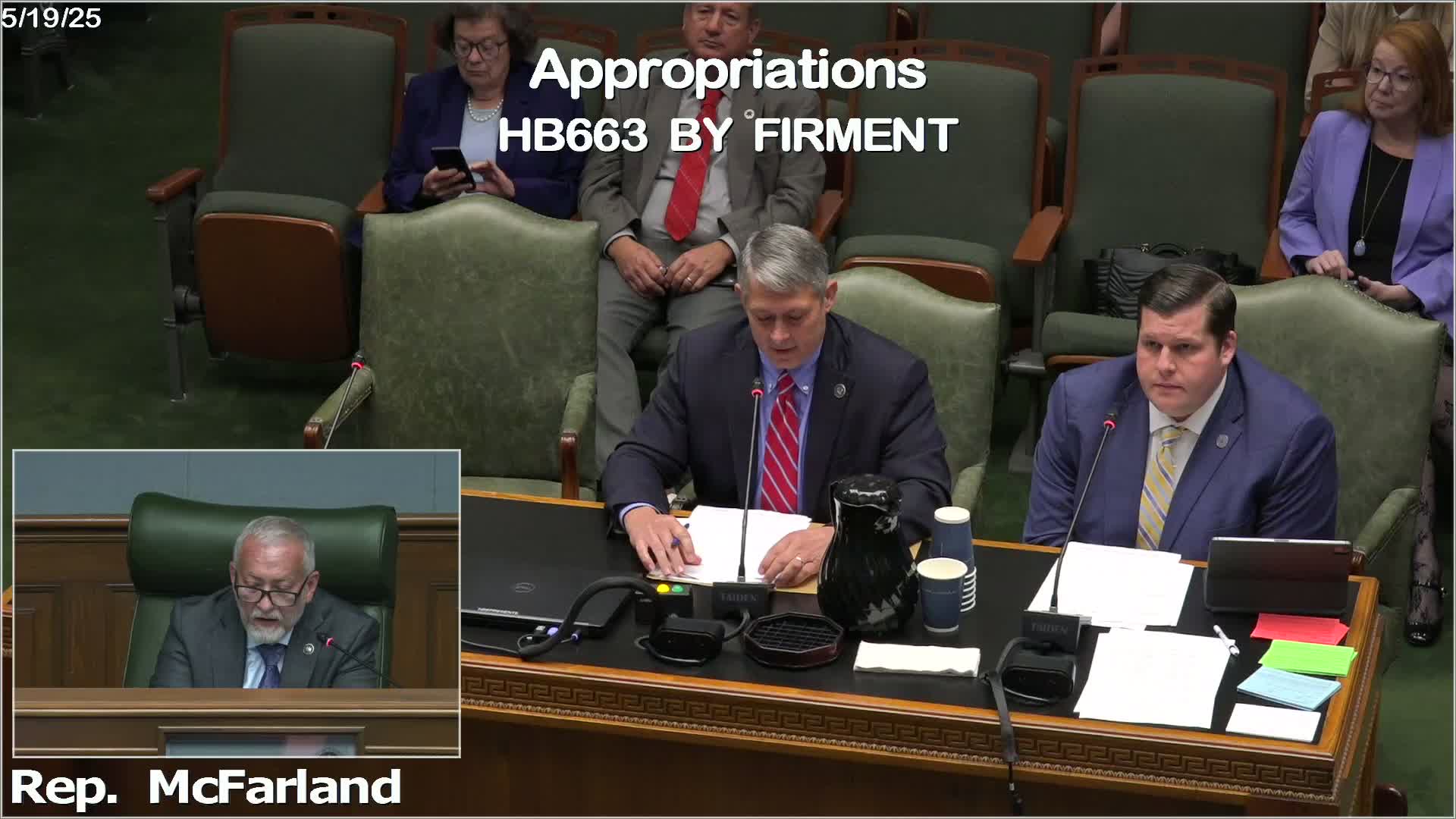
The House Appropriations Committee on Monday voluntarily deferred a proposal to provide supplemental pay to the nine aircraft rescue and firefighting (ARFF) personnel at the Lakefront Management Authority.
Representative Newell, who carried the bill, told the committee the Lakefront firefighters receive advanced aircraft rescue and hazardous materials training that other local departments do not, and that the authority loses trained personnel to city and parish departments that pay supplemental duty. "Without a fire department here, it's very hard for us to get planes to land," Bruce Martin, director of aviation at Lakefront Airport, told the panel.
Supporters stressed safety and retention. Christopher Heilley, an operations supervisor at the airport, said the specialized trucks, foam systems and training cannot be replicated quickly by municipal fire departments and that on‑site ARFF crews are necessary for a towered airport handling private and training flights.
But several members pressed equity and fiscal questions. Representative Marcel and others asked how many other airports, and how many other public safety groups such as EMS, might seek the same supplemental pay, and whether the state could afford to extend similar compensation. Representative Bagley raised concerns about other first responders, noting EMS personnel have long sought equivalent hazard pay.
Committee discussion also examined the size of the department (three shifts of three firefighters each, nine full‑time positions) and recent turnover; sponsors said the authority lost three firefighters in two years to other employers. An estimate of the recurring state supplemental pay was discussed in committee documents (sponsors mentioned a $64,800‑per‑year figure as representative of additional compensation cost), though the hearing focused on policy and precedent rather than final budget language.
After members sought more information on statewide implications and union/stakeholder endorsements, Representative Newell agreed to withdraw the bill for additional work and to return with possible funding options. The bill was voluntarily deferred at the sponsor's request.