Get Full Government Meeting Transcripts, Videos, & Alerts Forever!
Get email alerts on the Investigations Bank Records topic
No spam. Unsubscribe anytime.
Panel OKs bill letting Inspector General obtain bank records without 30‑day notice in certain investigations
Summary
Senate Bill 92 would add the Office of State Inspector General to agencies allowed to request bank records without serving the usual 30‑day certified notice to account holders when a judge approves a subpoena; the House Commerce Committee reported the bill favorable.
Senate Bill 92, presented May 19, 2025, would permit the Office of State Inspector General (OSIG) to obtain bank records in investigations without providing the normal 30‑day certified notice to the account holder when a court orders an investigative subpoena.
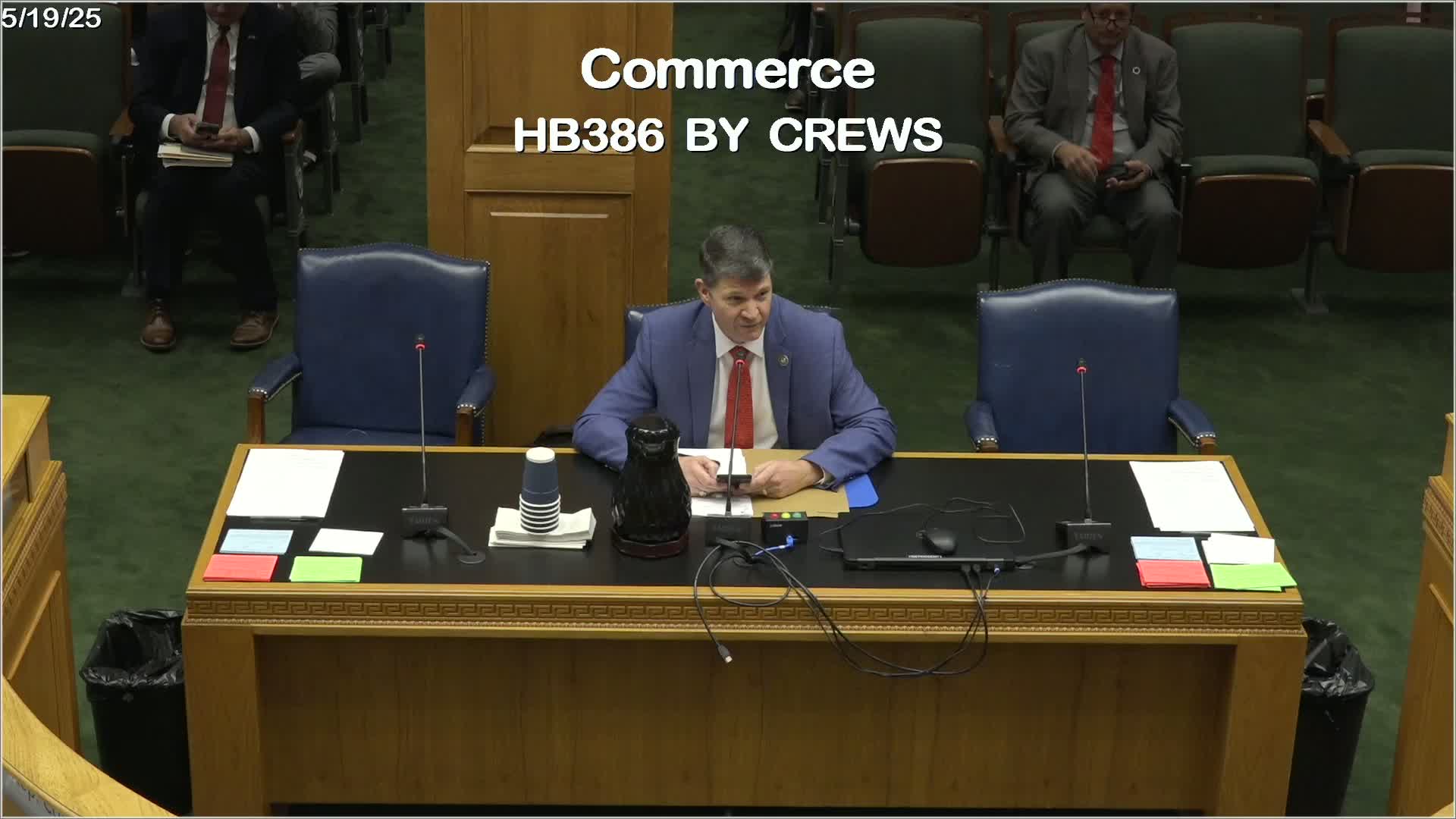
Steven Street, identified as the State Inspector General, told the committee his office operates as a criminal investigative agency and frequently uses subpoenas for bank records in fraud and public‑corruption investigations. Under current practice, the office must serve a certified copy of a subpoena on the account holder 30 business days prior to the bank providing records, and Street said that notice can “allow them to engage in all sorts of other mischief like destroying records, tampering with witnesses and such.” Street said the office has often sought federal grand jury subpoenas as an alternative but that route can slow investigations.
Street said the measure would add OSIG to the list of agencies that can obtain bank records without prior notice when a judge authorizes the subpoena, allowing investigations to proceed covertly where disclosure would risk evidence tampering. He said the office had coordinated with district attorneys, sheriffs and bankers before bringing the proposal and that those stakeholders did not object to the change.
Action: a committee member moved to report Senate Bill 92 favorable; the committee reported the bill favorable without recorded objection.
Discussion versus action: the hearing focused on procedural safeguards—Street emphasized that the judge must authorize the investigative subpoena and that the change is intended to prevent evidence compromise, not to remove judicial oversight.