Get Full Government Meeting Transcripts, Videos, & Alerts Forever!
Get email alerts on the Gold Electronic Legal Tender topic
No spam. Unsubscribe anytime.
Committee approves substitute to recognize electronic gold and silver transactions; bankers voice opposition
Summary
A substitute for House Bill 386 that recognizes gold and silver as legal tender in electronic form (gold-backed debit instruments) was adopted and reported favorable after debate; the Office of Financial Institutions and Louisiana Bankers Association raised licensing and policy concerns.
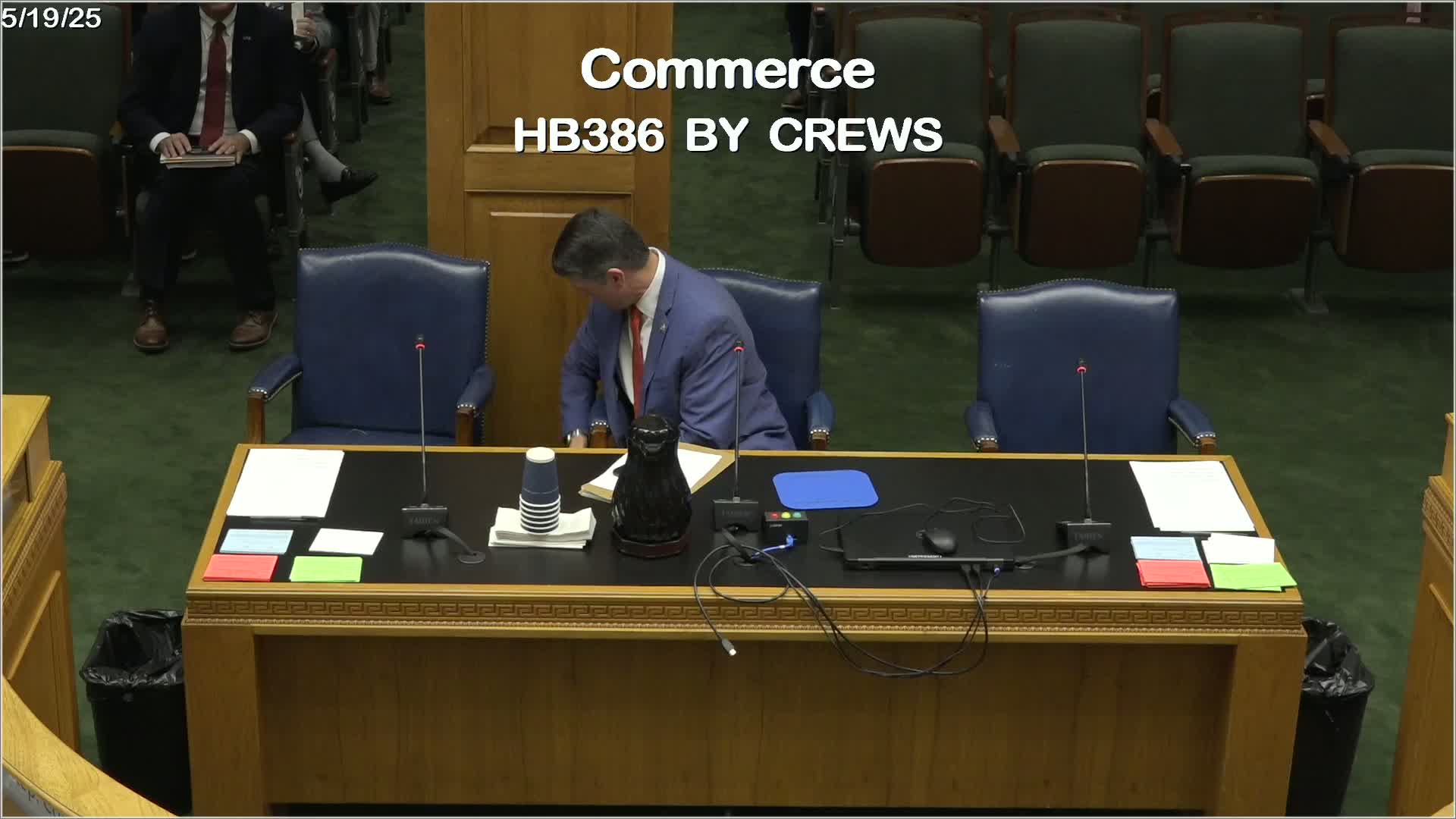
The House Commerce Committee on May 19, 2025, voted to report a substitute for House Bill 386 that recognizes gold and silver as legal tender when used in electronic transactional form and clarifies that gold‑backed debit instruments may be used as legal tender.
Representative Jason Cruz (presenting HB 386) described the substitute as a narrower measure than earlier versions. Cruz said he “struck the whole paragraph and reworded” the bill to remove language that had raised concern with the Louisiana Bankers Association and to avoid state involvement in setting up a depository or a state office. Cruz summarized the substitute: “All this does really, you know, senator Abraham last year passed the law that said we recognize gold and silver as legal tender, and I just added in the electronic transaction of that gold.”
Opposition and regulatory concerns: Michelle Jalsa, chief examiner at the Office of Financial Institutions (OFI), testified that the office studied the bill and prepared projections for the fiscal office. OFI staff said their primary concern is whether a gold‑backed debit instrument would be considered a stored‑value or money‑transmission function; if it is, entities offering that service might need a license from OFI and the bill could trigger regulatory and fiscal implications. Jalsa told the committee the OFI “prepared projections and provided [them] to the fiscal office over the weekend.”
The Louisiana Bankers Association (LBA) filed opposition and said privately available gold‑backed debit products already exist; Joe Gendron of the LBA said the association’s objection stems in part from the bill’s evolving language and uncertainty about whether the law’s effect would expand beyond recognizing existing private‑market options. The LBA said tax policy is the more direct lever if the goal is to change how gold and silver are taxed.
Supporters said the change would give consumers another transactional option to hedge against inflation. Eb Hale, speaking as a private citizen and board member of a credit union, told the committee the proposal “moves forward in the direction to help gold and silver to be put in the hands of just ordinary citizens.” Representative Cruz said the bill is designed to be minimal and not involve the treasurer or a state depository.
Action: Representative Knox moved to report the substitute bill favorable. The committee recorded 7 yeas and 6 nays and the substitute was reported favorable. The committee recorded several questions from members about fiscal notes and the role of OFI; OFI staff confirmed they prepared a fiscal projection on an earlier version and were reviewing the substitute to determine whether stored‑value licensing would apply.
Discussion versus action: most questions focused on whether the state would be involved in custody or transmission of gold, how point‑of‑sale pricing would be determined, and whether the substitute would trigger OFI licensing requirements. Sponsor and witnesses repeated that the substitute removed state depository language and intended only to recognize electronic gold transactions.