Get Full Government Meeting Transcripts, Videos, & Alerts Forever!
Get email alerts on the Education Curriculum topic
No spam. Unsubscribe anytime.
Nutley presents year‑4 program review; recommends library media updates, CTE expansion
Summary
District administrators presented a year‑4 program review of Library Media and Career & Technical Education (CTE) as part of the district’s five‑year curriculum cycle, recommending staffing adjustments, more STEM and nonfiction instruction in library media, and new CTE course and staffing options.
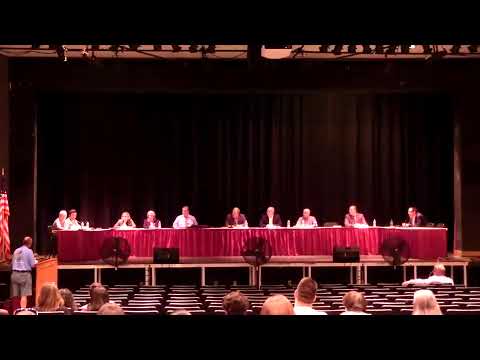
Nutley Public School District administrators presented the year‑4 program review for Library Media and Career & Technical Education (CTE) at a school board meeting, outlining data, stakeholder feedback and recommendations for curriculum, staffing and resources.
The program review is part of a state‑required five‑year curriculum cycle meant to ensure courses align with the New Jersey Student Learning Standards, district presenters said. The district’s process includes gap analysis, research into best practices, stakeholder surveys and pilot implementation before full adoption.
Janine Locansolo, who led the presentation on the district’s review process, said the five‑year cycle “begins with a new curriculum written in year 1” and that “year 4, the program review, is really what we're focusing on in our presentation tonight.” She described the review steps as including alignment checks against standards, review of student assessment data and outreach to neighboring districts for comparative practices.
The Library Media review found that elementary students attend library media with varying frequency by building, that middle schools receive push‑in instruction connected to other content areas, and that high school students do not currently have a dedicated library media course. The district reported survey results showing students identified book borrowing, online safety/digital citizenship, STEM projects and coding among the skills they learned. Based on that input, the district recommended exploring small‑group reading during media specialists’ open periods, increasing hands‑on STEM and nonfiction research lessons, piloting AI exploration units, purchasing keyboard attachments for iPads, and continuing partnership activities with the Nutley Public Library.
Vincent Vicarello, supervisor of fine and performing arts and CTE, summarized the CTE program review and said CTE enrollment has risen since 2021. He described middle school offerings as two elective technology engineering courses (one full‑time staff member at John H. Walker Middle School) and high school staffing as “eight full‑time staff members, one three‑quarter time staff member split with library media, and one full‑time social studies teacher” carrying a financial literacy load. Vicarello identified programs funded by Carl D. Perkins grants—radio/TV (audio/visual technology), hospitality and tourism (culinary), information technology (Cisco) and health sciences—and noted dual‑enrollment and honors options available to students.
CTE recommendations included consolidating overlapping business courses, exploring academy models to allow student progression through clusters, reinstituting or piloting a DECA chapter (a career and technical student organization), adding higher‑level industrial arts (Woodworking II/III, Metalworking II/III), creating an introductory culinary course, updating robotics and robotics hardware, and considering the addition of one industrial arts teacher to support higher‑level offerings. Vicarello cited scheduling conflicts as a primary barrier to student access and said the district will continue staffing conversations in year 1 of the next cycle.
Presenters emphasized that program review leads to a pilot year (year 5) before full implementation, and that resource pilots—sometimes including two competing resources—are tested with teacher feedback before final adoption. The district also identified potential resource sources including Scholastic Book Fair proceeds and the Nutley Educational Foundation to refresh library collections.
Next steps listed on the district slide deck include internal planning for staff support on curriculum changes, piloting recommended lessons and resources, and continuing partnerships with community organizations. The presentation concluded with the district signaling further work on staffing, course sequencing and resource pilots before any formal curriculum adoption vote.