Get Full Government Meeting Transcripts, Videos, & Alerts Forever!
Get email alerts on the Physician Assistant Scope Of Practice topic
No spam. Unsubscribe anytime.
Committee advances bill creating pathway to independent licensure for physician assistants; raises scope and specialty questions
Summary
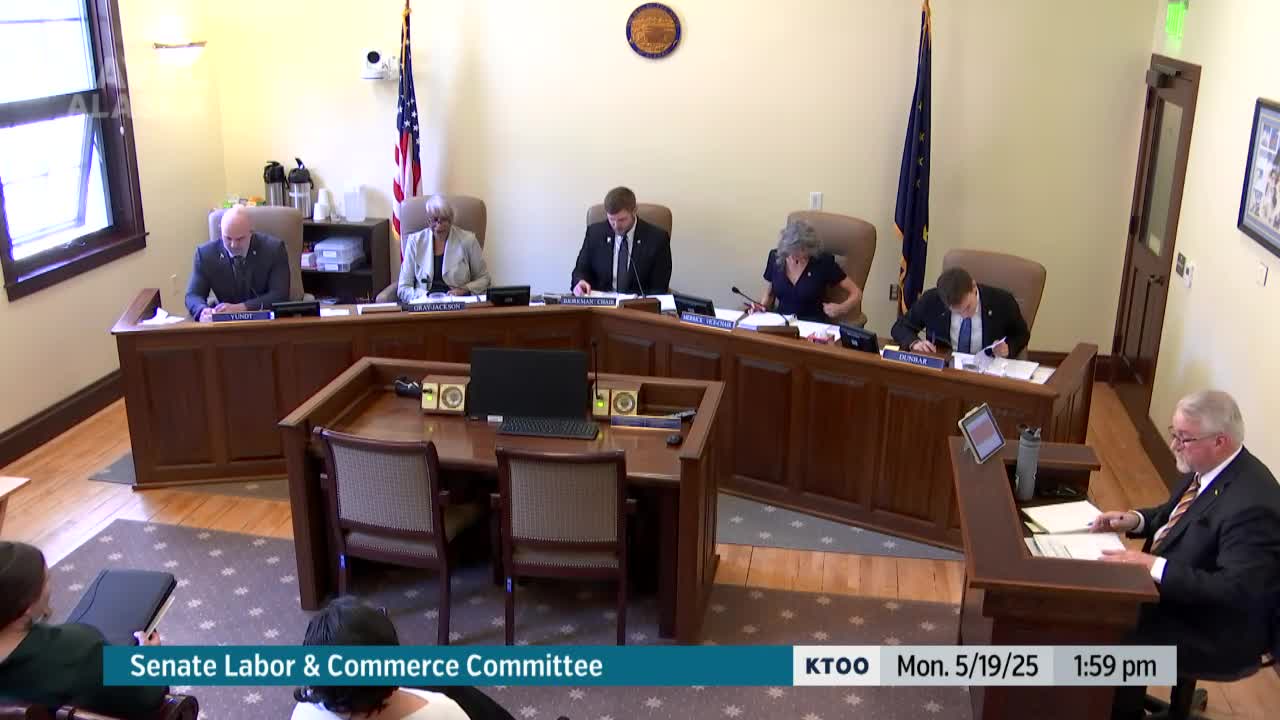
The Senate Labor and Commerce Committee on Monday voted to report a committee substitute for Senate Bill 89, as amended, out of committee with individual recommendations and an attached fiscal note.
The Senate Labor and Commerce Committee on Monday voted to report a committee substitute for Senate Bill 89, as amended, out of committee with individual recommendations and an attached fiscal note, sending the measure on for further consideration.
Senate Bill 89 would create a pathway for physician assistants (PAs) to exit collaborative agreements and seek independent licensure after meeting specified postgraduate clinical‑hour requirements, specialty attestations and related processes overseen by the state medical board.
Senator Lukey Tobin, sponsor of SB89, and Mackenzie Pope, staff to the senator, outlined changes in the version before the committee. The bill as amended increases the required postgraduate clinical hours to 6,000 before a PA may exit a collaborative agreement, adds a process for documenting specialty training and requires that a collaborating physician who attests to specialty hours practice in the same specialty. The measure also directs the state medical board to process attestations, prohibits retaliation in the attestation process, and requires notification to the board when a PA attests completion of requirements to exit a collaborative agreement.
Staff described a list of regulatory limits including language that "a PA may not perform surgery without acting as an assistant to a physician, osteopath, or podiatrist" while also instructing the state medical board to adopt regulations that "at a minimum" allow PAs to perform acts for which they have been trained. Senator Dunbar asked whether routine procedures such as suturing would be permitted under the language and whether the ‘‘no surgery’’ clause might unintentionally bar commonly performed procedures. Mackenzie Pope replied that the subsection sits under the section directing the state medical board to create regulation and said those regulations are intended to allow sutures and other commonplace procedures that PAs are generally educated to perform.
On specialty attestations, committee members raised practical concerns about the availability of specialists in Alaska to serve as collaborating physicians. Senator Tobin and staff said collaborating physicians can reside out of state in current practice and that specialty attestations could similarly rely on out‑of‑state practitioners when needed. The version before the committee also placed a cap on additional specialty hours that can be required and provided a process for reconsideration in the event a PA is denied exit of the collaborative agreement.
The committee adopted a narrow amendment to clarify parallel list language in two places in the bill to ensure listed items are taken together rather than singularly. A motion was made to report the committee substitute, as amended, from committee with individual recommendations and the attached fiscal note and to grant legislative legal authority to make technical and conforming changes; the chair announced no objection and the measure was reported from committee.
Senator Dunbar said she will continue to review the language and raised concern that some changes advanced at this committee were not previously considered in the Health Committee. The sponsor and staff indicated they were open to further changes in later referrals. The committee also directed that the state medical board and regulators be involved in implementation of the regulatory framework for exit attestations and specialty documentation.
The bill will move forward with committee recommendations and technical changes authorized for legislative legal. Specific regulatory details — including the content of regulations the state medical board will adopt and how specialty hours will be evaluated — remain to be finalized through the board and subsequent committee or floor action.