Get Full Government Meeting Transcripts, Videos, & Alerts Forever!
Get email alerts on the Criminal Justice topic
No spam. Unsubscribe anytime.
Senate approves bill letting AG prosecute human‑trafficking cases if local prosecutors do not act
Summary
The Texas Senate passed House Bill 45 to require local law enforcement to submit probable‑cause reports to the attorney general and allow the AG to step in after a defined period if local prosecutors do not pursue trafficking charges.
The Texas Senate on final passage approved House Bill 45, a measure that requires local law enforcement to submit probable‑cause reports in suspected human‑trafficking cases to the state attorney general and gives the attorney general authority to prosecute if local prosecutors do not act within a defined window.
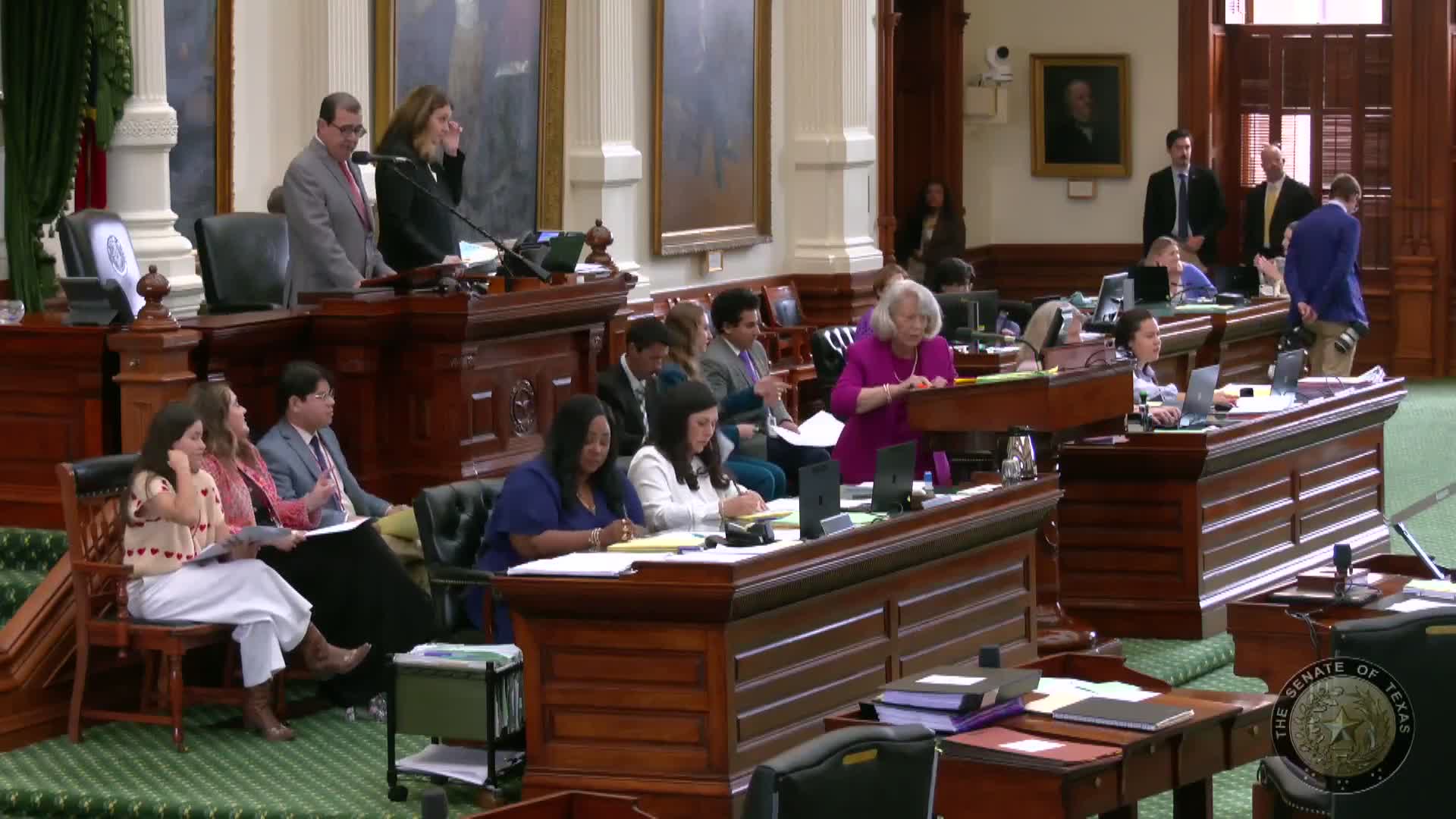
Senator Lois Kolkhorst moved the bill to the floor; Senator Jan Huffman presented the measure on the Senate floor and argued it addresses cases that cross jurisdictions or involve uncooperative witnesses and overseas evidence. The bill establishes a review window after which the attorney general may assert representation for the state if the local prosecutor has not initiated action, and it creates a court process allowing a local prosecutor to object and seek a judicial determination.
Proponents described the measure as a balance between local prosecutorial primacy and the need to make statewide resources available in complex trafficking matters. The Senate adopted a floor amendment clarifying timing and notice procedures and adding a short interlocutory appeal window for prosecutors who object to a transfer of representation to the attorney general’s office.
The Senate recorded final passage with a roll call of 23 ayes and 8 nays. The bill previously passed third reading and the Senate suspended the constitutional three‑day rule to take up final passage during the same floor session.
The measure says local prosecutors have a specified period to review and pursue charges before the AG may enter; it also preserves a district court mechanism for a local prosecutor to object and for the court to determine whether the AG should represent the state. The bill text on the floor emphasized coordination rather than a contest between offices.
Implementation: the bill requires administrative steps (probable‑cause report submissions and notices) and creates a short judicial review path when a local prosecutor challenges an AG takeover. The Senate did not amend the bill to change the underlying criminal statutes for trafficking; it addresses representation and prosecutorial responsibility.