Get Full Government Meeting Transcripts, Videos, & Alerts Forever!
Get email alerts on the Housing Affordability topic
No spam. Unsubscribe anytime.
Council approves substituted changes to mixed-income pilot, raising affordability threshold and lengthening abatement
Summary
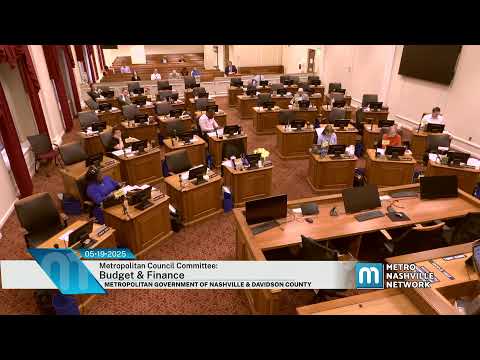
The Budget & Finance Committee approved a substitute to adjust the mixed-income pilot: raising the affordability threshold from 75% to 80% of area median income, extending the affordability period from 10 to 15 years, and moving to a dynamic calculation model. The substitute and the bill as substituted passed unanimously in committee.
The Budget & Finance Committee on a unanimous 11-0 vote approved a substitute to a resolution adjusting the city’s mixed-income pilot program, moving its affordability criteria from 75% to 80% of area median income, extending the abatement period from 10 years to 15 years, and adopting a more dynamic, adjustable calculation model.
The committee passed the substitute so the bill could advance to the full council. Council member Allen, who moved the substitute, said the changes respond to market shifts and feedback from developers: "This substitute makes some changes to the mixed income pilot, which we first introduced in 2022." He added that the program originally had a $3,000,000 cap and that two projects built under the pilot created close to 400 affordable units, evidence, he said, that the concept can work.
The nut graf: supporters said the substitute is intended to make the program more usable in current market conditions; opponents and public commentators raised concerns about program design and whether the changes would yield the intended affordability outcomes.
Supporters described three specific changes: increasing the affordability threshold to 80% of area median income (AMI), extending the affordability/abatement term to 15 years, and replacing a tiered calculation with a dynamic model used in other cities. Council member Allen said staff from the Unified Housing Strategy—"Hannah Davis and Travis"—helped inform the calculations and referenced builder feedback from the first round of applications.
During public comment, Steve Ryder raised a concern about income-averaging and marketable loopholes, saying it could allow households at 100% AMI to appear to meet program rules through averaging and marketing, and he warned that "program design is really important." Committee members noted the substitute represents progress but said more work remains before the policy is finalized.
The substitute passed the committee by voice vote and was then moved as the bill; the resolution as substituted passed in committee 11-0 and will advance to the council floor for further consideration.
The committee record shows the substitute and final approval in committee; no amendments beyond the substitute were recorded in committee discussion.