Get Full Government Meeting Transcripts, Videos, & Alerts Forever!
Get email alerts on the Board Governance And State Legislation topic
No spam. Unsubscribe anytime.
Trainer warns Harrison County board to follow law as recent West Virginia school bills reshape duties and rules
Summary
A presenter from the School Board Association reviewed recent West Virginia legislation and reminded Harrison County board members of the legal limits on individual members’ authority, potential consequences for violations, and a long list of new statutory requirements affecting discipline, special education, safety, and district policies.
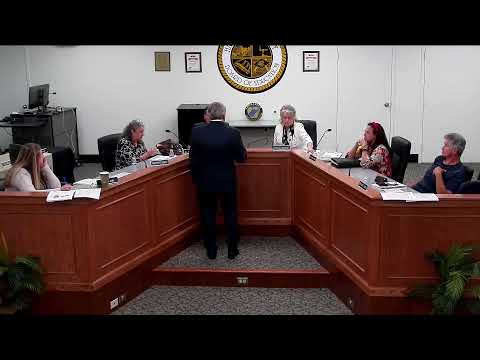
Howard, a presenter from the School Board Association, spent the meeting’s substantive portion briefing the Harrison County Schools board on the legal risks of board members acting outside formal meetings and summarizing recent West Virginia legislation that changes training, discipline, safety and other school rules.
Howard opened by warning of real consequences if boards or individual members stray from law or policy: “If you make some decision as a board and it violates the open meetings law and somebody goes to court, the law says the judge can erase what you did,” he said, describing court rescission and budgetary fallout as a possible outcome. He cited recent state interventions in Tyler, Mingo, Nicholas and Logan counties as examples the board should study.
The presentation’s central point was governance limits and personal liability: board members “individually have no authority of any kind in connection with the schools except for the president,” Howard said, and he repeatedly urged members to direct requests to the superintendent rather than instruct employees directly. He warned that individual investigations or off‑the‑record conversations about personnel or students can compromise due‑process hearings and lead courts to set aside board actions.
Why it matters: Howard said improper individual action can cause legal, financial and reputational harm to the district and to individual board members. He described types of legal exposure including court-ordered reversal of board actions, monetary awards and attorney fees in federal rights cases (for example, IDEA or First Amendment claims), misdemeanor criminal charges for open‑meetings violations, and the possible removal process under West Virginia law.
Howard summarized a long list of enacted bills and administrative changes board members should know: increased mandatory board training (12 hours per year, with some members potentially required to take additional hours by the State Board), new rules about school counselors and staffing ratios, new requirements for special‑education training (including in‑person training for principals, central office personnel and board members), expanded rules for student discipline and exclusions, a new requirement to post a standardized “In God We Trust” display, limits on DEI offices and training, new parental‑rights provisions, and rules governing school security officers and contractors. He noted several bills did not pass (for example, bills to expand immunization exemptions and to mandate locality pay for teachers).
On safety and security, Howard explained the new statute provides three legal options to add armed or plain‑clothes school security personnel: (1) hire designated school safety/security officers as district employees (with training and certification requirements); (2) contract with certified individuals (so‑called West Virginia guardians) subject to sheriff certification and training; or (3) contract with licensed private security firms. He said those officers would have detention authority but not arrest power and that boards choosing those options must meet training and background requirements.
Howard noted several statutory mismatches with district capacity and funding. For example, a new school mapping requirement to support emergency services must meet specific technical formats and is funded at $4,500 per school under the bill while his research showed average mapping costs nearer $7,500 per school, creating an unfunded mandate. He also said newly required counselor ratios and other staffing mandates carry little or no additional state funding in the bills he summarized.
On student discipline, Howard described a complex new exclusion/return process that increases parent involvement and requires procedures such as functional behavior assessments and alternative‑learning accommodations; he warned administrators and principals will need to clarify operational steps quickly because timelines and definitions in the law create potential litigation risk.
Howard emphasized compliance with board policy: “If you’ve got an illegal policy, you don’t have to follow it,” he said, but added that until a policy is changed through the district’s formal policy process, the board must follow its own policies, and the board should avoid ad hoc waivers or emergency shortcuts. He recommended that board members re‑read specific policies (he cited numbered district and state policy sections used as examples) and use the state ethics commission and legal counsel when in doubt.
Several board members asked procedural questions during the presentation (for example, whether a board member may notify a friend about a posted job opening or whether training deadlines differ for members who are not seeking reelection). Howard’s answers reiterated that individual board members may share publicly posted information as private citizens but must not direct personnel or search records, and that training requirements and deadlines had changed in the new laws he summarized.
The briefing closed with Howard offering more detailed summaries and the Association’s newsletter and workshops for members who want in‑depth follow‑up. He offered attendees access to the legal materials and invited board members to contact staff for copies of cases, statutes, and the Association’s longer legislative summary.
Board action: the meeting included no motion or vote on policy or adoption of new rules; Howard’s session was informational only.
The board’s next steps, based on the briefing, would be to (1) review and, where necessary, update local policies to align with new state statutes; (2) direct the superintendent and legal counsel to prepare implementation plans for unfunded mandates and for discipline and special‑education timelines; and (3) ensure board members complete the new training requirements and document compliance.
Ending: Howard left materials and offered a longer written legislative summary; the board thanked him for the briefing and indicated they would consider the materials and follow up through superintendent reports and policy review.