Get Full Government Meeting Transcripts, Videos, & Alerts Forever!
Get email alerts on the Staffing And Class Size topic
No spam. Unsubscribe anytime.
Madison board approves 10 building-based substitute positions amid debate over class sizes and staffing
Summary
The Madison Metropolitan School District board approved funding for 10 dedicated building-based substitute positions while several school-specific staffing amendment requests failed. Public commenters and parents urged the board to add teachers and reduce class sizes, citing understaffing and unmet special-education supports.
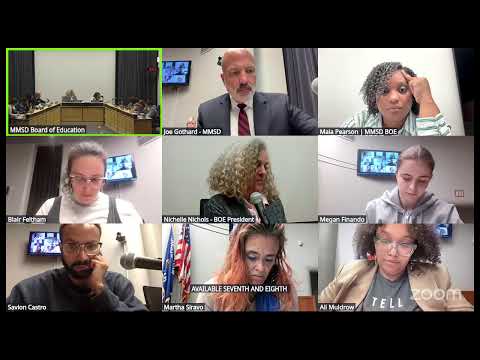
The Madison Metropolitan School District Board of Education on May 19 approved an allocation for 10 full-time-equivalent building-based substitute teachers and corresponding budget increases, after hours of public comment and debate about class sizes and staffing.
The vote came after multiple parents, staff and students urged the board to restore or add classroom teachers and educational assistants. “These staffing increases are necessary,” Tiffany Glass told the board during public input, recounting her family’s experience: “Because of understaffing at West High School, critical supports mandated by his IEP were not implemented… which resulted in the loss of his ability to communicate.”
Why it matters: board members and community speakers said smaller classes and more classroom staff affect daily access to instruction, special-education implementation and extracurricular eligibility. Several board members described the issue as a long-running allocation and “surplusing” process problem that leaves families and teachers unsettled.
Most of the public remarks supported board member Nikki VanderMeelen’s set of amendments to add teachers and educational assistants at specific schools. Speakers included Grace Van Berkel, who identified herself as an early childhood special-education assistant at Lapham Elementary and a parent, and Ariel Hendrickson, a parent of a first grader; both urged passage of amendments tied to reducing class size and restoring staff. Van Berkel said board policy 34 50 on maximum class sizes should be revisited so class sizes “are lower than 27, more in line with kindergarten and first grade, no more than 23 students.”
Board deliberations focused on process as much as substance. Superintendent Dr. Carlton Gothard (identified in the meeting as Dr. Gothard) and human-resources staff described how substitute assignment and licensing rules work, and how district staffing is monitored through summer enrollment updates and the “watch list” that informs allocations before the school year. Human-resources manager Jennifer Trendle described the daily substitute-pickup process through the Frontline system and explained that dedicated building-based substitutes would be assigned to identified schools rather than remain in a district pool.
Discussion versus decision: board members debated whether targeted, school-specific budget amendments (many proposed by VanderMeelen) were the right way to address systemic allocation concerns. Several board members said they favor a broader policy review of class-size and allocation procedures rather than ad-hoc, school-specific additions. Board member Muldrow said she supported the district’s general privacy and equity aims but abstained on some votes because of timing and process concerns. Board member Mosner-Feltham said she supported the substitute amendment as a way to give schools flexibility for short-notice instructional coverage.
Outcome and related votes: the motion to allocate 10 FTE building-based substitute positions (agenda item 9.4) was approved by the board during the meeting. Multiple other school-targeted staffing amendments (including line items proposing new teacher allocations for Lapham, O'Keeffe, East High, La Follette and West High) were debated and ultimately failed to win board approval. The board consolidated remaining consent motions and approved the consent agenda following the amendment votes.
Clarifying details: administration said the substitute positions, if funded, will be posted as positions for hire and then assigned to schools identified by HR in collaboration with associate superintendents. The district noted state licensing rules limit the length a substitute without a license may serve in a single classroom (about 45 days), which constrains how long a building-based substitute can function as a long-term classroom teacher. Dr. Gothard clarified that the 9.4 amendment will add budgeted expenditures beyond the previously budgeted unallocated pool rather than drawing down that pool.
What’s next: several board members asked administration for a board-level review of allocation and surplusing processes, and for clearer data on retention of surplus teachers and on enrollment projections that drive staffing. Parents and staff indicated they will continue to press for policy changes on class-size limits.
Ending note: the discussion cut across student access to special education services, teacher stability and district budget trade-offs; the board left the larger policy questions for future meetings while approving a targeted step to add substitute capacity for schools.