Get Full Government Meeting Transcripts, Videos, & Alerts Forever!
Get email alerts on the Epa Reclassification Cra topic
No spam. Unsubscribe anytime.
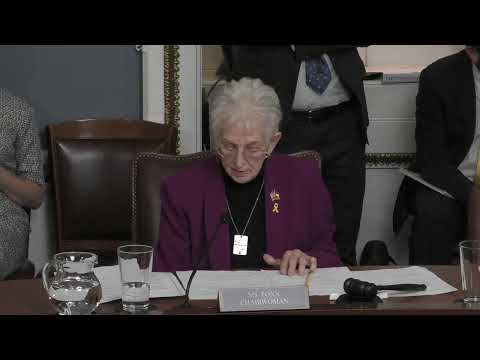
Rules Committee advances CRA to overturn EPA 'once‑in/always‑in' reclassification rule
Summary
The House Rules Committee reported a closed rule to permit floor consideration of S.J. Res. 31, a CRA resolution that would disapprove an EPA rule reinstating a "once‑in/always‑in" policy for major sources under Clean Air Act section 112.
The House Committee on Rules voted to report a closed rule for floor consideration of S.J. Res. 31, which would use the Congressional Review Act to disapprove an Environmental Protection Agency rule that reinstates a "once‑in/always‑in" classification for major sources under the Clean Air Act.
Why it matters: Supporters said overturning the EPA's 2024 rule would restore incentives for facilities to lower emissions and remove a disincentive that kept sources labeled "major" from undertaking emissions‑reducing investments. Opponents said rescission would permit large industrial facilities to evade stricter pollution controls and risk increases in hazardous air pollutants that harm public health.
Chairman Guthrie testified in support of S.J. Res. 31, calling the EPA rule a "wrong‑headed approach" that makes a major‑source classification "a one‑way street" and therefore "creates a disincentive for businesses to take steps to reduce their emissions." Guthrie said the 2018–2020 Trump‑era policy permitted reclassification to area source status after demonstrated emissions reductions, and he characterized the Biden‑era rule as reinstating a policy that "penalizes" companies that reduce pollution.
Representative Tonko, speaking for the Energy and Commerce ranking member, strongly opposed S.J. Res. 31. Tonko said that the rule protects communities from seven especially hazardous pollutants (including mercury, alkylated lead and PCBs) and warned the CRA "would hamstring EPA's ability to protect the public from the worst of the worst cancer causing toxic air pollutants." He said rescinding the rule could allow approximately 1,800 facilities to stop operating long‑standing pollution control equipment and increase toxic emissions.
Members questioned witnesses about classification mechanics and regulatory consequences. Supporters maintained reclassification as an area source would not exempt facilities from the Clean Air Act’s requirements but would permit less onerous, more appropriate controls when emissions fall below statutory major‑source thresholds (testimony cited thresholds of 10 tons per year for a single hazardous air pollutant and 25 tons per year for combinations). Opponents stressed the health risks from pollutants identified in the Clean Air Act amendments of 1990 and warned of higher local exposures, particularly in environmental justice communities.
Committee action: The committee adopted a closed rule to permit floor consideration of S.J. Res. 31 along with S.J. Res. 13. The committee did not vote on the underlying resolution; a committee motion to report the rule passed by recorded vote (7 yeas, 3 nays). The committee recessed following the panel's testimony.
What to watch: If the House takes up S.J. Res. 31, the debate is likely to center on tradeoffs between regulatory burden on industry and health protections for communities near large industrial emitters. Witnesses and members cited both technical details of classification and broader questions about incentives for cleaner operations.