Get Full Government Meeting Transcripts, Videos, & Alerts Forever!
Get email alerts on the Vacant Building Registration topic
No spam. Unsubscribe anytime.
Auburn councilors and staff weigh vacant building registration, fees and exemptions
Summary
City staff proposed a vacant building registration ordinance intended to improve emergency response and encourage property reuse; councilors pressed for caps, waiver procedures and clearer definitions for 'vacant' versus 'abandoned.'
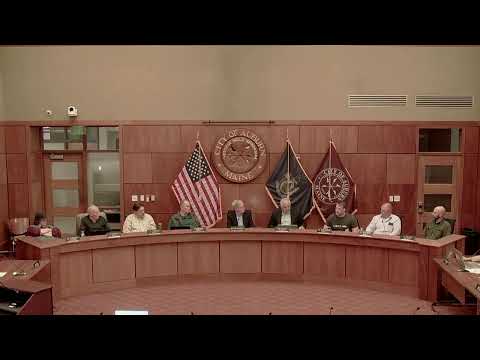
At a May 19 Auburn City Council workshop, Eric Cousins, Auburn public services director, and Chris Bowden presented a draft ordinance to require registration and periodic inspection of vacant buildings, saying the measure would improve neighborhood awareness, aid first responders and could incentivize property owners to return units to service.
The measure would require a registration that is renewed at six-month intervals and, in many cases, impose a fee schedule that increases with time and building size; Cousins said census-based housing-study estimates suggest 6–7% of units in Auburn may be vacant — “that would put us at, you know, over 500 units, not necessarily buildings,” — and the city currently lacks a reliable registry.
Councilors said the registry could help emergency responders, but they also pressed for clearer definitions, caps on escalating fees and procedures to avoid penalizing owners who are maintaining property for legitimate reasons. Councilor Adam Platts asked how many properties the ordinance would affect and emphasized the city needs hard data; Platts also suggested a cap on long escalations, proposing examples such as limiting the highest fees to levels like $12,000 or $50,000 rather than allowing indefinite doubling.
Councilman (Councilor) Oates and several other councilors argued that owners who keep property maintained but temporarily vacant — for business reasons or because they are collecting lease payments — should not face punitive charges, and urged exceptions or waiver procedures for commercially unmarketable properties. Several councilors asked for a way to suspend fees while owners pull building permits or undertake renovations.
The city’s fire chief told the council the registry itself is important for emergency response and agreed the fee structure should primarily cover inspection and administrative costs rather than serve solely as a punitive measure: “The registry for both vacant and abandoned is hugely important from emergency response standpoint,” the chief said, noting the difficulty of contacting responsible parties during emergencies.
Staff explained the draft separates lower-impact vacant buildings from higher-impact vacant or abandoned large buildings by applying higher fees to larger or higher-risk structures; Cousins said the models used from other municipalities often require re-registration every six or 12 months and that Auburn’s draft leans toward the shorter timeframe to keep contact information current.
Councilors raised concerns about specific draft language. Among the changes requested were: a clearer occupancy threshold for the “periodically occupied” exemption (for example, a specific number of days per year), replacing “seasonal residence” with a defined term like “seasonal dwelling,” explicit language on “constructive occupation” (situations where leases are paid but units are vacant), and consistent naming for enforcement offices in the ordinance text. Several councilors suggested a three-tier approach to fees: (1) low-fee vacant buildings that are well-maintained, (2) abandoned buildings with escalating penalties, and (3) a high-impact vacant-building tier with higher initial fees for structures that pose a greater hazard.
No formal vote was taken. Mayor Jeff Hyman and staff said they would revise the draft to address council concerns and return for another workshop rather than proceeding immediately to a first reading. Cousins said staff will consider caps, waiver procedures, clearer definitions, and a fee schedule that distinguishes low-impact vacant buildings from higher-risk abandoned properties.
The workshop discussion combined policy goals — improved public safety and neighborhood information — with practical concerns about enforcement, administrative cost recovery and the risk of driving property turnover in ways that could be counterproductive. Councilors repeatedly asked staff to preserve an ability to suspend fees when owners demonstrate active steps toward renovation or have legitimate, documented reasons for temporary vacancy.
The council directed staff to revise the draft ordinance based on workshop feedback and to return with a revised proposal for further review.