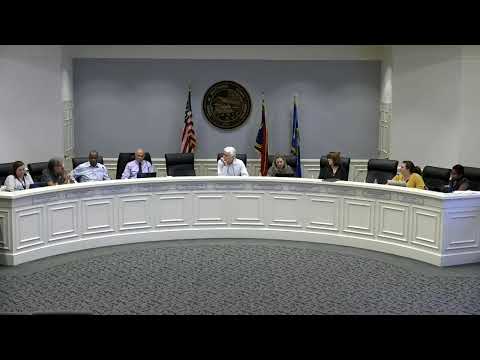
Matthews officials dissect new bond debt-service and options to limit tax increase
Loading...
Summary
Town staff and commissioners reviewed bond-related debt-service numbers, discussed a proposed tax increase tied to the bonds, and asked staff to model fund-balance options that could reduce or defer the tax impact.
Town Manager Becky Hall and finance staff laid out how the town’s recently sold bonds will affect Matthews’ operating budget and tax rate, while commissioners pressed staff for options to avoid or delay a proposed tax increase.
The immediate figures presented to the Board of Commissioners included an estimated $909,254 annual payment for the new bond and a staff-calculated “total cost to service the new bond debt” of $1,812,000 in the current plan. Hall told commissioners the town had committed to bring a budget in which “the only tax increase that the citizens would see if we move forward with the bonds would be to pay the debt service on the bonds.”
The stakes and the math mattered to commissioners. Commissioner Threep asked for a line-by-line breakdown of principal and interest and how it translated into the 1.3‑cent tax increase discussed by the board. Finance staff clarified the town is paying both principal and interest in the coming fiscal year and that the interest portion will change annually. Teresa (staff member) gave the figure for the new bond component as $909,254 and said, “The total cost to service the new bond debt is 1,812,000.”
Why it matters: Commissioners asked whether the town could avoid the tax increase by using fund balance (one-time dollars) or cutting recurring costs. Hall and finance staff advised caution. Hall said using one-time fund balance to pay an ongoing debt-service obligation is “not a best practice” because it merely postpones the obligation and risks putting the town into a deficit in future years. She offered instead to prepare a conservative estimate of expected year-end fund balance for the board and return with scenarios that show (a) how much fund balance would have to be used to offset the bond-related tax increase for one year and (b) trade-offs for operations if the board instead chose to use recurring savings.
Discussion highlights: Commissioners suggested options including delaying vehicle leases, reducing some recurring line items, or applying excess fund balance to a one-time project instead of reducing the tax burden. Commissioner Urban noted that delaying recurring purchases could create service or safety impacts (for example, the police fleet replacement cycle) and that cutting recurring costs of the magnitude required would be difficult without broader operational impacts.
Next steps: Staff agreed to deliver a conservative fund-balance estimate and at least one “what-if” scenario in time for the next budget work session so the board can decide whether to (a) accept the proposed tax rate tied to bond debt-service or (b) use one-time resources to reduce or delay the increase. The board voted later in the meeting to move into a closed session pursuant to North Carolina General Statute 143-318.11(a)(6).