Get Full Government Meeting Transcripts, Videos, & Alerts Forever!
Get email alerts on the Critical Minerals Nonpartisanship topic
No spam. Unsubscribe anytime.
Senator asks USGS to keep critical-minerals work nonpartisan during Energy committee hearing
Summary
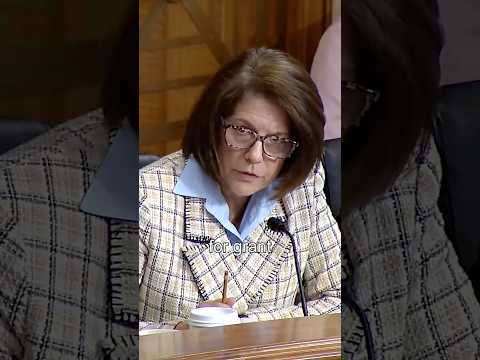
Senator (unnamed) asked a U.S. Geological Survey scientist (unnamed) at a Senate Energy and Natural Resources Committee hearing to pledge that the agency would not favor "blue states" over "red states" if grant funding were reduced.
Senator (unnamed) asked a U.S. Geological Survey scientist (unnamed) at a Senate Energy and Natural Resources Committee hearing to commit that, if funding cuts force the agency to reduce grant support, it would not “pick blue states over red states.”
The senator posed the concern directly: “Will you promise me this? If you once you get in there and the cuts are made and there are gonna be significant cuts to you, including cuts to grant funding, that when you whatever little funds that you do have for grant funding, that you do not make a decision that you're gonna pick blue states over red states?”
The USGS scientist replied that the agency would need to examine specifics but framed critical minerals work as a nonpartisan scientific priority. “Senator, I need to take a look at that. I can envision when we do geology and funding and cooperation between state, federal, that there's a blue state, red state senator. Let me just go on the record and say, Critical Minerals, our energy, our rare earth, our technology metals, I hope, and sometimes secretly, I pray that this is the greatest nonpartisan issue before us in our time. We have to” (comment ends mid-sentence in the transcript).
When the senator asked for a clear commitment, the USGS scientist said: “Senator, we are scientists, and if we get into the weeds of politics, it kinda spoil our credibility, and I would never do that to the USGS.” The exchange concluded with the senator saying, “Thank you.”
The transcript contains no formal motion, vote, or directive recorded in this exchange, and no specifics about the size or source of the possible funding cuts were provided during the remarks. The senator’s question referenced hypothetical “significant cuts” and concern about partisan distribution of limited grant funding; the USGS scientist offered an informal pledge of nonpartisanship rather than a formal agency policy statement.
This was a brief, verbal exchange during the hearing record; the transcript does not show follow-up actions, commitments in writing, or any committee vote tied to the topic.