Get Full Government Meeting Transcripts, Videos, & Alerts Forever!
Get email alerts on the Budget And Capital Planning topic
No spam. Unsubscribe anytime.
West Geauga board approves 5-year forecast update, moves $18.6 million into capital reserves
Summary
The West Geauga Local Schools Board approved a five-year forecast update and a second capital projects fund, authorizing an $18.6 million transfer to pay for long-term building repairs and planned projects including $6 million earmarked for middle school renovations.
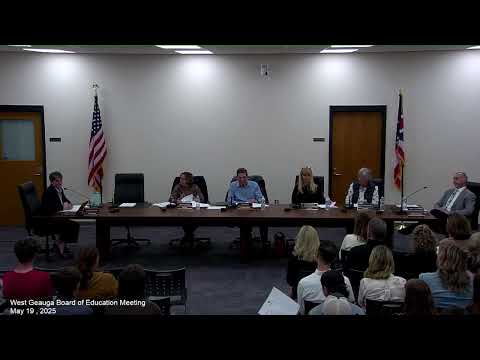
The West Geauga Local Schools Board of Education on Monday approved an updated five-year forecast and created a second capital projects fund, authorizing an $18.6 million transfer into capital reserves to cover planned repairs and long-term building projects.
The action, approved unanimously by the board, establishes a dedicated capital account and sets aside roughly $6 million of the transfer for middle school renovations, the district’s treasurer identified during the meeting.
The forecast update and the fund transfer come as the district works through competing pressures: flat or reduced increases in state aid under the current House budget proposals, rising operating costs and an anticipated increase in property valuations in 2026. Finance staff said the district expects revenues to grow modestly (about 1.8 percent) while expenditures are projected to rise faster (about 5.7 percent), driven largely by wages, benefits and inflation on supplies and services.
School finance staff presented the assumptions behind the forecast and a multi-year capital plan the board approved. The plan lists near-term projects already contracted (roofs, lighting and doors), medium-term priorities such as roofing across multiple buildings (an estimate of about $8.5 million was cited), replacement of aging univent HVAC units (about $1.1 million), a campus water treatment plant (approximately $3.7 million) and surface projects including parking lots and turf. The treasurer said the district will stage projects and bring individual bids and contracts back to the board for authorization.
Board members and staff framed the transfer as prudent planning while the board has postponed placing a bond measure on the ballot. “We are going to transfer a total of $18,600,000 to our capital plan,” the district’s finance presenter said during the meeting, explaining the move was intended to fund roofing, HVAC, generators, windows and other infrastructure so buildings remain “safe, warm and dry.” The presenter added the board’s action is to approve the plan and the transfer; individual projects will come back for separate approvals and contracts.
The board-approved plan also includes a secondary capital account (the “070” account in the district’s fund numbering) to hold funds for other buildings across campus and over time. Staff said the district may hold funds up to 10 years for long-range projects; unspent funds would revert to the general fund if not committed, and the board retains authority to move money back into the general fund before contracts are issued.
Staff warned the district’s fiscal outlook is sensitive to actions in Columbus. The presenter flagged House Bill 96 and changes proposed to the state’s Fair School Funding Plan, noting the House budget carried reductions in planned funding and that a broad, expanded voucher program in the biennial budget is diverting education dollars. Officials identified two statutory-level items they are monitoring closely: a proposal to cap carryover cash at 30 percent (over 400 districts currently exceed that threshold, staff said) and language that could give the county budget commission greater authority over voter-approved levies.
Other details presented to the board included: state aid currently accounts for roughly 24 percent of district revenues, locally raised property taxes make up the majority; two collective bargaining agreements recently settled with multi-year pay steps and scheduled increases (presenter cited a 3.2 percent increase in the first year, 3.3 percent the next year and 3.5 percent thereafter before settling to a long-term 2.5 percent assumption); a roughly $1.3 million transfer to a severance/pay-out reserve to cover retiree payouts; and a modest projected decline in enrollment (on the order of about 25–30 students annually, staff said).
The board approved the related resolutions on the consent agenda: resolution establishing the second capital projects fund and authorizing transfers, a resolution approving appropriation adjustments tied to the transfers, the five-year forecast update and formal approval of the district capital plan. Roll-call votes on those items were unanimous in favor.
Board members asked staff to continue monitoring state budget actions and the joint tax commission’s work on property tax reform, and to return with more detailed bid packages and contract recommendations for each capital project before any construction begins. Staff said some projects are already staged for summer work (roofs, lighting, playground equipment procurement and site work) and that bidding timelines will be provided when available.
Implementation risks identified during the meeting included uncertainty in the final state budget (and its treatment of the Fair School Funding Plan and vouchers), evolving statutory proposals around carryover caps and levy suspension authority, supply-chain timing for long-lead items (playground equipment and HVAC parts), and schedule conflicts with planned heavy construction (for example, turf installation affecting timing for resurfacing tracks and parking lots).