Get Full Government Meeting Transcripts, Videos, & Alerts Forever!
Get email alerts on the Food Labeling Shrimp topic
No spam. Unsubscribe anytime.
Committee adopts substitute to require clear labeling for imported shrimp; enforcement and liability questions raised
Summary
The committee adopted a substitute for Senate Bill 823 to require clear origin labeling for shrimp sold by food service suppliers and wholesalers and to bar representing imported shrimp as Texas, American or Gulf shrimp; witnesses and senators debated who should bear liability and how enforcement would work.
The committee adopted a substitute for Senate Bill 823, which requires that shrimp sold in Texas by food service suppliers, wholesalers or distributors include clear and conspicuous labeling when the shrimp are imported.
The substitute bars restaurants and other sellers from labeling or representing imported shrimp as Texas shrimp, American shrimp, domestic shrimp, or Gulf shrimp, and aligns the definition of imported shrimp with federal country‑of‑origin labeling standards.
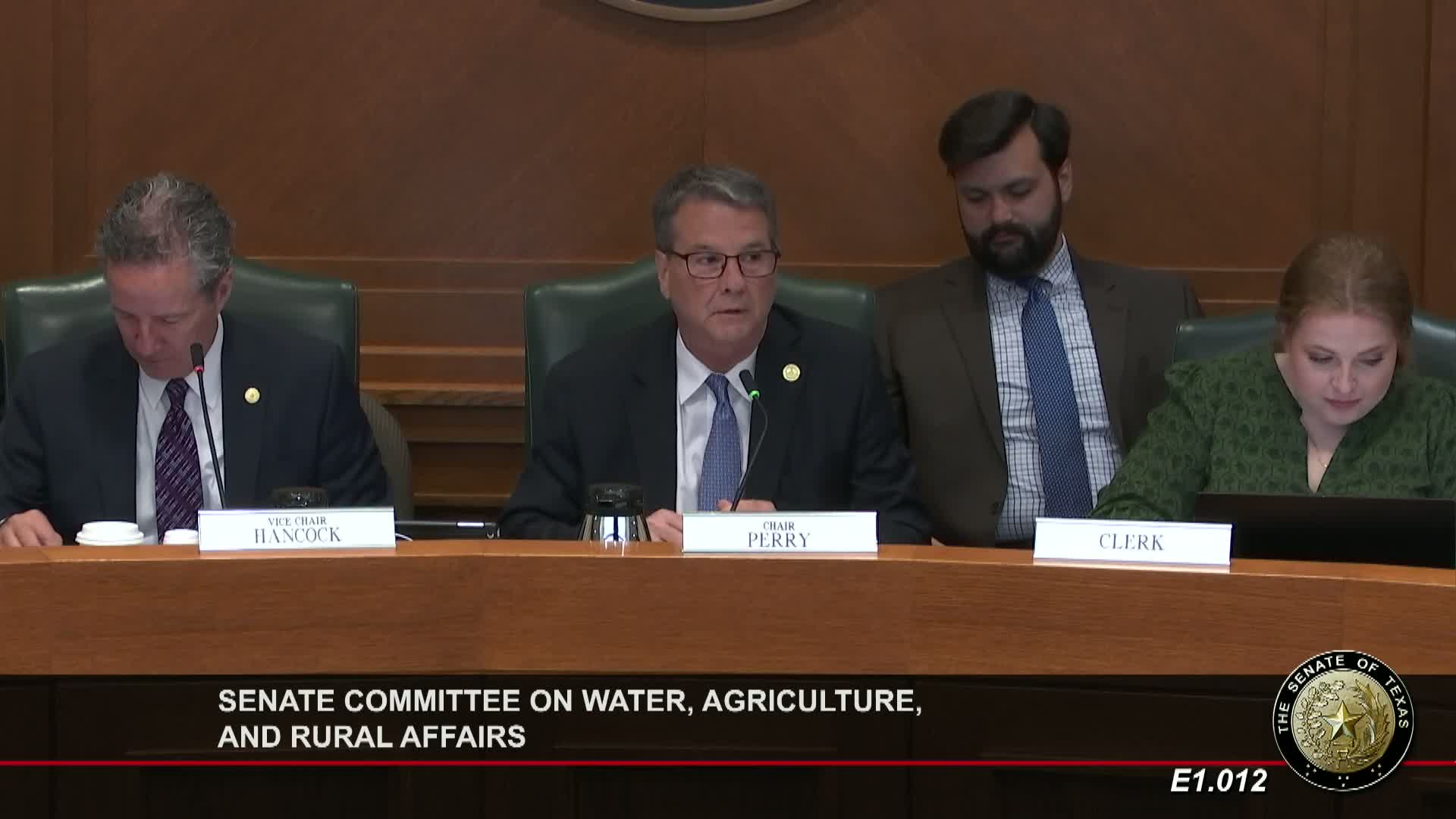
Senators and witnesses raised enforcement and allocation‑of‑liability questions during the hearing. Vice Chair Hancock questioned why wholesalers — often a pass‑through entity — would be accountable when they typically receive product already labeled by a supplier. Hancock asked whether wholesalers are able to relabel products; the line of questioning probed whether the substitute appropriately targeted the party that could most readily correct mislabeling.
Timothy Stevenson of the Department of State Health Services, a resource witness, told the committee that relabeling in the food industry typically involves processing or manufacturing steps. “It’s the same in the food industry — if they’re relabeling, relabeling requires a processing manufacturing or process,” Stevenson said, explaining why wholesalers can sometimes be regulated when they change labels or package products.
Kelsey Erickson Streifert of the Texas Restaurant Association said the association had worked with the sponsor on the substitute and “we’re happy with the language as it stands and happy to answer any questions.” She indicated the association supported the revised enforcement language, which allows local regulatory entities such as municipalities or counties to impose administrative penalties on permit holders who violate labeling requirements, while the bill excludes packaged shrimp sold through grocery retail outlets.
The substitute includes an affirmative‑defense provision for good‑faith reliance on supply‑chain information; in committee questioning, senators explored examples of good faith — for instance, a restaurant that relied on a manufacturer label that did not indicate imported product would have a possible defense.
Committee members also discussed whether existing law already made relabeling illegal and whether HB 823 (the substitute) mainly clarified enforcement authority for health departments and local regulators rather than creating a new private cause of action.
The committee adopted the committee substitute; the substitute will be reported to the Senate with the committee’s action noted on the record.
No final floor disposition was decided during the hearing; the committee’s adoption of the substitute was the principal committee action recorded.