Get AI Briefings, Transcripts & Alerts on Local & National Government Meetings — Forever.
Senate committee hears proposal to increase penalties for repeated denials of court-ordered child possession
Loading...
Summary
House Bill 3181 would strengthen consequences for parents who repeatedly deny court-ordered possession or access to children, including limiting probation and authorizing modification of custody or additional make-up time. Family-court judges and parents testified in favor; the committee left the bill pending.
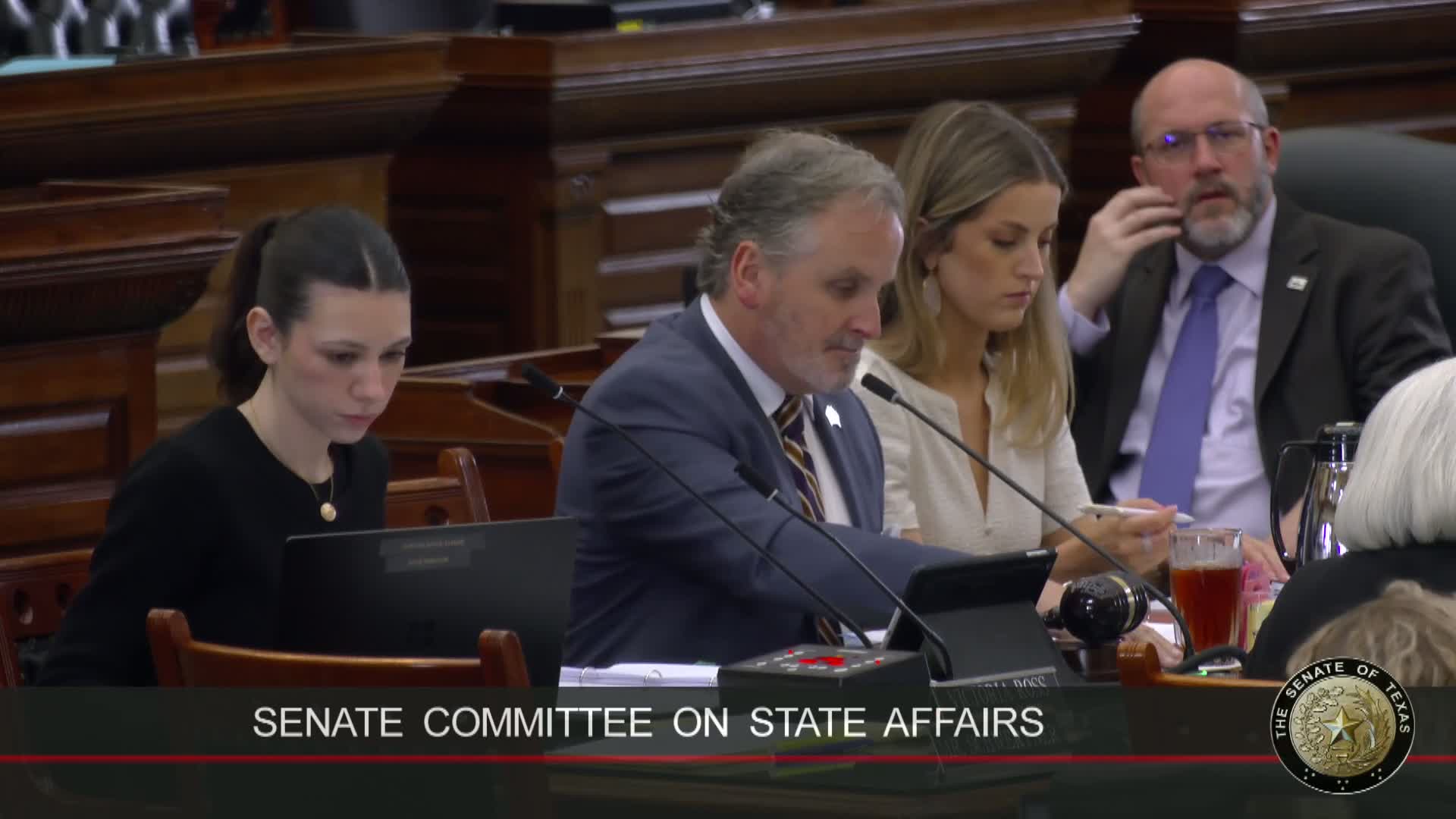
House Bill 3181, presented to the Senate Committee on State Affairs, would change enforcement tools available to courts when a parent repeatedly denies court-ordered possession or access to a child. The bill targets repeat violations by permitting enhanced consequences after three prior contempt findings for denying possession or access.
"By law, a child's best interest is to be prioritized when determining access to and possession of a child," said Senator Paxton, who explained the measure's aims. Carl Hayes, a family court judge who said he drafted the legislation, described existing contempt remedies as difficult for many parents to use and said judges currently have too much discretionary latitude to avoid meaningful penalties. "If I find all three of those things, I find the person in contempt," Hayes explained about the elements for contempt in enforcement hearings. He said short confinement sentences can be effective to deter repeat violators.
Witnesses described the bill's key provisions: courts could modify conservatorship or possession orders after repeated contempt findings; additional access ordered to make up for denied time could total twice the duration of time lost; and the court would face limits on waiving attorney's fees for repeat offenders. Hayes noted contempt can carry up to six months confinement and a $500 fine per violation under current law. Supporters argued existing remedies are costly and impractical for many parents who cannot afford repeated contempt actions; one witness said prosecutorial and law-enforcement responses to custody-interference complaints vary and often leave parents with only civil enforcement options.
Senators questioned how the measure would operate in practice, including whether three violations is an appropriate threshold and how the rule would interact with contempt procedure and probation practices. The committee heard detailed testimony from Judge Hayes, parents who said they had multiple violations and enforcement difficulties, and others advocating for both civil- and criminal-side fixes to enforcement. The committee closed public testimony and left the bill pending.