Get Full Government Meeting Transcripts, Videos, & Alerts Forever!
Get email alerts on the Criminal Justice Credit Card Fraud topic
No spam. Unsubscribe anytime.
Senate committee hears bill to align credit-card-data fraud statute with venue, intent rules
Summary
The Senate Committee on State Affairs heard House Bill 272, which would change how prosecutors bring cases for fraudulent possession or use of credit- or debit-card information so those cases can be tried in more counties and with broader proof of intent. Law enforcement witnesses supported the change; the bill was left pending.
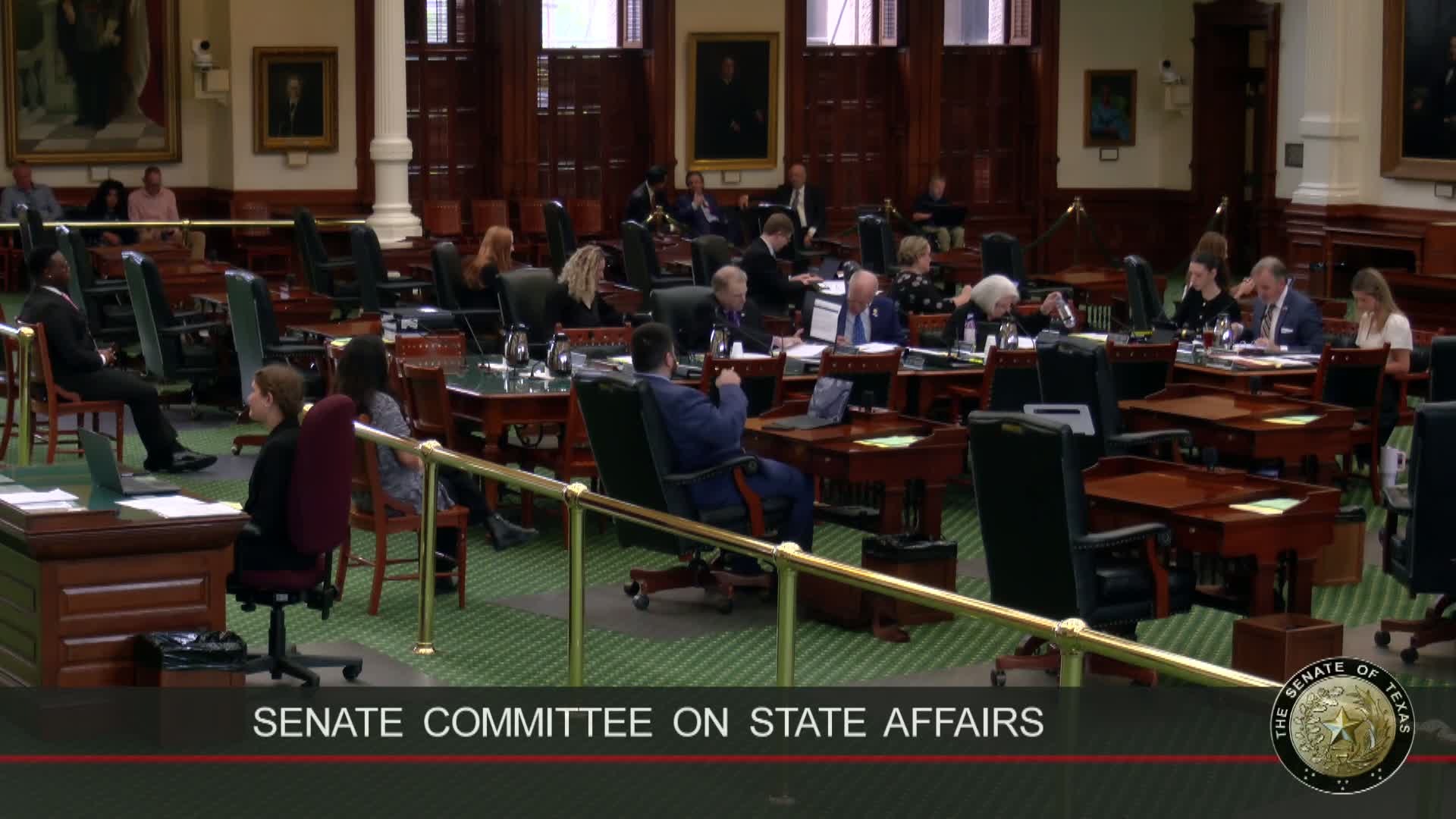
House Bill 272, carried to the Senate as a companion to Senate Bill 807, was presented to the Senate Committee on State Affairs as a measure to change prosecution rules for fraudulent possession or use of credit-card or debit-card information.
The bill would align a 2019 statute that criminalizes possession or fraudulent use of card data with an earlier 2019 statute that expanded venue and how prosecutors may prove intent. "The counterfeit credit card statute has pretty much become the gold standard for Texas law enforcement across the state for prosecuting credit card crimes," said Adam Colby, director of the Texas Financial Crimes Intelligence Center.
The measure's sponsor said the change is intended to make prosecutions easier when card data are misused without the physical card and to allow cases to be brought either where the offense occurred or in the victim's county of residence, matching the venue flexibility created by a separate 2019 card-abuse statute. The sponsor noted that Texas ranked eighth in credit-card fraud, with 45,206 reports in 2022.
In committee discussion, witnesses and senators described the older fraudulent-use statute as designed more for identity-theft cases and said the 2019 card statute had become the model for prosecuting card-related crimes. No members of the public testified for or against the bill during the hearing; the committee called and heard resource testimony from Adam Colby.
The committee closed public testimony and left the bill pending at this hearing for further consideration.
Why it matters: aligning venue and intent provisions can affect where prosecutors bring cases and how they establish criminal intent in digital credit-card fraud prosecutions, which proponents said will assist law enforcement statewide.