Get Full Government Meeting Transcripts, Videos, & Alerts Forever!
Get email alerts on the Rural Economic Development topic
No spam. Unsubscribe anytime.
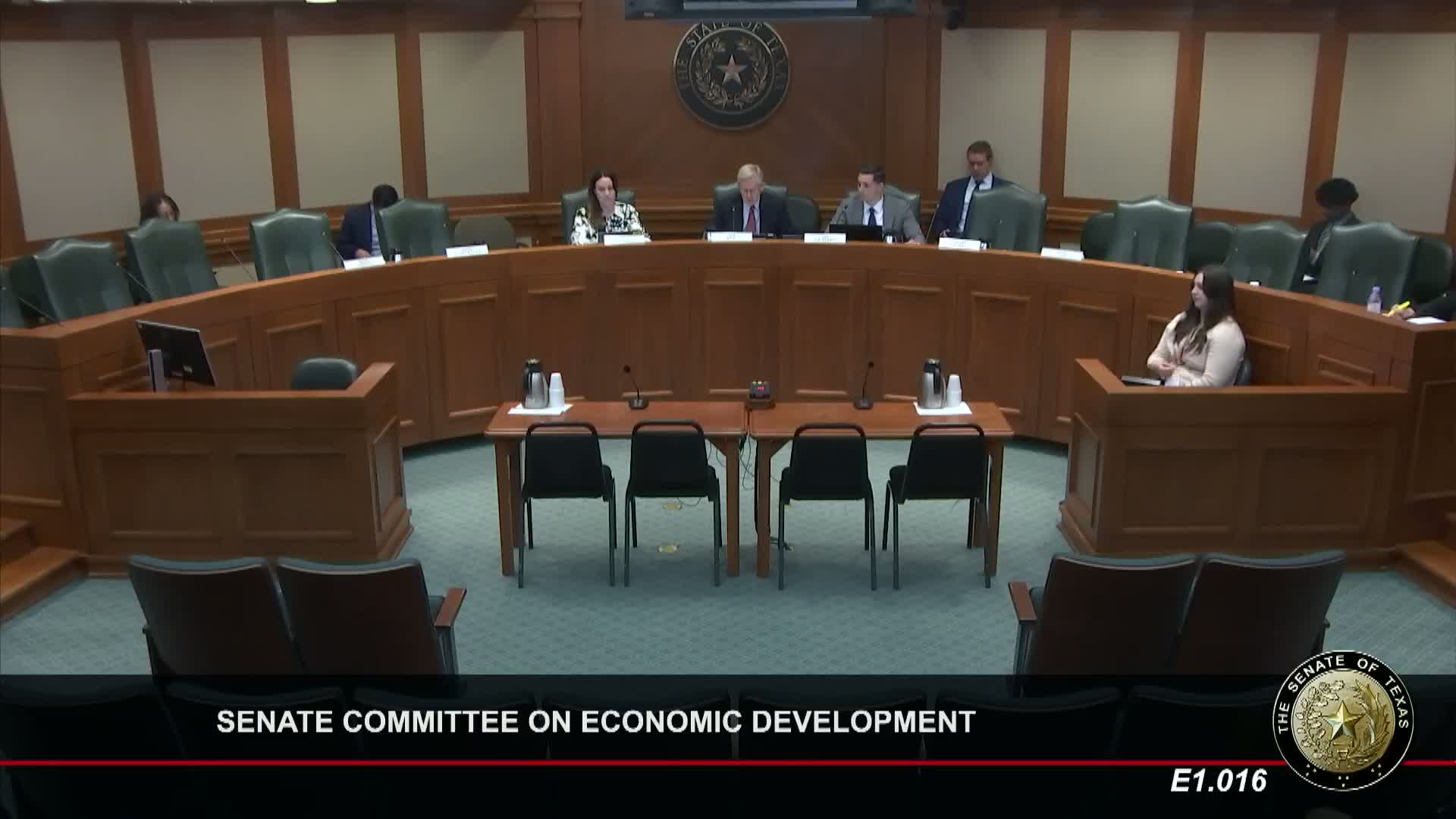
Senate panel backs bill to expand rural economic development fund eligibility
Summary
The committee advanced House Bill 27 65 to widen eligibility for the Rural Economic Development and Investment Program, aligning Texas definitions with HUD and increasing population limits, allowing more rural communities and infrastructure projects to apply for loans and grants.
House Bill 27 65, sponsored in the Senate by Sen. Zaffirini, would expand eligibility and modernize the Rural Economic Development and Investment Program to serve larger rural counties and additional types of projects.
The bill matters because it would raise the population cap for eligible counties from 75,000 to 200,000, align Texas’ definition of rural counties with the U.S. Department of Housing and Urban Development’s Community Development Block Grant program, and broaden who may receive financial assistance to include municipal utilities, certain political subdivisions and lenders that primarily represent municipalities or counties.
Sen. Dean Zaffirini told the Committee the Legislature must expand the program to meet growing infrastructure and economic development needs in rural Texas. "Areas facing infrastructure gaps and limited access to capital for economic growth projects require financial assistance to support projects that attract private investment, develop infrastructure, and create jobs," she said.
Drew Fuller, associate legislative director for the Texas Farm Bureau, testified in support, saying the bill "will help bridge infrastructure gaps and boost economic growth in our communities." Rob Hughes, executive director of the Texas Forestry Association, described recent road washouts that delayed timber transport and said the fund could pay to upgrade roads and utilities that enable forestry and other rural industries to operate and attract private investment.
The bill would add mineral extraction activities as an allowable use and remove a requirement that loan repayments begin within 90 days, instead allowing the Texas Department of Agriculture to adopt repayment rules. It would also permit the department to use fund money for new loans and grants if the required minimum fund balance is maintained and apply a $1,000,000 cap separately to grants and to total outstanding loan amounts per person for new loans or grants.
Committee members asked no formal questions during public testimony. The committee voted to report the bill favorably to the full Senate with a 4-0 roll call and recommended it for the local and uncontested calendar.
If enacted, the bill would change program eligibility and repayment rules but would not itself appropriate money; bill language as discussed would apply only to future loans and grants.