
Committee advances discussion on HB 96 to create Home Care Employment Standards Advisory Board
Get AI-powered insights, summaries, and transcripts
Subscribe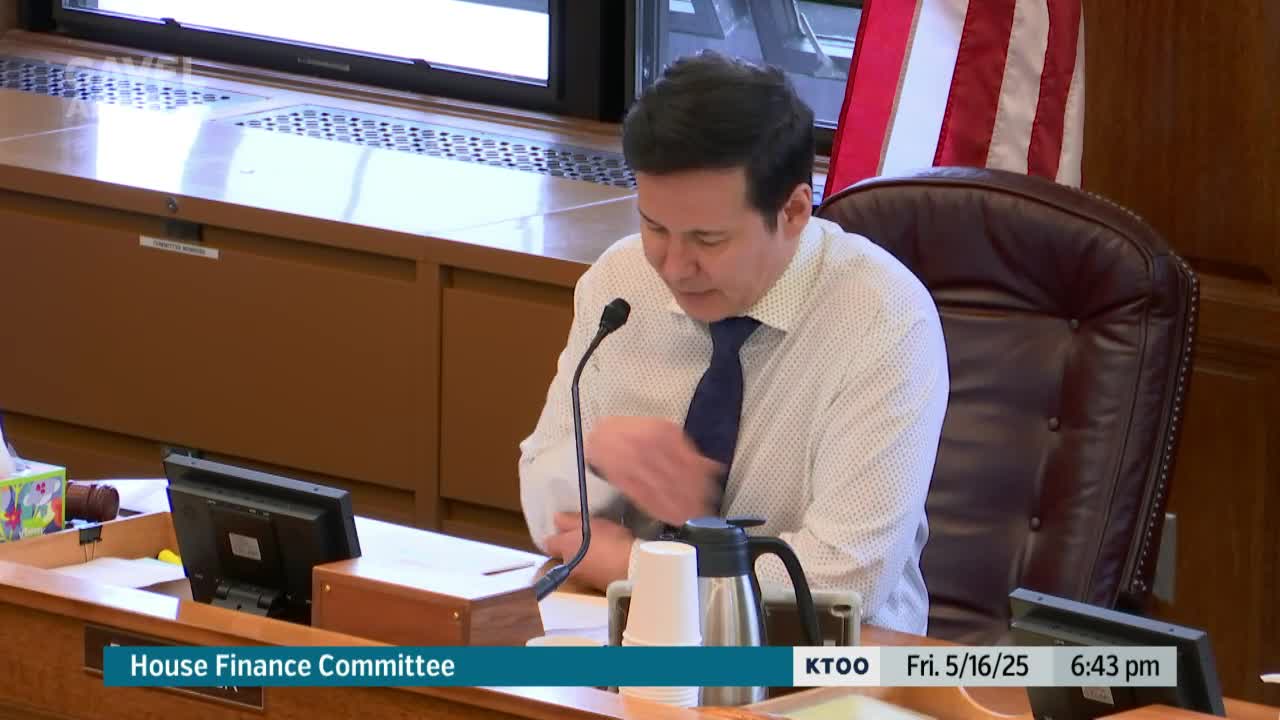
Summary
Lawmakers heard invited testimony and public comment on HB 96, a bill to create a Home Care Employment Standards Advisory Board and a labor‑rate requirement that would direct a portion of Medicaid personal care rates to caregiver pay; department officials described federal Medicaid access rules and fiscal staff presented implementation costs.
Representative Mike Prax (sponsor) introduced House Bill 96 on May 16, saying Alaska is facing a growing demand for home care and that the bill would establish a Home Care Employment Standards Advisory Board to recommend workforce and rate policies for Medicaid personal care services.
Alexis Rodich, testifying for the Alaska Caregivers Union (SEIU 775), told the committee HB 96 would strengthen the direct‑care workforce by creating a statewide labor‑rate requirement and a stakeholder advisory body. Rodich said a 70 percent “labor rate” of the Medicaid personal‑care service payment should be directed to direct‑care worker pay and benefits in Alaska’s predominantly consumer‑directed service model; the bill text sets a labor‑rate target and a path to higher shares over time.
Rodich summarized workforce pressures: Alaska’s aging population, rising acuity and declining pool of working‑age caregivers increase demand, particularly in rural regions. She cited a Department of Health analysis (2019) indicating in‑home care is substantially less costly than nursing‑home or congregate care and said investing in home‑care worker pay would also boost local economies—citing literature that each $1 in caregiver pay can generate $1.60–$2.10 in local economic activity.
Tony Newman, director of the Division of Senior and Disability Services at the Department of Health, told the committee the bill aligns with an upcoming federal requirement (Medicaid access/“insuring access” rule) that expects states to establish advisory structures and assess whether Medicaid payment rates permit sufficient provider capacity. Newman said the federal rule contemplates ensuring a specific share of Medicaid personal‑care payments reach workers (the department has described an eventual 80% target in federal guidance) and that parts of the federal schedule phase in over several years; the federal compliance horizon discussed in testimony extends to 2030 for some provisions.
Fiscal staff presented a fiscal note for the Department of Health that requests funding for two health program manager positions and modest operating costs: a FY26 operating request of about $163,300 (approximately $81,600 federal receipts and $81,700 general‑fund match) to add one position in FY26 and a second position in FY27, with higher ongoing costs thereafter for regulation writing and program implementation.
Members asked about the bill’s mechanics and scope: whether the labor‑rate requirement applies to consumer‑directed agencies (Rodich said most Alaska personal‑care services are delivered via consumer‑directed agency with lower overhead), how the board’s recommendations would interact with Medicaid rate‑setting and federal requirements, and whether the proposal would help rural communities keep people in place rather than relocating to urban centers for care. Newman said the department is working on implementation details and emphasized the bill would help the state meet the federal Medicaid access rule’s expectations.
Representative Prox asked the committee to set an amendment deadline; Cochair Foster set a deadline for amendments for May 17 at 5 p.m., with flexibility if additional time is needed. The committee indicated support for further work to refine fiscal and implementation details and to coordinate with federal guidance.
Ending: The committee set an amendment deadline and asked the Department of Health to assist with technical implementation details and to coordinate rule‑making timelines with the federal Medicaid access rule.