Get Full Government Meeting Transcripts, Videos, & Alerts Forever!
Get email alerts on the Regional Planning Transit Recovery topic
No spam. Unsubscribe anytime.
MTC vice chair outlines Plan Bay Area goals, warns transit operators face steep operating shortfalls
Summary
MTC Vice Chair Stephanie Moulton Peters presented Plan Bay Area 2050+ priorities and warned that major Bay Area transit operators face a multi‑hundred million‑dollar annual shortfall unless new revenues or cost recovery measures are put in place.
Metropolitan Transportation Commission leaders briefed the California Transportation Commission on Plan Bay Area priorities and the region’s transit recovery challenges.
Stephanie Moulton Peters, vice chair of the Metropolitan Transportation Commission (MTC), described Plan Bay Area 2050+ as the region’s long‑range blueprint that links transportation, housing, the economy and the environment. “The plan should ensure that by the year 2050, the Bay Area is affordable, connected, diverse, healthy, and vibrant for all,” Moulton Peters said.
She summarized the region’s transit recovery work and a projected operating shortfall for major systems, noting a draft estimate that could approach $900 million in annual transit operating costs beginning in fiscal year 2027 if current fare recovery and cost trends continue. MTC has proposed a set of customer‑focused priorities—fare integration, better wayfinding, transit priority, schedule coordination and accessibility improvements—as part of a transit transformation action plan.
Moulton Peters also described a draft legislative measure, referred to in the presentation as Senate Bill 63, that would focus on funding core operators (BART, Caltrain, AC Transit and Muni) and allow three Bay Area counties to participate with options for two more to opt in. The commission was told MTC expects county participation decisions over the summer and a key legislative milestone was an upcoming Senate Appropriations review.
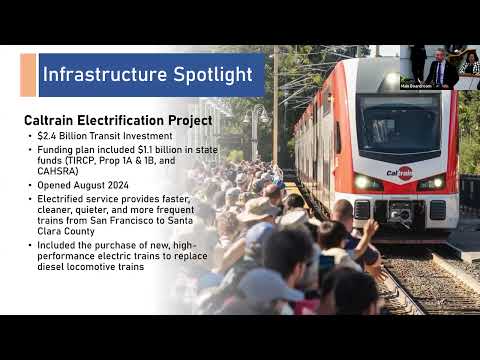
Moulton Peters highlighted major capital projects funded or underway in the region—Caltrain electrification, the I‑80 Gilman Street interchange, the Marin‑Sonoma Narrows—and reminded the CTC that voter‑approved Regional Measure 3 will finance a large share of bridge and regional projects; about one‑third of the RM3 program has been allocated to date.
The presentation was informational; commissioners asked questions but did not take formal action. Moulton Peters thanked the CTC for hosting its meeting in San Francisco and highlighted interagency collaboration on housing, land use and transportation planning across the Bay Area.