Get Full Government Meeting Transcripts, Videos, & Alerts Forever!
Get email alerts on the Open Meetings Compliance topic
No spam. Unsubscribe anytime.
Legal counsel briefs board on Tennessee Open Meetings Act and executive-session limits
Summary
A legal presenter reviewed the Tennessee Open Meetings Act, the City of Knoxville charter authority for the civil service board, notice requirements, executive-session rules and examples of case law, advising members on conduct to avoid Open Meetings Act violations.
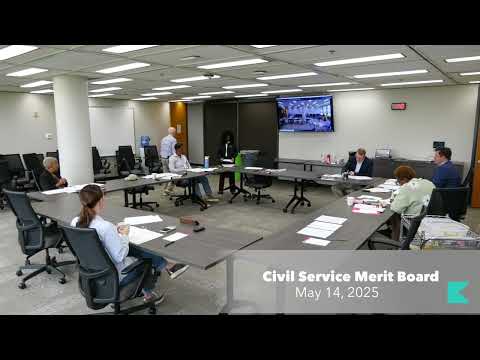
An attorney presenting to the Civil Service Merit Board on May 14 gave a refresher on the Tennessee Open Meetings Act and the board’s obligations under the City of Knoxville charter.
The presenter said the Open Meetings Act balances the public—xpectation of transparent official action with the need for government decision-making and noted that the civil service board erives authority from the City of Knoxville Charter (Article 10, Section 1,003). “Multiple members of a governing body are prohibited from meeting privately to deliberate toward or make decisions about the public’s business,” the presenter said, summarizing a central rule.
The counsel walked the board through three notice principles used in case law: (1) post notice where the public could reasonably see it, (2) describe the purpose of the meeting with sufficient specificity, and (3) post notice sufficiently in advance to permit public awareness and attendance. The presenter said civil service meeting notices are posted on the city—alendar and the civil service board website and cautioned that last-minute or vague agenda language can create legal risk.
On executive sessions, the attorney said attorney-client privilege allows limited closed discussions about pending or threatened litigation but emphasized that minutes and public deliberation are required for decisions. The presenter gave rules for lawful executive sessions: the attorney must attend; the subject must be pending or threatened litigation; and deliberative decisions must occur in a properly noticed public meeting. He warned that using executive sessions or electronic communications among multiple members to deliberate about public business can void actions and require remedial public meetings.
The attorney cited several court examples — including a Tennessee school-board travel case and a Metro Nashville email-deliberation matter — to show how courts have interpreted and applied the statute and the consequences of noncompliance, such as requiring a re-vote at a noticed public meeting.
The presenter closed by noting the board must keep accurate minutes that record attendees, motions, and vote results and offered to provide written resources to the civil service office for future reference.