Get Full Government Meeting Transcripts, Videos, & Alerts Forever!
Get email alerts on the School Budget topic
No spam. Unsubscribe anytime.
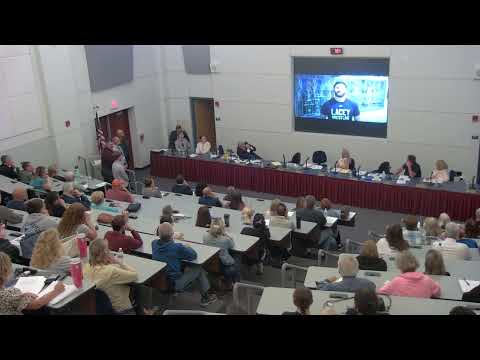
Lacey Township board adopts 2025–26 budget; approves grade‑banding, 27 teacher cuts and end to most courtesy busing
Summary
The Lacey Township School District Board of Education voted to adopt a final 2025–26 budget that raises the local tax levy and implements grade‑banding to reduce staff costs, while approving 27 teacher cuts, two administrator eliminations and the end of most courtesy busing.
The Lacey Township School District Board of Education voted to adopt a final 2025–26 budget at its public meeting, approving a plan the administration says balances the district’s books while cutting staff and reorganizing elementary schools. The final roll call was: Mr. Peters — no; Mr. Bell — yes; Mrs. Walker — yes; Mr. Conaty — no; Board President Claus — yes, producing a 3–2 approval.
The budget "while allowing us to move forward, still falls short," Superintendent Zelensky told the board as he introduced the final plan, saying administrators had pared the proposal and sought compromises after the district’s tentative budget. The district projects an overall operating increase of about 1.8% over last year and a net property‑tax levy increase of 7.57 percent; administrators also included an estimated $400,000 from a modest land sale to help close the gap.
The nut graf: the board approved changes intended to reduce payroll costs and preserve core programs, but the package relies on staff reductions, building realignment and service cuts that parents and special‑education advocates said will disrupt students and may raise legal and safety concerns.
Most significant actions adopted in the final budget package
- Staffing: The final plan includes the reduction of 27 certificated teacher positions and the elimination of two administrator roles (an elementary supervisor and the assistant superintendent position). Superintendent Zelensky said these steps were needed to make the numbers work after earlier proposals were reduced. Board materials and the superintendent’s presentation noted that the district has cut roughly 73 certificated positions over eight years.
- Grade banding (elementary realignment): The district will reorganize elementary grades to concentrate grade levels in fewer buildings (grade banding). Under the adopted plan, Mill Pond School will serve pre‑K and pre‑K disabled students, Cedar Creek School will house kindergarten and first grade, Forkett River School will host second and third grades, and Linoqua Harbor School will serve fourth and fifth grades. Zelensky said the change "will allow us to spread the class size loads out and will allow us to use less teachers," though he acknowledged class sizes will increase in some grades.
- Transportation and operations: Courtesy busing for students living within the walking zone will be eliminated except where routes are officially designated hazardous (for example, students crossing Route 9/Lacey Road near Forkett River School will still be bused). The administration also plans to delay bus replacements and to rely on repairs to older vehicles.
- Revenues and other cuts: The budget assumes the $400,000 modest land sale, trims other administrative positions and corrects salary and tuition lines. The district noted debt service costs will decline and extraordinary aid and categorical state aid remain constrained under current state caps.
Public comment and special‑education concerns
Parents and advocates spoke repeatedly during public comment, pressing the board to reconsider grade banding and the effect of building moves on students with disabilities. "Every student with an IEP is entitled to a free appropriate public education in the least restrictive environment," said parent Brandon Hurley, who identified himself as the father of a child in the district’s autism program and raised safety and continuity concerns if Cedar Creek’s specialized services are moved.
Other speakers warned that consolidating grades into fewer buildings would increase average class sizes (administration slides showed averages rising), strain paraprofessional staffing and remove familiar routines important to students with sensory or behavioral needs. Several speakers said the changes could create legal and safety risks if specialized supports, fencing and one‑to‑one aides are not replicated at receiving schools.
Board and administration response
Board members and administrators said they had pursued alternatives. Board President Claus told the public the board had previously presented a higher levy option and reduced it after public feedback: "We did present a budget to everyone. That was 14%... So we listened. And we cut it to 7%," she said.
Business Administrator Sharon Ormsby and Superintendent Zelensky explained the district’s narrow options: with state aid constrained by a new funding formula and categorical caps, the district must either increase local taxes or reduce recurring expenses. Zelensky said the administration also sought a tax‑levy incentive and was advised that a modest property sale was a more certain revenue source than relying on larger, uncertain sales.
Formal action and next steps
The board’s adopted budget documents and motions call for implementation of the grade‑banding plan and staffing reductions when the new fiscal year begins; the administration said detailed operational decisions (class assignments, paraprofessional allocations, fencing and transportation routing) will be developed during the summer and posted as plans are finalized. Zelensky also said the district will continue advocating for additional state aid and noted some state funding decisions could change the district’s position later.
Distinguishing discussion from decision
- Discussion: The public and board discussion included alternatives (higher tax levy proposals, requests to prioritize athletics or co‑curricular programs over classroom positions), legal questions about obligations under IDEA and requests for detailed, school‑level implementation plans.
- Direction/assignment: The board directed administration to proceed with the adopted final budget and to prepare the grade banding implementation and transportation routing documents for summer planning.
- Formal decision: The board formally adopted the 2025–26 budget by roll‑call vote (3 yes, 2 no); the adoption is the binding formal action recorded in the meeting minutes.
What the action does not yet resolve
Board and administration repeatedly noted the plan is a compromise and said a significant solution requires sustainable changes to state funding. They warned the district faces recurring shortfalls next year unless state aid formulas or revenues change; some board members and members of the public urged the district to continue to press county and state legislators for additional funds.
Ending: The district will post final implementation details, schedules and school‑specific plans on its website as staff complete routing, building assignments and special‑education placement logistics over the summer. Parents seeking individual clarifications were directed to contact the Board Office for appointments with district staff.