Get Full Government Meeting Transcripts, Videos, & Alerts Forever!
Get email alerts on the K 12 Budget topic
No spam. Unsubscribe anytime.
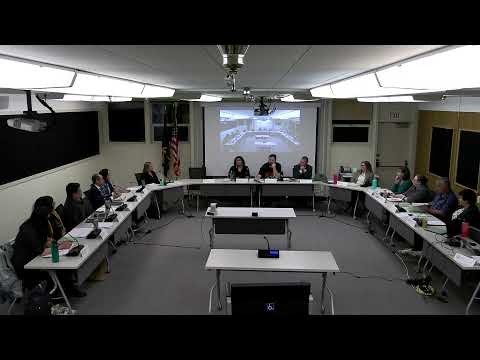
Corvallis School District presents $182.6 million 2025–26 budget, public urges use of reserves to avoid cuts
Summary
Superintendent Noss and Finance Director Lauren Wolf described a budget that balances rising payroll and PERS costs against declining enrollment and uncertain state and federal funding; public commenters and some committee members urged using reserves or delaying decisions to avoid cuts to programs such as elementary music.
Corvallis School District Superintendent Noss on Wednesday presented a proposed $182.6 million budget for fiscal 2025–26 that the district says narrows but does not eliminate a multi‑year shortfall driven by declining enrollment and uncertain state and federal funding.
The proposed all‑fund total is $182.6 million, with general fund current resources budgeted at $115.1 million. Finance Director Lauren Wolf told the budget committee the district is projecting enrollment of about 5,898 students for 2025–26 and a year‑to‑year general‑fund shortfall of roughly $2.98 million unless the state school fund allocation changes. “We need that support, and we need community to be involved,” Wolf said during the presentation.
Why it matters: payroll and benefits make up more than half of the district’s costs, PERS contribution rates are large and volatile, and federal and state grant allocations that supplement local revenue may be reduced. Committee members and several public speakers urged the district to consider using reserves or a short runway to preserve student services while planning longer‑term changes.
Key facts and figures - Total proposed all‑fund budget for 2025–26: $182.6 million. - Budgeted general fund resources (all funds basis): $115.1 million, up about $2.6 million (2.3%) from the previous year. - Projected enrollment used for the budget: about 5,898 students; committee discussion referenced a projected decline of about 237 students year‑over‑year. - Previously addressed deficit (2024–25): about $8.2 million; projected new shortfall for 2025–26: about $2.98 million. - Beginning fund balance all funds: $25.6 million (about $16.8 million of that is general fund). - Federal funds represent roughly 6% of the budget (approximately $10 million annually); the budget assumes a 25% reduction in federal grant programs as a conservative scenario. - Local option levy provides about $10.8 million that funds roughly 66 full‑time equivalent positions.
What district leaders said Superintendent Noss framed the proposal as a plan “that reflects our commitment to cultivating a district where all students belong,” while acknowledging fiscal pressure from declining enrollment and rising operating costs. Noss told the committee the district will present demographic and facilities data to the school board in August and that “all options regarding potential redistribution, consolidation, or school closure will be considered at that time.” She also assured the community that “all current schools will remain open for the 2025–26 school year.”
Finance Director Lauren Wolf walked the committee through assumptions used in the budget: a state school fund assumption near the governor’s recommended number, a property tax increase of about 2.9% in Benton County, a student investment account allocation assumed at $6.7 million, and an assumed carryover of federal grant funds into 2025–26 of about $770,000. Wolf said the district’s largest ongoing expense categories are salaries and benefits (over half of the budget), health insurance (about $21 million), and purchased services (about $18 million).
Program priorities and scheduling Wolf and other staff emphasized the district’s stated priorities — literacy, equitable systems, relevant learning and healthy communities — and described programs funded by restricted and discretionary sources, including CTE, dual‑language immersion, MTSS, and mental‑health staffing. Wolf explained changes in how the district codes and presents budget lines caused some large appearing shifts between functions (for example, alternative education and psychological services), and said some increases reflect reclassification rather than new spending.
Public comment and committee reaction At least four public commenters urged the committee to reject the proposed budget or recommend using reserves to avoid cuts that community members said are already driving families away from district schools. Resident Richard Arnold reminded the committee that its authority is statutorily granted and urged members to “be persistent” and use their authority to change the budget if it does not reflect community values. Parent and community member Chris Blacker presented district‑level data he said show a steep local loss of students and urged the committee to use reserves and a planned closure timetable to avoid service cuts and a “death spiral” of declining enrollment.
A Crescent Valley High School junior, who identified themself as Vibhav, told the committee he was at the meeting rather than preparing for an AP exam and urged members to reject the budget because “more cuts means bigger class sizes, overworked teachers, and fewer opportunities.” A younger commenter, Molly Burch, said cuts to music would prevent her elementary school from producing an annual musical.
Committee discussion and next steps Committee members asked detailed questions about the assumptions and the mechanics of possible reserve use. Wolf said tapping general reserves requires careful planning: board policy (Policy DA) requires a plan to replenish reserves when they are used, and Wolf warned that reserves do not currently cover even one month of operating expenditures. She also noted two Oregon districts (Silverton and Newberg) recently faced midyear cash‑flow problems and made substantial midyear corrections.
Committee members pressed staff about the timeline and potential savings from a school closure. Wolf and staff said consolidation can produce savings but typically requires a multi‑year runway: initial year costs (redistricting, system changes, staffing redistribution) can offset immediate savings, with net savings generally showing after roughly three years. Committee members also discussed restrictions on construction excise taxes and other restricted funds that limit how those dollars can be used.
Special education and state policy limits Multiple committee members and the public asked about special education funding. Wolf explained Oregon law currently applies an 11% cap in the state school fund weighting for students with IEPs; Corvallis’s actual special‑education percentage is higher (discussed at roughly 13–16% during the meeting), meaning the district serves students above the cap without equivalent weighted state revenue. Committee members said the cap has not changed since the mid‑1990s and that an attempted change this legislative session is unlikely given recent state revenue forecasts.
PERS, debt and one‑time funds The committee discussed the district’s prior PERS bond buy‑down and its schedule: the district issued bonds to smooth PERS costs and expects that debt service to finish in 2028. Wolf also noted there may be a modest one‑time statewide PERS rate buy‑down resulting from higher than expected earnings in a reserve pool; the district expects the PERS rate released to districts to change when the PERS board finalizes updated figures.
Where the budget stands now After more than three hours of presentation, public comment and committee questions, one committee member moved and another seconded to pause action and reconvene for a final vote the following week to give members time to review additional community input and for staff to provide any further requested clarifications. The budget will return to the committee next week for possible approval and the committee will also consider the tax rate and levy language it is required to recommend under state law.
Ending The district will present demographic and facilities data to the school board in August; staff said that analysis will inform any long‑range facility planning, consolidation or closure considerations beyond the 2025–26 school year. Meanwhile, the budget committee asked staff to collect and publish additional clarifying details and answer follow‑up questions received via the committee email so members and the public can review them before any final vote.