
Escambia school board members debate changing book-review process, opt-in access for restricted titles
Get AI-powered insights, summaries, and transcripts
Subscribe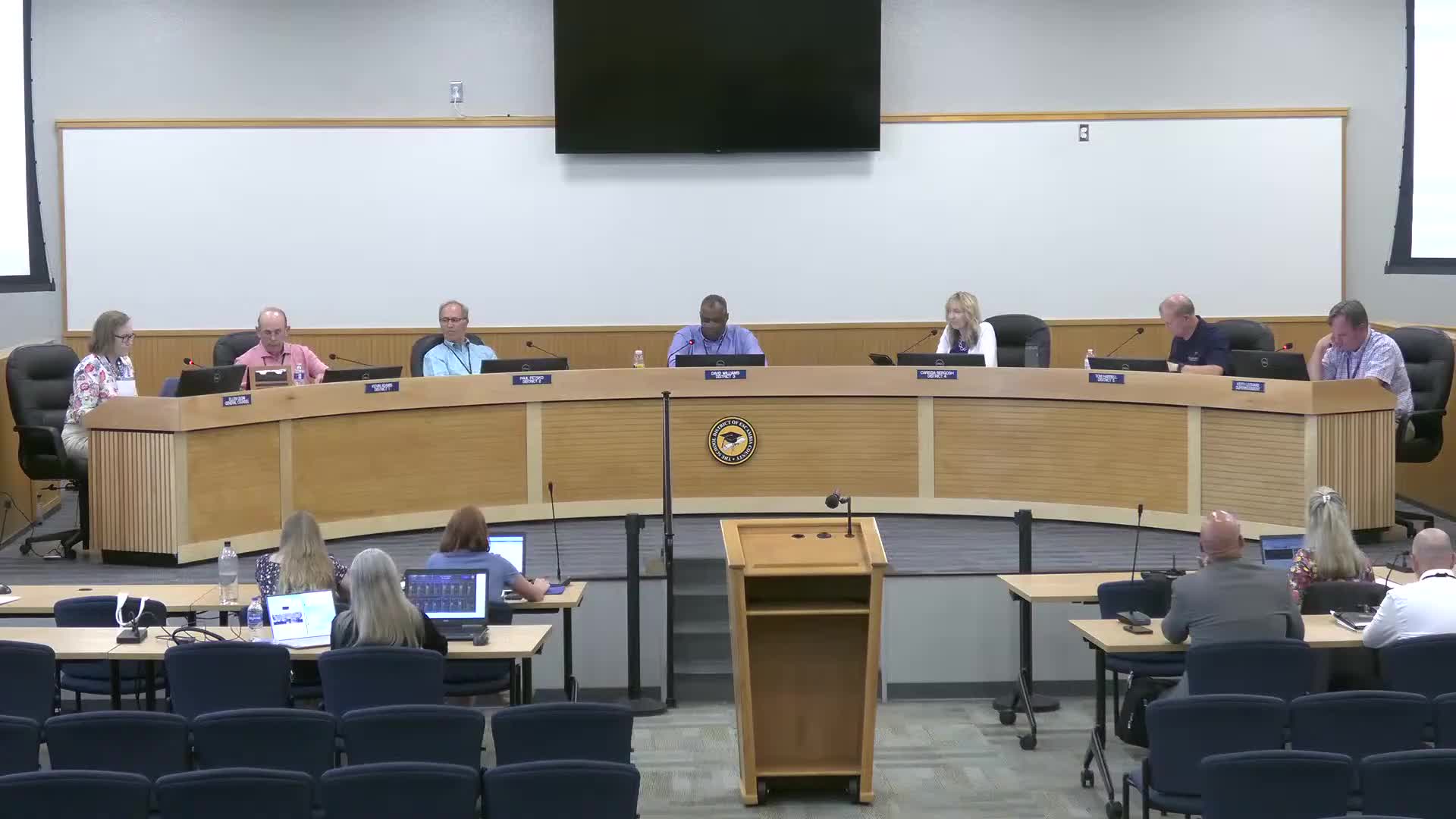
Summary
Members of the Escambia County School Board opened a lengthy discussion at their May workshop about how the district handles challenged library books and whether to adopt a Clay County–style community standards process that would shorten review timelines and limit access to certain titles unless a parent opts in.
Members of the Escambia County School Board opened a lengthy discussion at their May workshop about how the district handles challenged library books and whether to adopt a Clay County–style community standards process that would shorten review timelines and limit access to certain titles unless a parent opts in.
Board member Paul Adams proposed four changes: adopt community standards, create a district review process for state-law compliance, add a parental opt-in for restricted titles, and eliminate the standing book-review committee. Adams said he agreed with a recent comment from a judge that the committee “creates unnecessary complications and greatly slows down the book review process,” and described the proposal as intended to speed decisions and “respect parental rights.”
The proposal would keep an initial staff review to remove material that violates state law, then apply community standards to determine whether a title should be restricted. Restricted titles would be shelved separately and available only to students whose parents had opted in. Board members and staff also discussed keeping the committee step for titles that pass initial review, as Clay County policy does, but several board members said they prefer reliance on media specialists and administrative review with appeals handled by the superintendent and the school board.
Bradley (staff) provided statistics the board members cited while debating communication and opt-in uptake. The district has about 36,200 students; Bradley-supplied figures read to the board showed 97 students with limited access selected, 11 students with no access, and 1,739 students recorded as having opt-in access for young-adult titles in middle school. Board members said the opt-in numbers were low relative to the district population and flagged parent notification and Focus (the district’s parent portal) as places to improve outreach.
Board attorney Miss Odom reminded members that the district is not required by law to maintain a book-review committee and noted legal limits the board must consider. She also pointed to a recent Eleventh Circuit opinion the board discussed that criticized “I know it when I see it” as an insufficient legal standard for identifying obscene material, underscoring the need for clearer definitions and caution in any policy changes.
Several board members urged caution because litigation is pending. One board member noted the district has amended its policy while litigation was active before and said changing procedures now would require careful legal review and community engagement. Other speakers pressed for aligning library-media and classroom standards and for clearer, repeated communication to parents about access options.
No formal action was taken at the workshop; board members asked staff and legal counsel to draft potential policy language and to return the item for further discussion and possible formal changes at a subsequent meeting.
The conversation also included operational clarifications: media specialists will continue initial reviews for clearly inappropriate material, and the superintendent’s office would handle appeals that move beyond staff review. Members discussed whether any committee composition change — for example, limiting outside committee members to parents — should be included in a draft.
The board agreed to continue the discussion and directed staff to prepare draft language and implementation steps that would include community outreach, legal review, and options for parental notification and opt-in mechanics.