Get Full Government Meeting Transcripts, Videos, & Alerts Forever!
Get email alerts on the Federal Programs Title I Iv topic
No spam. Unsubscribe anytime.
Wentzville R‑IV outlines federal Title funding uses, ELL growth and rising displaced‑student transportation costs
Summary
District officials reviewed Title I–IV program spending May 15, saying Title I supports intervention and preschool slots, Title II funds teacher development, Title III supports about 500 EL students, and costs to transport displaced (McKinney‑Vento/foster) students rose from roughly $17,000 to $618,000 since 2020.
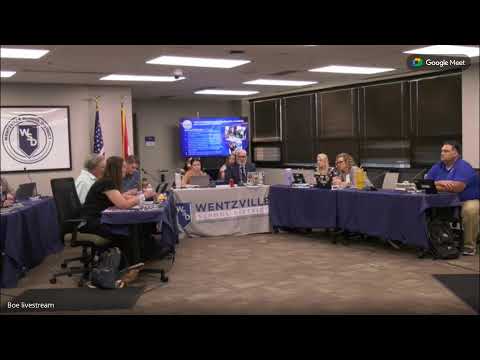
WENTZVILLE, Mo. — District staff presented the Wentzville R‑IV Board of Education on May 15 with a federal programs update that summarized how Title I–IV funds were used this year and flagged a sharp increase in costs tied to displaced students and transportation.
The presentation said Title I funds were focused on tier‑2 and tier‑3 interventions, three additional reading specialists, districtwide part‑time tutors and 50 new Title preschool seats. “Title 1a funds are used to improve academic achievement of disadvantaged students,” the presenter said, describing how buildings with higher free‑and‑reduced lunch rates were targeted for funds.
Why it matters: administrators told the board that the district now serves roughly 500 English‑learner (EL) students, up about 200 in two years, and that support and transportation for displaced students (foster and homeless under the McKinney‑Vento Act) has grown substantially, both in numbers and in cost.
The presenter said Title II funding supported instructional coaching, assessment initiatives and class‑size reduction teachers in first and second grade. Title III programming funded after‑school and summer tutoring for secondary EL students, purchased EL instructional resources and added ELL instructional assistance. Title IV money paid for counselor professional learning, de‑escalation and suicide‑prevention training, and a pharmacy‑tech program at St. Charles Community College that served 12 Wentzville students.
Board members pressed for detail on counts and baselines. The district said it identifies schools for Title I by eligibility and that two elementary schools currently qualify for Title I funds. On ELs: “We have a little over 500 currently in our school district right now, which is up about 200 in the last 2 years,” the presenter said.
On displaced students, the presentation and subsequent Q&A said transportation costs for students identified under McKinney‑Vento or foster care rose from about $17,000 in 2020 to roughly $618,000 at present. Staff described the legal protections that allow displaced students to remain enrolled in their original schools and be transported back to the district, and said those protections can extend beyond a single school year depending on living circumstances. “They would still qualify because they don't have a fixed permanent nighttime residence,” a staff member said when explaining McKinney‑Vento status.
The presenter said enrollment documentation follows DESE guidance: birth certificates are requested but not required for enrollment, and school staff consult central office and the school resource officer if they suspect fraudulent enrollments or safety concerns.
There were no votes attached to the federal‑programs presentation; staff said they will continue to evaluate program outcomes and report back with CSIP (comprehensive school improvement plan) updates this summer.
What’s next: the district will continue measuring Title‑funded goals through its CSIP process, monitor EL and displaced‑student needs and present updated evaluations to the board later this year.