Get Full Government Meeting Transcripts, Videos, & Alerts Forever!
Get email alerts on the Townwide Finance Committee topic
No spam. Unsubscribe anytime.
Milton discussion centers on forming townwide finance committee with 2-2-2 membership model
Summary
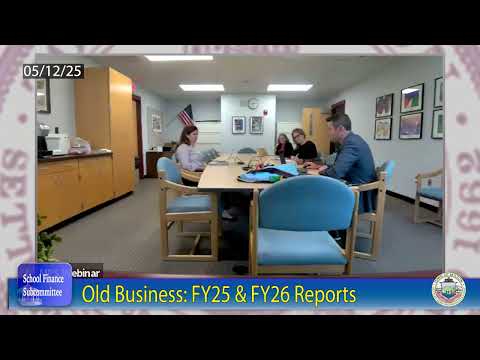
Milton Public Schools finance subcommittee members spent the meeting debating the structure, membership and charter of a proposed townwide finance committee that would pair school, select board and warrant-committee representation and could include resident members.
Members of the Milton Public Schools Finance Subcommittee debated how to form a proposed townwide finance committee, focusing on membership, charter language and whether to include resident appointees.
The subcommittee met May 21 to discuss a recommendation that surfaced at recent town meeting for a committee composed of two school committee members, two select board members and two warrant-committee members — a “2-2-2” model participants repeatedly referenced. Members said the goal is to restore and expand the coordination that existed between town and school finance groups in prior years and to add warrant-committee input and, possibly, resident appointees.
The discussion turned to process questions: which body must vote to establish the group; how resident members would be selected; whether the committee needs a formal charter before it begins meeting; and whether meetings should be publicly posted. Participants noted that a similar joint committee existed in the past but did not complete its work. Katie (meeting participant) said the school committee has a subcommittee policy that requires the school committee to take action to establish subcommittees — a procedural point that prompted calls to confirm what votes are required and when.
Several members said they favor including resident members to increase transparency and trust, but raised practical concerns about selection. One participant suggested posting openings and accepting resumes, then having the appointing bodies review and select candidates; others urged outreach to neighboring towns to collect best practices and example charters. A number of participants said the committee should begin meeting quickly and could hold initial sessions even while resident appointments remain open.
Participants also debated how the townwide committee would interact with existing school subcommittees. Some argued the members formally designated to the school finance subcommittee should also serve on the townwide body so information flows smoothly; others worried about creating additional layers that could fragment communication. Several members emphasized the importance of a clear charter or scope for the new committee — including meeting frequency, decision points and reporting lines — so the group does not duplicate work or add unnecessary steps.
The group agreed on next steps: staff will check whether the select board must vote to establish the committee and will share any draft language; committee members Katie and Amanda will gather documentation from other towns and from prior local committees; and the subcommittee will schedule an initial meeting to scope the committee’s purpose and draft a charter. Participants asked the school committee and select board to coordinate on appointments so the townwide committee can form in time to inform the next budget cycle.
No formal vote to establish the townwide finance committee occurred at the May 21 subcommittee meeting. The subcommittee recorded this as a discussion with assigned follow-up steps and will return the item for further action at a subsequent meeting.