
Berkeley County water rates to rise 23.5% as district speeds river-plant expansion
Get AI-powered insights, summaries, and transcripts
Subscribe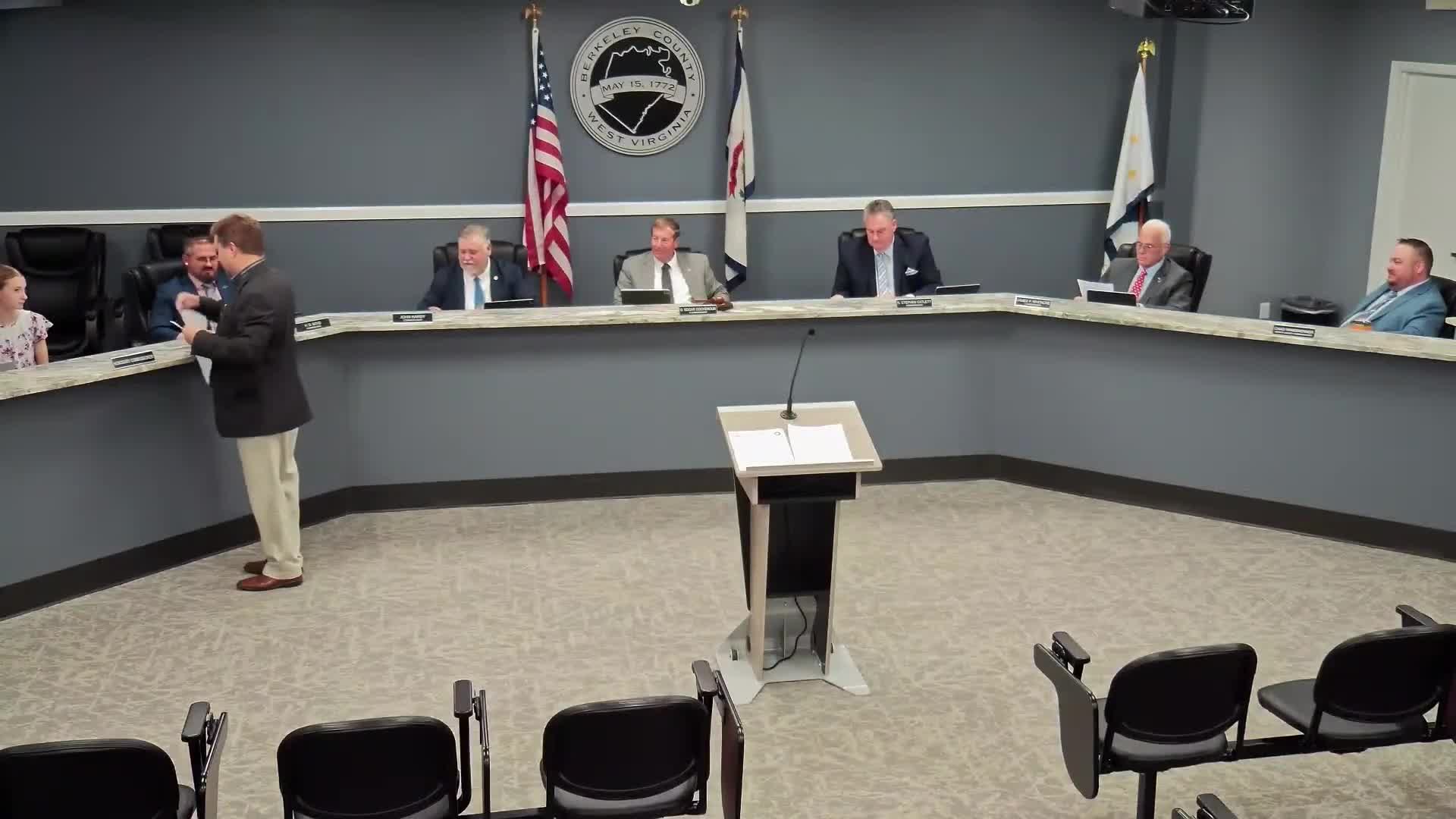
Summary
Berkeley County Water District told commissioners it will increase rates 23.5% this summer as it borrows to expand treatment and distribution capacity, including raising river plant output toward 10 million gallons per day and a series of capital projects.
Jim Ouellette, a representative of the Berkeley County Water District, told the county commission the district will implement the third step of a five-year rate schedule that increases typical monthly bills by 23.5% starting this summer.
The rate change will raise a typical monthly bill — based on 3,400 gallons — from $37.90 to $46.70, an increase Ouellette said is about $8.80. He said the district also will raise capacity improvement fees (service-infrastructure fees) from about $3,100 to $3,600 for a typical household connection, with two additional scheduled steps after that.
Ouellette said the increases are driven by a multiyear capital program. He told the commission more than $125 million in water projects are underway, including expansion of the river treatment plant’s capacity “from a capacity of 6,000,000 gallons a day to 10,000,000 gallons a day,” a project he said is expected to be “well in the fall of 2026.” He also described the Bunker Hill plant as a major replacement project and said the district is preparing a large water-main bid opening on June 23 to move river water and serve a major CMC facility.
The district reported revenues above $30 million annually and annual debt-service that Ouellette said had grown to about $12.4 million. He said the 23.5% increase is the largest single step in the five-year program and that the next two steps will be materially smaller (roughly “5 and 7%” in the next two years, per the district).
Commissioners asked about the structure of future increases and the district’s plans to expand distribution. Ouellette said intake structures at the river are currently rated for about 12 million gallons per day and noted the district is installing a 42-inch transmission main intended to serve growth for decades. He also said planned storage-tank projects will improve pressure and fire flows in specific areas; two tanks referenced in the meeting were described as major capital investments.
Ouellette emphasized the operational challenge of treating variable river water quality during heavy runoff and credited operators for continuous monitoring and chemical adjustments to meet treatment goals. He invited commissioners to tour plant construction sites.
The commission did not take a formal vote on the district’s budget or rates in this session; Ouellette presented the district’s information and commissioners asked questions about timing, magnitude of future steps, and the effect on customers.