Get Full Government Meeting Transcripts, Videos, & Alerts Forever!
Get email alerts on the Bcps Budget topic
No spam. Unsubscribe anytime.
City Schools presents FY26 budget; ESSER litigation and blueprint funding shape year
Summary
Baltimore City Public Schools officials told the committee the FY26 operating budget represents a 6 percent increase but school leaders said the end of ESSER funding, weighted student funding and recent salary increases make this a tight year at the school level.
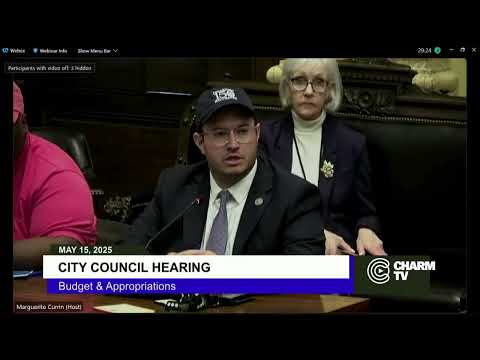
Baltimore City Public Schools presented its FY26 operating budget overview to the Budget and Appropriations Committee and said the district’s spending plan reflects a 6 percent year‑over‑year increase even as officials described the constraints schools will feel as federal ESSER funding ends and the state's Blueprint for Maryland’s Future continues to structure funding.
"We unexpectedly received a letter, saying that in fact, the United States Federal Department of Education had rescinded something that had been previously, approved and that had to do with a late liquidation deadline for the all important ESSER funding," CFO Chris Doherty said, describing a March 28 federal action that temporarily put roughly $48 million in ESSER reimbursements at risk and led the district, briefly, to suspend some after‑school and tutoring activities. He said a subsequent injunction and coordination with the Maryland State Department of Education allowed the system to seek reimbursement.
Doherty said the district’s FY26 general fund portion increases from $1.437 billion to $1.5 billion (about a 4.2 percent increase), and that state blueprint funding and the city contribution together account for the overwhelming majority of general fund revenue. He warned that blueprint formulae create wide variation at the school level — "one school can get almost 3 times more money than another school does" — because funding weights follow student characteristics such as poverty, special education and multilingual learner status.
Chief of Staff Allison Perkins Cohen told the committee the budget prioritizes a set of core investments maintained from ESSER where possible: $10.5 million for early literacy tutoring (using paraeducators), $7.6 million for summer programming (serving about 12,000 students) and $1.8 million for credit recovery. The district also continues to invest in instructional coaching (roughly $25 million for literacy coaching and $8 million for math coaching), career‑readiness partnerships, school‑based social workers and psychologists (nearly $50 million for mental‑health staff), attendance positions (about $6 million), and school re‑engagement services.
Doherty said the district remains focused on protecting positions and programming in the face of ESSER step‑downs and rising personnel costs: teacher contract increases and fringe cost growth have increased position costs materially over recent years. He also described the district’s decentralized budgeting model: roughly 73 percent of general fund dollars either are controlled by principals or spent on their behalf.
Why this matters: the district reports steady funding overall but warns that the end of ESSER, the state’s blueprint formula and higher personnel costs make FY26 a lean year at the school level. District officials said they avoided layoffs and retained high‑priority investments but acknowledged principals will feel tight budgets and asked for continued coordination with the council on state grant and blueprint developments.