Get Full Government Meeting Transcripts, Videos, & Alerts Forever!
Get email alerts on the Public Safety Strangulation Response topic
No spam. Unsubscribe anytime.
Sawyer County presentation urges law enforcement to treat “choke” reports as potential strangulation
Summary
A St. Croix Valley Sexual Assault Response Team trainer told the Sawyer County Criminal Justice Coordinating Council that strangulation is often a high-risk, sometimes invisible injury and urged a multidisciplinary response, local forensic nursing access and improved documentation by first responders.
Mary Slisschuk, a forensic nurse with Sawyer County Public Health and St. Croix Valley Sexual Assault Response Team, told the Sawyer County Criminal Justice Coordinating Council on May 14 that officers should treat a report that “he choked me” as a major red flag for strangulation and potential homicide.
“Choke is something you do on food, strangulation is pressure on the neck,” Slisschuk said during a 30-minute presentation and training video she introduced to the council.
The Training Institute on Strangulation Prevention — represented in a video by Casey Gwen, president of Alliance for Hope International — told attendees that visible neck injury is often absent even in life-threatening strangulation, and that victims who report being choked face markedly higher risks of future homicide. “If a victim is strangled one time, she's 750 percent more likely to be killed,” Gwen said in the recorded material shown to the council.
Slisschuk said St. Croix Valley SART provides forensic nursing across northwest Wisconsin, including Barron, Rusk and Polk counties, and maintains offices in Rice Lake and Hudson. Since 2021 she said she has worked on roughly 25 adult and adolescent cases and five pediatric cases in the region.
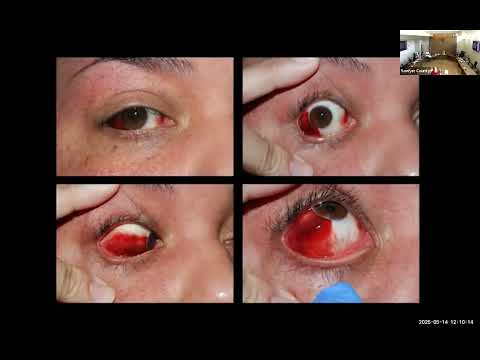
She reviewed medical signs first responders can document at the scene — for example, exposing the neck, checking for petechiae or asking the victim to check eyelid pallor — and urged use of a standardized patrol form for suspected strangulation to help prosecutors evaluate appropriate charges. Slisschuk described delayed-onset signs such as bruising that may not appear for 24 hours and emphasized that oxygen loss to the brain can make victims appear intoxicated, combative or disoriented.
The presenter said local coordination has already produced operational changes: the Sawyer County LCO Sexual Assault Response Team restarted monthly meetings in April of last year; participants identified gaps including a retired nurse at a local hospital and a need to train additional hospital staff so patients need not travel to Duluth for forensic exams. Slisschuk said partners at the LCO Health Center are developing local services and that the team is training additional hospital staff to keep services nearby.
Slisschuk urged a multidisciplinary approach — involving patrol officers, detectives, nurses, prosecutors, advocates and judges — and offered to share training slides and contact information with agencies that want help developing local protocols and expert witnesses in strangulation cases.
The council did not take formal action on protocols during the meeting; the presentation closed with a brief question period and confirmation that local patrol had received training earlier in the year.