Get Full Government Meeting Transcripts, Videos, & Alerts Forever!
Get email alerts on the Parks And Recreation topic
No spam. Unsubscribe anytime.
Sawyer County board denies proposed Seeley Forest Trail after committee approval and months of public comment
Summary
After months of public support and a split recommendation from the Land, Water and Forest Resources Committee, the Sawyer County Board voted to deny the Seeley Forest Trail proposal. Supporters said the trail would expand inclusive outdoor access; forestry staff and some board members cited location, trail density and timber-management conflicts.
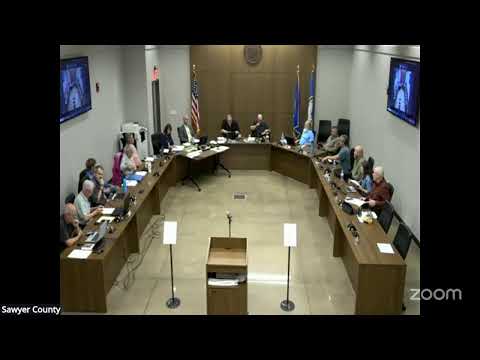
The Sawyer County Board of Supervisors on May 15 voted to deny a proposed multiuse Seeley Forest Trail intended to provide year-round, “adaptive-friendly” access for casual outdoor users and older residents.
The proposal attracted more than a dozen public speakers at the county board meeting, most urging approval. Montgomery Mao, presenting for the Seeley Trails Foundation, described a roughly 4-mile proposed route that would upgrade existing logging corridors to a maintained dirt surface and be built and funded by the nonprofit, not by Sawyer County. Mao said the trail would be 12-foot corridor maintained at 8 feet, intended to serve people of varying abilities, families and visitors, and would highlight local history such as the former Camp Smith Lake CCC site.
Supporters said the trail would fill a gap in low-gradient, year-round recreation for casual users and older residents. “This trail would be a great addition to our community and would help achieve that,” said Janine Evanston, a Seeley resident. Several speakers emphasized accessibility for older adults and people with physical challenges and said the trail would support local tourism.
But Greg Peterson, Sawyer County forestry department head, told the board he opposed the project’s chosen location. Peterson said the proposed corridor sits inside a roughly 1,000-acre block already dense with trails and that adding another trail there would increase user conflict, complicate timber-sale administration and potentially lower sale values. He also raised soil concerns for parts of the route and said an engineered, fully ADA‑compliant surface would be a different—and costlier—undertaking than the dirt trail being proposed.
The county’s Land, Water and Forest Resources Committee had previously reviewed the project and, after discussion, voted 3–2 in favor of approving the Seeley Forest Trail at its May meeting; that committee vote and the public comments were discussed at length during the full board meeting. Committee documents cited concerns including trail crossings, maintenance, construction impacts and potential liability if the trail were promoted as ADA-compliant.
At the county board meeting, a motion to deny the Seeley Forest Trail was made and seconded; after discussion and attempted counting of oppositions, the chair announced the motion carried and the trail proposal was denied. The Seeley Trails Foundation, which the presenter said is a registered nonprofit created to support the project, had indicated it would provide volunteer machine hours, maintenance and fundraising; the presenter told the board the trail would not be county funded.
Why it matters: the Seeley Forest Trail was proposed to broaden access to county forest land for people who are not well served by the current mix of groomed ski trails, single‑track mountain-bike trails and motorized corridors. Advocates framed the project as filling a regional recreation gap; forestry staff and some board members said the location and cumulative trail density create management and liability risks.
Next steps: proponents and forestry staff both suggested alternative sites and further study. The board did not adopt any direction to staff to develop an alternative plan at the May 15 meeting.