Get Full Government Meeting Transcripts, Videos, & Alerts Forever!
Get email alerts on the County Employees Pay Staffing topic
No spam. Unsubscribe anytime.
Tuolumne County employees urge supervisors to act on staffing, pay and workplace hazards
Summary
Multiple county employees and a union representative told the Tuolumne County Board of Supervisors that vacancies, low pay and building safety problems are driving staff shortages and forcing remaining employees to work unsustainable caseloads.
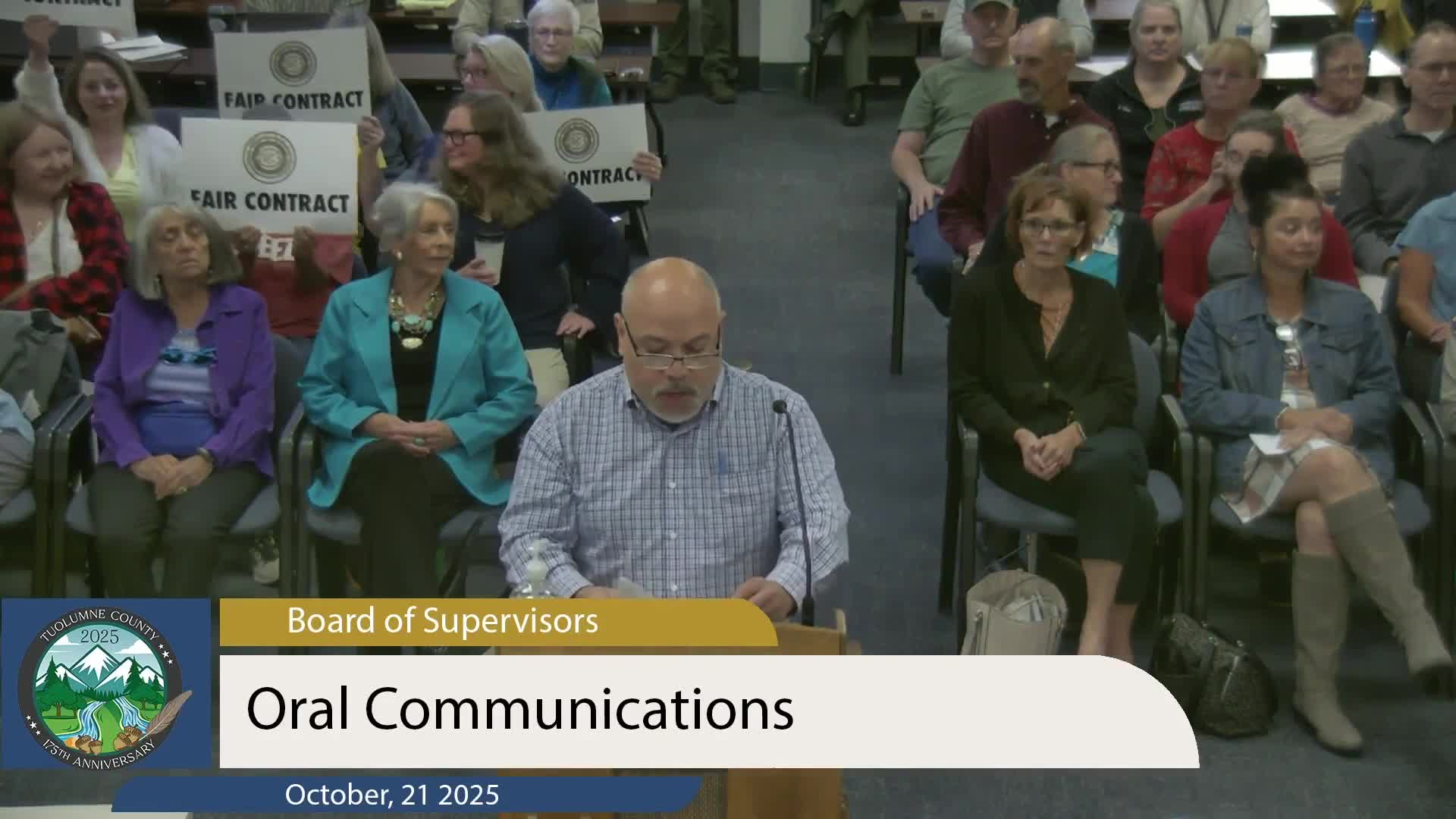
Several county employees and a union representative urged the Tuolumne County Board of Supervisors on Oct. 14 to address long-running staffing shortages, a lack of pay increases and unsafe workplace conditions that they said are driving employees into poverty and forcing remaining staff to cover multiple roles.
In oral communications, Mike Deanda, a business representative for Operating Engineers Local 3, told the board that vacancies and layoffs had pushed workers to carry the caseload of “two, three and sometimes even four” positions and said employees face threats of discipline and performance improvement plans even as they struggle to meet basic needs.
Deanda said union members report they have had no raises in the last three bargaining cycles and that many county employees rely on public assistance and food banks. “You have a crisis on your hands and you need to act now,” he told the board.
The board heard similar comments from county public-health and social-service employees. Laurel McDonald, who identified herself as an eligibility worker at the Department of Social Services, said the office has nine vacancies and that many staff “make too much to qualify for assistance but don’t make enough to pay for it.” McDonald said a common health-insurance plan will increase by about $280 in January and that family premiums will rise further, making care unaffordable for many.
Other speakers, including an unidentified county employee who described toxic air problems in a county office building, said staffing shortages have left remaining employees “crumbling” under heavier workloads and that recruitment and training costs exceed the expense of retaining experienced workers.
Why it matters: Speakers said staffing and pay problems are affecting the county’s ability to deliver services such as eligibility determinations, public health and permitting. Several asked the board to prioritize bargaining units in closed-session labor talks later in the day and to identify budget solutions that preserve services and retain experienced employees.
Board response and next steps: Board Chair and other supervisors acknowledged the public comments during the meeting. The agenda included a closed-session labor negotiation item; speakers asked supervisors not to leave closed session “until you have a resolution for this crisis.” The board did not take a public vote on pay or staffing during the meeting; any formal changes would require separate agenda items.
Context and supporting details: Speakers at the meeting said county employees had not received cost-of-living increases in more than three years and cited roughly 20% local cost increases over that period. One eligibility office speaker said the least expensive insurance plan has a $3,000 deductible, with premiums rising substantially in January. A public-health nurse who spoke later during staff reports highlighted other county programs and did not vote.
Ending: County staff and supervisors will proceed to labor negotiations in closed session; employees asked the board to make bargaining and workplace safety a priority in upcoming budget and personnel decisions.