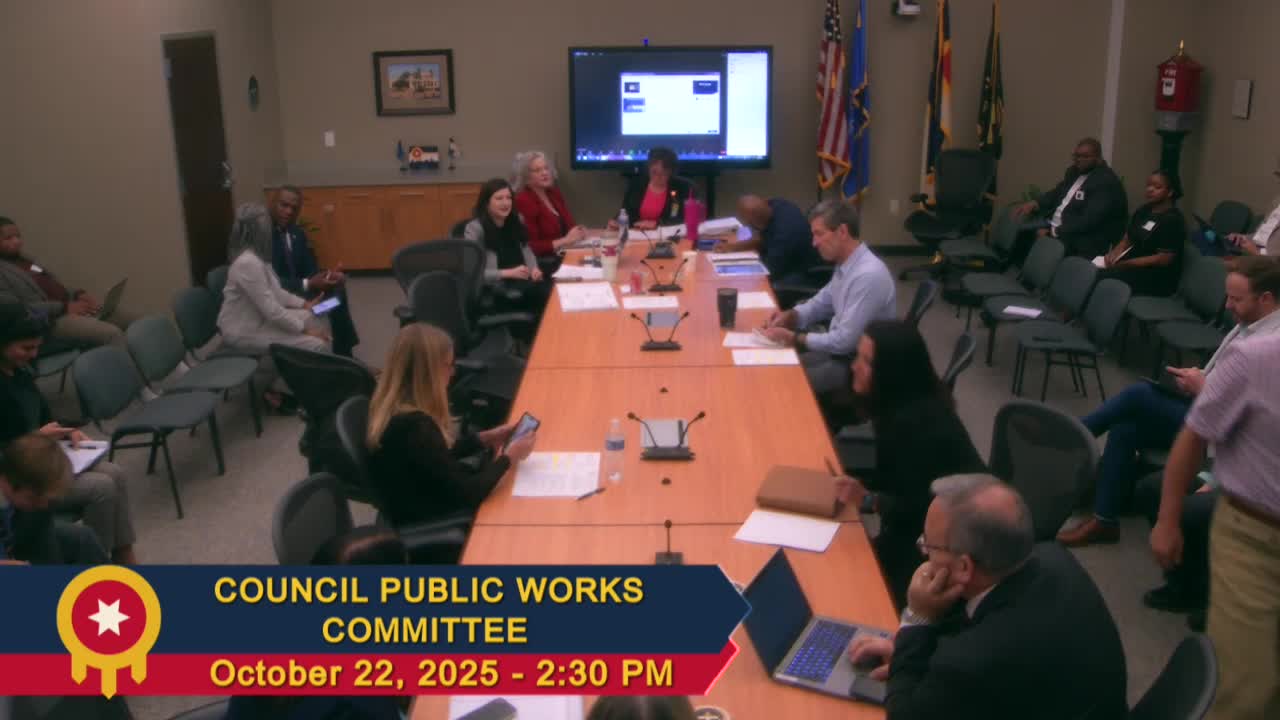
City consultants present "Safe Move Tulsa" plan; aim to reduce street homelessness and house 1,000 people per year
Loading...
Summary
Consultants from Klutch (Safe Move Tulsa) and Housing Solutions briefed the committee on a three‑phase plan to reduce street sleeping, expand shelter access and rehouse people. Officials discussed targets, capacity limits, pilot data and an estimated multi‑year funding need rising to about $30 million annually to sustain the system.
Consultants working with the city presented a three‑year plan called Safe Move Tulsa and related system modeling to the Public Works Committee on Wednesday, outlining targets to reduce "street sleeping" and increase rapid rehousing.
Mandy Chapman Semple, managing partner at Klutch Consulting (lead consultant on the initiative), told the committee the work began with a system model to identify gaps and calculate what scale of interventions would be needed. "What we discovered is that on an annual basis, there are about 3,100 adult individuals who enter homelessness annually in Tulsa," she said, adding that about 74% are experiencing homelessness for the first time and many can be served with low‑cost, one‑time interventions that avoid long shelter stays.
The consultants and city staff said key figures from the briefing include:
- By‑name list (people identified by providers as in need of housing): roughly 2,500–2,800 people. - Point‑in‑time unsheltered count (January snapshot): 496 individuals. - People rehoused since Jan. 1, 2025 (presentation figure): 675; retention reported at 93% for 2024. - Daily downtown shuttle/day‑services pilot: averaged 30–50 riders per day, totaling about 2,121 rides; data are duplicated counts rather than unduplicated unique clients. - Current decommissioning capacity for encampments: approximately one decommissioning per month.
Semple described a three‑phase ramp‑up: an initial phase focused on intervening early with quick exits from shelter and targeting those newly entering homelessness; a second phase to scale shelter flow and deep interventions for long‑term cases; and a third phase to secure sustainable funding. "We need about $10,000,000 in year 1," Semple said from the consultant presentation, adding the modeling projects a sustainable annual budget near $30,000,000 once the system is scaled and new inventory added.
City staff and councilors asked for details about funding sources, program costs and operational staffing. A city staff member said a portion of the city's earlier housing allocation (referred to in the briefing) is being incorporated into the Safe Move budget; committee members sought clarification whether the consulting projections are additive to prior commitments. The consultants said the initial $10 million figure includes certain city commitments already under discussion; subsequent ramps would require additional resources.
Councilors pressed on practical concerns: insufficient shelter capacity for women, families and people with disabilities; whether the plan assumes new housing stock will be available; and how the city will measure performance. Staff said the plan aims to shorten the time between listing on the by‑name list and housing placement (a current average measured in the hundreds of days) and to increase rapid exits from shelter.
The committee requested follow‑up data: unduplicated counts for the day‑service shuttle, quarterly progress reports following Safe Move Tulsa's November launch, and a clearer accounting of which funding streams (local, federal, philanthropic) will support each phase. Consultants and staff said they will provide quarterly updates and additional breakdowns on unduplicated clients and retention metrics.
No formal vote was taken on the plan during the committee meeting. Staff said implementation contracts were being finalized and that a public launch was expected in early November; the committee asked for quarterly reporting to review outcomes and budgets.