Tulsa officials weigh changes to local food‑truck rules after state preemption laws
Loading...
Summary
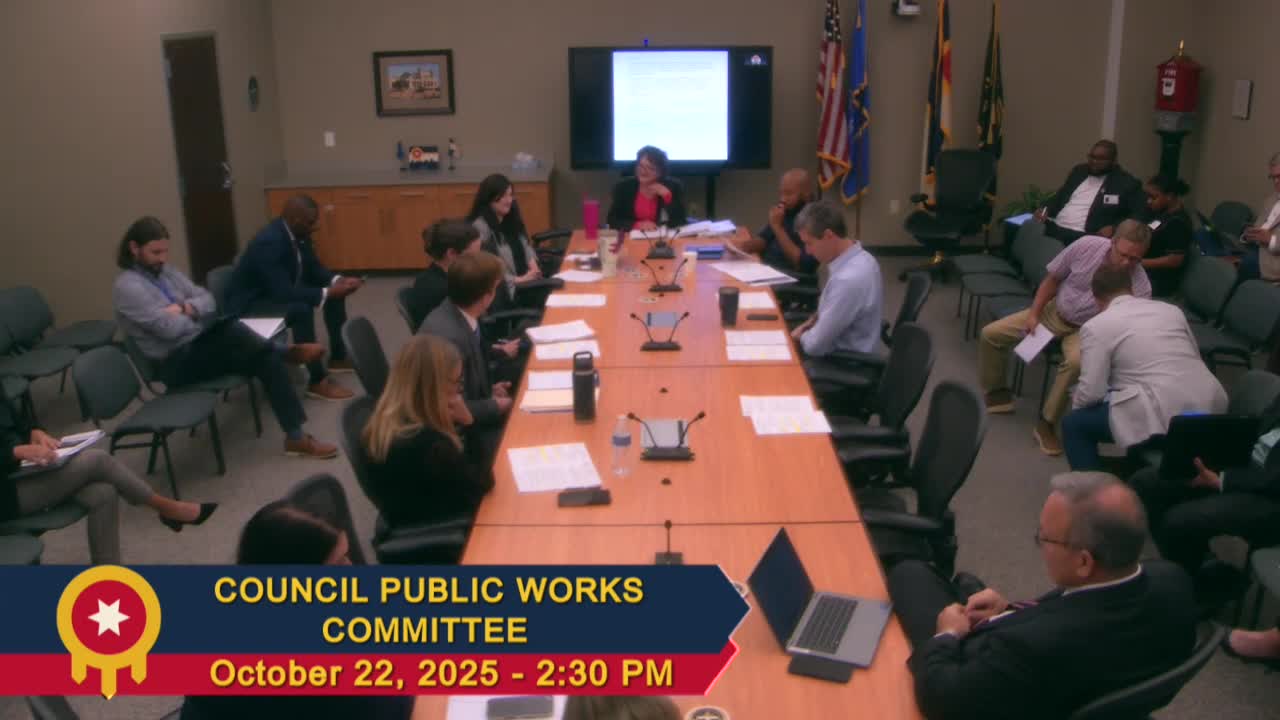
Tulsa officials on Wednesday discussed two proposed ordinances that would amend city code to comply with recent Oklahoma laws limiting local regulation of mobile food vendors.
Tulsa officials on Wednesday discussed two proposed ordinances that would amend city code to comply with recent Oklahoma laws limiting local regulation of mobile food vendors.
Caroline Gerowolf, an attorney in the city's legal department, told the Public Works Committee the changes respond to two state bills: House Bill 1076, the Food Truck Freedom Act, which largely preempts local restrictions and fees for food trucks, and House Bill 2459, which assigns certain fire‑safety inspection authority to the state fire marshal. "The Food Truck Freedom Act...is primarily the state preempting cities with respect to food trucks," Gerowolf said, and the city is revising Title 17 and Title 21 of the Tulsa Revised Ordinances to match state law.
The proposed amendments would remove Tulsa's separate mobile‑vendor license (currently $30) and eliminate local fees that exceed the administrative cost of issuing the required city recognition of a state food permit. Under the draft, the city would continue a nominal $5 processing charge for a city food permit; other fees now tied to a local mobile‑vendor license would be struck.
Eric Kronft, also from the legal department, explained the city can keep health‑and‑safety restrictions "that seemed to be about public health and safety" but must remove rules deemed to limit competition or otherwise conflict with state law. "We did our best to...strike through things that were restrictions not related to public health and safety," Kronft said, and asked councilors to flag any strikes they believed should remain.
Cody Zhang, identified in the meeting as representing the state fire marshal's office and legislative chair for the Fire Marshal Association of Oklahoma, told the committee the fire marshal law directs the state to perform food‑truck life‑safety inspections. He said as many as 7,000 food trucks statewide may require state inspection under the law and that larger counties will be scheduled for periodic "food truck rodeo" inspections; he added the number of state inspectors is limited. "There are 12 agents throughout the state, for 77 counties," Zhang said, noting staffing constraints could limit how quickly every truck is inspected.
Councilors pressed staff on practical effects: how much revenue the city would lose and whether the health department or code enforcement would continue oversight. A staff member summarized the budgetary impact at roughly $25,000 per year, reflecting that current food‑license revenue is split with the county (70% county / 30% city) and that the city keeps a small processing fee now set at $5. "Budgetary impact, I think it's about $25,000 a year," the staff member said.
Council members asked whether the city could increase the $5 processing fee to cover administrative and code‑enforcement costs; staff said the state law allows charging only administrative costs for local permits and that the processing fee could be adjusted to reflect administrative burden. Staff also said the city will continue some administrative checks at the time of application, such as sales‑tax compliance, and that the draft could be written to require applicants to confirm they have obtained any required state fire‑marshal sticker before the city issues its processing acknowledgement.
Committee members repeatedly raised concern that local health‑department inspections and enforcement roles are reduced by the state bills. Staff and the fire marshal representative said food‑safety inspections will be the county health department's role while fire‑safety inspections are moving to the state. "So the state's gonna do it for us," a committee member summarized.
No formal vote on the ordinances was taken during the committee discussion recorded in the transcript; staff indicated the ordinance drafts will be returned to committee for further refinement and to confirm whether the city can and should require applicants to show proof of state inspection/sticker when applying for the $5 permit.
Votes and next steps recorded in the meeting packet show the city attorney's office will revise the redline drafts to reflect council feedback and return to committee; staff also said they would confirm the ability to remit any portion of a processing fee to the health department if necessary.
The discussion underscored tensions between state preemption and local oversight: councilors sought clarity on where the city still can act to protect public health and collect revenue to fund enforcement, while the state representative warned resource limits at the state level could delay inspections. The committee did not take a final action on either ordinance at the meeting.