Prosper planners review proposed unified development code consolidating zoning, permitting rules
Loading...
Summary
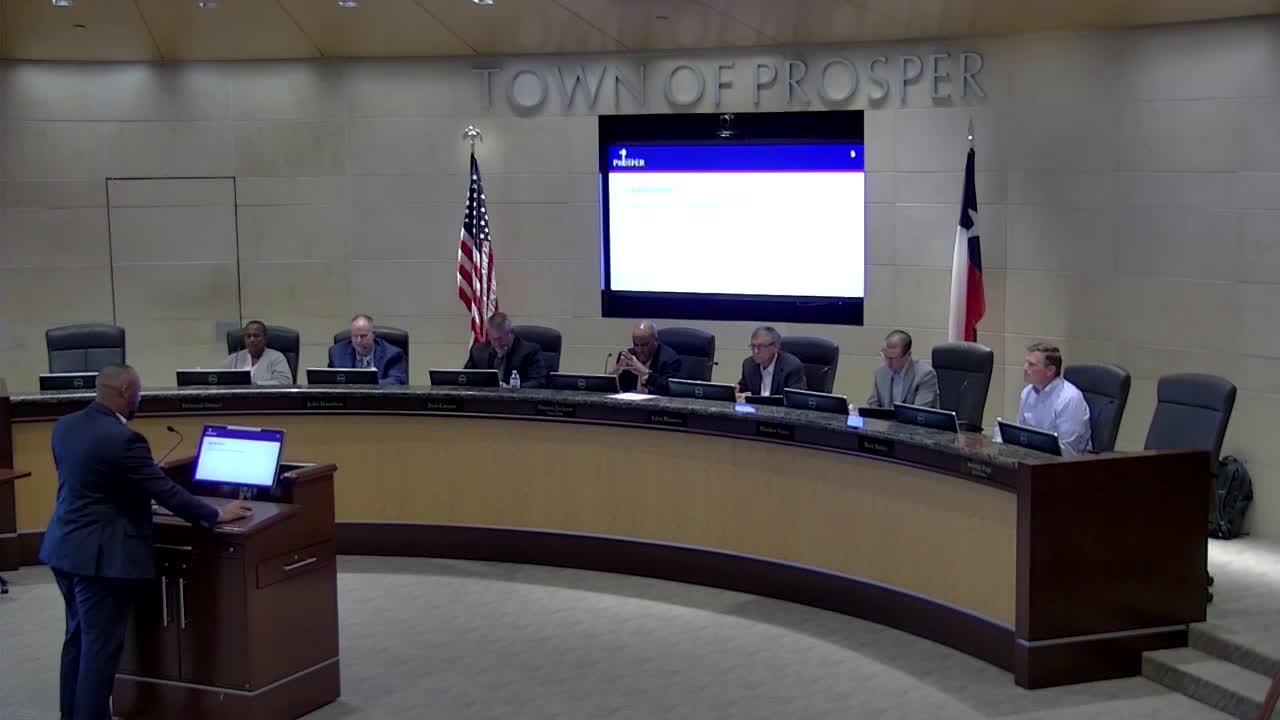
The Prosper Planning and Zoning Commission on Oct. 21 heard a staff and consultant presentation on a proposed Unified Development Code (UDC) that would consolidate the town's development regulations into a single document and codify several practices now handled administratively.
The Prosper Planning and Zoning Commission on Oct. 21 heard a staff and consultant presentation on a proposed Unified Development Code (UDC) that would consolidate the town's development regulations into a single document and codify several practices now handled administratively.
The UDC proposal, presented by consultant Abdul Voss of Freese Nichols, would move definitions into a single chapter, add multifamily registration and rental inspections, require final plats to be recorded before site-plan approval, and consolidate enforcement and penalties. Commissioners asked for clarification on short-term and transient rental language, site-plan expiration timelines and how the code would align with the town's comprehensive plan.
Voss said the primary goals are to follow best planning practices and to align the town code with the Texas Local Government Code (TLGC) so the regulations are enforceable. The draft would add two alternate members to the construction board of appeals and centralize graphic illustrations for sign types. It would also introduce a multifamily registration and inspection program so units must be inspected before being offered for rent; the enforcement authority would rest with the building official or fire marshal or their designee.
The draft consolidates definitions into a single chapter instead of scattering them through the code. Business regulations changes flagged include a prohibition on solicitation without a town permit and continued prohibition of short-term rentals, which staff said are defined as stays of less than 30 days and are already not allowed in Prosper.
Subdivision changes are among the more substantive edits: the UDC would require final plats to be recorded before staff approves a site plan, with the intent of reducing repeated site-plan amendments that arise when preliminary and final plats differ. Conveyance plats or small replats of four lots or fewer with no public improvements could be approved administratively rather than routed to the commission. The commission would gain authority to decide plat vacations rather than forwarding those to town council.
The code would also consolidate enforcement and remove pandemic-specific subsections. Chapter-level clarifications include relocating pool and spa rules into building regulations and updating language to reflect the town's current fire department and administrative titles. The draft allows the town to regulate e-cigarettes similarly to other tobacco products and would require public-records requests to obtain a certificate of occupancy.
Design and site standards in the draft include a point-based design standard (applicants meet a points threshold through landscaping and other features), limits on accessory structures being used for short-term rentals or commercial uses, and a new requirement to submit conceptual façade drawings and tree surveys at the site-plan stage. The draft also contains a prohibition on so-called "jellyfish" style outdoor lighting; staff said enforcement would be complaint-driven and could require removal of nonconforming fixtures within a set time period.
Staff noted current site-plan expiration language is inconsistent in the code and with council practice. The draft would retain an option to use a two-year site-plan expiration—language the TLGC permits—but commissioners discussed whether Prosper should adopt a shorter period (town staff said the current local practice is 18 months for site plans). The town attorney will review whether the term may be shortened under state law.
Commissioners asked about aligning density metrics and minimum lot sizes with the town's comprehensive plan; staff acknowledged inconsistency between the comp plan's density and lot-size provisions and said an amendment to the comprehensive plan may be required if the ordinance is to be truly synchronized.
No formal action was taken on the UDC at the meeting. Staff and the consultant said they will stitch the consolidated chapters into a single document (the complete draft will be nearly 600 pages) and return with a consolidated redline for additional review and eventual adoption steps.